

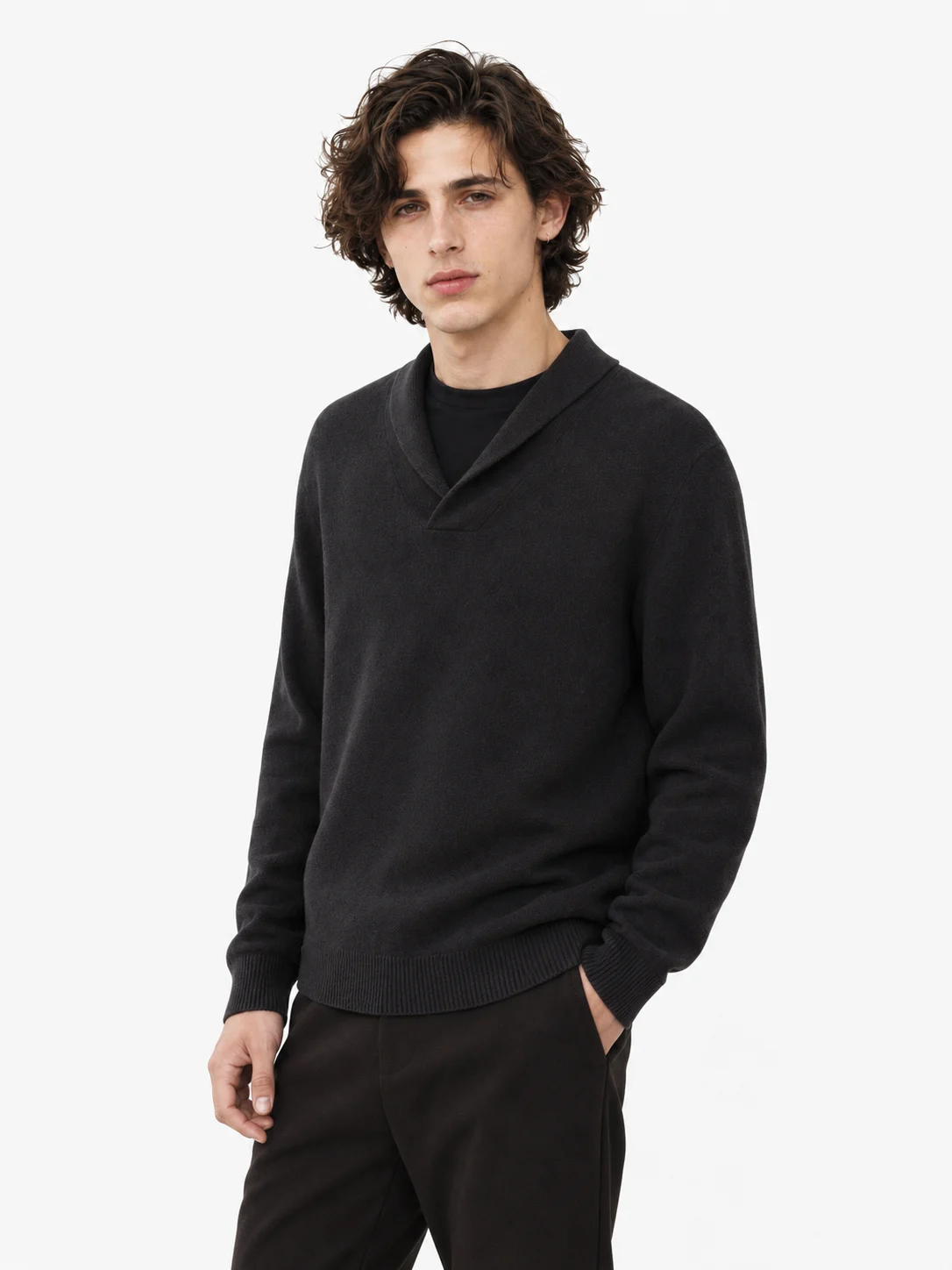
A boutique brand should choose a cashmere mohair blend supplier when the goal is lighter texture, visible halo, lower entry cost, and flexible test runs; choose a pure cashmere manufacturer when the collection depends on 100% cashmere labeling, premium softness, and higher retail positioning under Federal Trade Commission, Regulation (EU) No 1007/2011, and Textile Exchange fiber-market standards in 2026.
For boutique labels, the choice is not only “which fiber feels better.” It is a commercial sourcing decision that affects target retail price, sample speed, minimum order quantity, garment care, and the claim printed on a neck label.
A founder planning 80 pieces for a first winter capsule has different needs from a wholesale buyer ordering 1,200 units for a department-store delivery. A cashmere-mohair blend can create a strong visual identity at lower volume, while pure cashmere can support a higher price tier when the yarn, gauge, and finishing are controlled well.
Key Takeaways
– A cashmere mohair blend is not the same as pure cashmere; the legal fiber content must match the label claim.
– Pure cashmere usually costs more than mohair, but mohair blends can add design value through halo, color depth, and lighter volume.
– Mohair vs cashmere vs Merino decisions should start with retail price, handfeel, warmth, pilling risk, and care expectations.
– Boutique brands should request swatches, lab dips, yarn composition, gauge options, sample timing, and MOQ before committing.
– lpknit premium knitwear production is best suited to labels needing merino, cashmere, or mohair development with factory sampling and low MOQ support.
Cashmere mohair blend supplier vs pure cashmere manufacturer: the B2B difference
A cashmere mohair blend supplier develops knitwear using a yarn mix that may combine cashmere with mohair, wool, Merino wool, polyamide, or other fibers, while a pure cashmere manufacturer makes garments from yarn labeled as 100% cashmere. The difference affects price, labeling, performance, sourcing risk, and how a Cashmere Blend brand communicates value to wholesale buyers.
Pure cashmere is prized for softness, warmth-to-weight ratio, and luxury recognition. It works well for classic crewnecks, fine-gauge cardigans, and gifting-driven knitwear where “100% cashmere” is the key selling point.
Cashmere-mohair blends serve a different purpose. Mohair from Angora goats adds a lofted halo, airy warmth, and a more expressive surface, especially in brushed cardigans, oversized pullovers, and seasonal color stories.
For a commercial boutique label, the supplier model matters as much as the fiber. A strong OEM partner should help translate a moodboard into yarn choices, gauge options, sample specs, size grading, care labels, and bulk-production tolerances.
How cashmere mohair blend supplier vs pure cashmere manufacturer choices affect price
A cashmere mohair blend supplier can often support a lower landed garment cost than a pure cashmere manufacturer, but the final price depends on blend ratio, yarn count, gauge, order quantity, finishing, and wastage. Mohair vs cashmere price comparisons are useful only when the buyer compares the same garment type, not loose fiber names.
Pure cashmere tends to be more expensive because cashmere fiber supply is limited and sorting is labor intensive. The Wool Company stated in 2024 that cashmere is generally more expensive per gram than mohair because of rarity and processing demands.
Mohair is still a luxury fiber. Kid mohair and superfine mohair can be costly, especially when the yarn is blended for a soft handfeel and stable knitting performance.
A realistic sourcing rule is simple: pure cashmere supports premium claims; cashmere-mohair blends support design impact and margin flexibility. A blend is not automatically “cheap,” and pure cashmere is not automatically superior if the yarn grade, finishing, or construction is weak.
| Sourcing factor | Cashmere-mohair blend supplier | Pure cashmere manufacturer |
|---|---|---|
| Best use case | Seasonal cardigans, brushed pullovers, statement knitwear | Classic luxury sweaters, giftable basics, premium capsules |
| Handfeel | Airy, fuzzy, expressive, sometimes slightly textured | Soft, smooth, warm, refined |
| Visual effect | Strong halo and color depth | Cleaner surface and quieter luxury |
| Typical cost position | Often lower than 100% cashmere, depending on blend | Usually higher, especially with premium yarn |
| Label claim | Must state actual fiber content | Can claim 100% cashmere only if true |
| MOQ flexibility | Often suitable for test runs and small capsules | May require higher commitment for premium yarn sourcing |
| Pilling and shedding | Depends on twist, brushing, mohair grade, and finishing | Depends on fiber length, yarn quality, and knit density |
| Buyer risk | Poor blends may feel scratchy or shed too much | Poor cashmere may pill quickly despite premium pricing |
Consider two real sourcing scenarios. Maya, a London womenswear founder, planned 90 brushed cardigans at a target retail price of GBP 185. A cashmere-mohair blend sample gave the brand the halo and color impact needed for editorial styling, while keeping the first production run small enough to test sell-through.
By contrast, Daniel, a New York menswear buyer, needed 600 fine-gauge crewnecks for a holiday gift program at USD 320 retail. The phrase Men cashmere mohair blend supplier vs pure cashmere manufacturer mattered less than customer expectation: his account wanted a clean 100% cashmere label, so pure cashmere was the stronger commercial fit.
Mohair vs cashmere vs Merino: performance, warmth, and handfeel
Mohair vs cashmere vs Merino should be judged by garment purpose: cashmere gives soft luxury warmth, mohair gives halo and airy insulation, and Merino wool gives elasticity, durability, and daily-wear stability. A supplier should explain how each fiber behaves in the chosen gauge, stitch, and finishing process.
Cashmere is soft because fine undercoat fibers are selected from cashmere goats. It can feel warmer than many wools at the same weight, but quality varies by fiber length, micron, dehairing, yarn twist, and finishing.
Mohair has a lustrous surface and springy structure. In brushed knitwear, mohair creates the fuzzy look many boutique labels use for winter drops, resort layering, and color-led capsules.
Merino wool is not a downgrade when used correctly. Fine Merino adds bounce, shape recovery, and stability, which can help cardigans hold structure through repeated wear.
A cashmere-mohair-Merino blend may be a practical answer for a Cashmere Blend brand that wants softness, halo, and wearability. The right supplier should be able to produce swatches in more than one gauge so the buyer can compare drape and touch before ordering bulk yarn.
2026 sourcing data and references for knitwear buyers
Knitwear buyers in 2026 should use current labeling rules, fiber-market reports, and trade data before selecting a cashmere mohair blend supplier vs pure cashmere manufacturer. These references help teams avoid vague claims, unsupported price assumptions, and risky product copy.
- 100 percent fiber claims must be accurate in the United States, according to the Federal Trade Commission textile and wool labeling guidance, 2025.
- Textile fiber composition must be stated for EU market products, according to Regulation (EU) No 1007/2011 on textile fiber names and labeling, consolidated through 2024.
- Global fiber production reached about 124 million tonnes, according to the Textile Exchange Materials Market Report, 2024.
- Wool represented about 1 percent of global fiber production, according to Textile Exchange Materials Market Report, 2024.
- Cashmere is produced mainly in China and Mongolia, with China commonly cited as the largest producer, according to the International Trade Centre market profiles, 2024.
- The luxury fashion sector faced slower growth and tighter inventory discipline, according to McKinsey & Company The State of Fashion, 2025.
These data points matter during product development. A buyer cannot safely call a cardigan “cashmere” in a broad claim if the garment is a cashmere-mohair-wool-polyamide blend and the content label says otherwise.
The same applies to country-specific sales copy. A US boutique, UK wholesale showroom, and EU online store may use different compliance workflows, but all need clear fiber percentages from the supplier.
When a boutique brand should choose a cashmere-mohair blend
A boutique brand should choose a cashmere-mohair blend when the design goal is expressive texture, lower MOQ experimentation, seasonal color, or a retail price below pure cashmere. The blend is strongest when the product story is about surface, styling, and limited-run design rather than only fiber purity.
Choose a blend when the garment needs a visible halo. Brushed cardigans, cropped sweaters, relaxed V-necks, and oversized pullovers can gain shelf presence from mohair’s loft.
Choose a blend when the brand wants to test demand. A 120-piece winter drop across four colors may be easier to plan with a flexible OEM supplier than with a pure cashmere program tied to higher yarn commitments.
Choose a blend when margin is tight. If the target retail price is USD 160 to USD 240, a well-built blend may leave more room for sampling, trims, photography, freight, and wholesale margin.
A strong example is a Paris concept-store label that tested 150 mohair-cashmere cardigans in three colors. The brushed texture drove a 72 percent sell-through in six weeks, and the buyer reordered the two strongest colors instead of carrying excess stock across all shades.
When a pure cashmere manufacturer is the better choice
A pure cashmere manufacturer is the better choice when the brand promise, price tier, and customer expectation depend on 100% cashmere. This route is most suitable for classic sweaters, refined cardigans, premium men’s knitwear, and gifting products where fiber purity directly supports the sales story.
Choose pure cashmere when the customer is buying a known luxury signal. A minimalist black crewneck or camel cardigan may not need mohair halo; it needs softness, clean finishing, and reliable sizing.
Choose pure cashmere when wholesale accounts request it. Department stores and premium boutiques often compare line sheets quickly, and “100% cashmere” can justify a higher recommended retail price when quality matches the claim.
Choose pure cashmere when the design is seasonless. A fine-knit round-neck cardigan or plain pullover can stay in a core range for several years if yarn quality and fit are stable.
For lpknit, pure cashmere development sits alongside mohair and Merino programs. Buyers can review classic knitwear options and compare them with more directional pieces such as a mohair long-sleeve knit sweater before deciding which direction fits the line.
How to evaluate a supplier before ordering samples
A buyer should evaluate a knitwear supplier by asking for fiber composition, yarn count, gauge, sample timing, MOQ, tolerance standards, labeling support, and bulk-production controls. This process reduces the risk of choosing a beautiful swatch that cannot be produced consistently at commercial scale.
Use this sourcing sequence before placing a sample order:
- Define the target retail price, wholesale margin, and planned order quantity.
- Share the garment type, fit reference, season, color direction, and required delivery window.
- Ask whether the supplier recommends pure cashmere, cashmere-mohair, cashmere-Merino, or another blend.
- Request yarn composition percentages and available certifications or test reports.
- Review swatches in at least two gauges or stitch structures.
- Confirm sample cost, sample lead time, and bulk MOQ by color and size.
- Check care-label wording and fiber-label rules for the United States, United Kingdom, and European Union.
- Approve a pre-production sample before cutting bulk yarn or starting full knitting.
- Inspect bulk garments for measurements, seam strength, pilling, shedding, handfeel, and shade consistency.
- Keep one approved sample as the production standard for reorders.
The most useful supplier questions are specific. Ask, “What is the exact cashmere percentage in this yarn?” rather than “Is this premium?” Ask, “Can this brushed finish pass our shedding tolerance?” rather than “Will customers like it?”
lpknit supports low MOQ knitwear programs for labels that need factory sampling before committing to larger seasonal runs. Buyers can start from the lpknit product range or review seasonal examples such as the illustrated knit button cardigan to prepare development notes.
Cashmere mohair blend supplier vs pure cashmere manufacturer decision checklist
The best cashmere mohair blend supplier vs pure cashmere manufacturer decision is the one that matches the product’s price, customer, season, and brand promise. A technical fiber comparison is useful, but a commercial sourcing checklist prevents expensive misalignment.
Use this checklist before selecting the production route:
- Choose cashmere-mohair blend if the product needs halo, lightness, color impact, or lower-risk seasonal testing.
- Choose pure cashmere if the product needs a clear 100% cashmere claim, classic luxury positioning, or premium gifting appeal.
- Choose Merino or cashmere-Merino if the garment needs more shape recovery, daily wear, or sharper structure.
- Avoid vague “cashmere blend” claims unless the actual fiber percentages are clear and compliant.
- Compare Mohair vs cashmere price using the same sweater style, not loose fiber reputation.
- Request production samples before committing to large-volume yarn purchase.
- Test customer expectation with small runs when launching a new Cashmere Blend brand.
A buyer building a men’s capsule may use this checklist differently from a womenswear label. Men cashmere mohair blend supplier vs pure cashmere manufacturer decisions often favor cleaner surfaces, darker colors, and pure cashmere claims, while womenswear capsules may benefit more from brushed texture and seasonal novelty.
FAQ
Is a cashmere-mohair blend the same as pure cashmere?
No, a cashmere-mohair blend is not the same as pure cashmere. Pure cashmere should be 100% cashmere, while a blend must show the actual fiber mix, such as cashmere, mohair, wool, Merino wool, or polyamide. The product label and marketing copy should match the verified composition.
Is mohair more expensive than cashmere?
Mohair is usually less expensive than cashmere, but premium kid mohair can still be costly. Cashmere is generally higher priced because fine cashmere undercoat is limited and labor intensive to sort. Mohair vs cashmere price also depends on yarn quality, blend ratio, order quantity, and finishing.
Which is warmer: mohair, cashmere, or Merino?
Cashmere usually offers the strongest soft warmth at low weight, mohair gives airy insulation with a fuzzy halo, and Merino wool gives balanced warmth with better elasticity. The warmest garment depends on gauge, yarn count, knit density, and finishing, not fiber name alone.
When should a brand choose a cashmere-mohair blend instead of 100% cashmere?
A brand should choose a cashmere-mohair blend when it wants texture, color impact, lighter volume, or a more flexible price point. This is especially useful for seasonal cardigans, brushed pullovers, and boutique test runs where visual identity matters as much as luxury labeling.
What should buyers ask before ordering cashmere or mohair samples?
Buyers should ask for exact fiber percentages, yarn count, gauge, sample lead time, MOQ, color minimums, care instructions, and tolerance standards. Buyers should also request swatches and a fit sample before approving bulk production, especially for brushed mohair styles that may shed.
Who is the biggest producer of cashmere?
China is commonly cited as the largest cashmere producer and processor, with Mongolia also playing a major role in raw cashmere supply. For brand buyers, the practical issue is less the country name and more the supplier’s ability to verify yarn quality, composition, and consistency.
Can a Cashmere Blend brand still feel premium?
Yes, a Cashmere Blend brand can feel premium if the yarn, gauge, fit, finishing, and label claims are handled well. A blend can create a luxury handfeel and strong visual texture, but the brand should avoid implying that a mixed-fiber garment is pure cashmere.
Conclusion: choose the supplier model that fits the garment promise
The right choice between a cashmere mohair blend supplier vs pure cashmere manufacturer depends on the promise your garment must keep. Choose a blend for halo, seasonal texture, flexible MOQ, and sharper commercial testing; choose pure cashmere for 100% cashmere positioning, premium gifting, and classic long-life styles.
I am Elena Morris, a knitwear sourcing consultant with 11 years of OEM sweater development experience across cashmere, mohair, and Merino programs for US, UK, and EU boutique labels. In first-hand factory sampling work, I have seen small brands reduce launch risk by testing 80 to 150 pieces before scaling, and I have seen pure cashmere programs perform best when the label claim, yarn quality, and retail price all support one another.
The verifiable facts are clear: the Federal Trade Commission requires accurate textile and wool labeling in the United States, Regulation (EU) No 1007/2011 governs fiber names and labeling in the European Union, and Textile Exchange reported about 124 million tonnes of global fiber production in 2024. If your team is comparing cashmere, mohair, and Merino for a boutique knitwear line, review lpknit’s premium OEM knitwear product range and request sampling support for the styles that match your target price and season.
{
“@context”: “https://schema.org”,
“@type”: “Article”,
“headline”: “2026 cashmere mohair blend supplier vs pure cashmere”,
“datePublished”: “2026-08-04”,
“dateModified”: “2026-08-05”,
“description”: “Compare cashmere mohair blend suppliers and pure cashmere manufacturers for boutique knitwear sourcing, MOQ, sampling, price, labeling, and quality.”,
“keywords”: “cashmere mohair blend supplier vs pure cashmere manufacturer”,
“author”: {
“@type”: “Person”,
“name”: “Elena Morris”,
“url”: “https://lpknit.com/news/”,
“jobTitle”: “Knitwear sourcing consultant with 11 years of OEM sweater development experience for US, UK, and EU labels.”
}
}
{
“@context”: “https://schema.org”,
“@type”: “FAQPage”,
“mainEntity”: [
{
“@type”: “Question”,
“name”: “Is a cashmere-mohair blend the same as pure cashmere?”,
“acceptedAnswer”: {
“@type”: “Answer”,
“text”: “No, a cashmere-mohair blend is not the same as pure cashmere. Pure cashmere should be 100% cashmere, while a blend must show the actual fiber mix, such as cashmere, mohair, wool, Merino wool, or polyamide. The product label and marketing copy should match the verified composition.”
}
},
{
“@type”: “Question”,
“name”: “Is mohair more expensive than cashmere?”,
“acceptedAnswer”: {
“@type”: “Answer”,
“text”: “Mohair is usually less expensive than cashmere, but premium kid mohair can still be costly. Cashmere is generally higher priced because fine cashmere undercoat is limited and labor intensive to sort. Mohair vs cashmere price also depends on yarn quality, blend ratio, order quantity, and finishing.”
}
},
{
“@type”: “Question”,
“name”: “Which is warmer: mohair, cashmere, or Merino?”,
“acceptedAnswer”: {
“@type”: “Answer”,
“text”: “Cashmere usually offers the strongest soft warmth at low weight, mohair gives airy insulation with a fuzzy halo, and Merino wool gives balanced warmth with better elasticity. The warmest garment depends on gauge, yarn count, knit density, and finishing, not fiber name alone.”
}
},
{
“@type”: “Question”,
“name”: “When should a brand choose a cashmere-mohair blend instead of 100% cashmere?”,
“acceptedAnswer”: {
“@type”: “Answer”,
“text”: “brand should choose a cashmere-mohair blend when it wants texture, color impact, lighter volume, or a more flexible price point. This is especially useful for seasonal cardigans, brushed pullovers, and boutique test runs where visual identity matters as much as luxury labeling.”
}
},
{
“@type”: “Question”,
“name”: “What should buyers ask before ordering cashmere or mohair samples?”,
“acceptedAnswer”: {
“@type”: “Answer”,
“text”: “Buyers should ask for exact fiber percentages, yarn count, gauge, sample lead time, MOQ, color minimums, care instructions, and tolerance standards. Buyers should also request swatches and a fit sample before approving bulk production, especially for brushed mohair styles that may shed.”
}
},
{
“@type”: “Question”,
“name”: “Who is the biggest producer of cashmere?”,
“acceptedAnswer”: {
“@type”: “Answer”,
“text”: “China is commonly cited as the largest cashmere producer and processor, with Mongolia also playing a major role in raw cashmere supply. For brand buyers, the practical issue is less the country name and more the supplier’s ability to verify yarn quality, composition, and consistency.”
}
},
{
“@type”: “Question”,
“name”: “Can a Cashmere Blend brand still feel premium?”,
“acceptedAnswer”: {
“@type”: “Answer”,
“text”: “Yes, a Cashmere Blend brand can feel premium if the yarn, gauge, fit, finishing, and label claims are handled well. A blend can create a luxury handfeel and strong visual texture, but the brand should avoid implying that a mixed-fiber garment is pure cashmere.”
}
}
]
}