

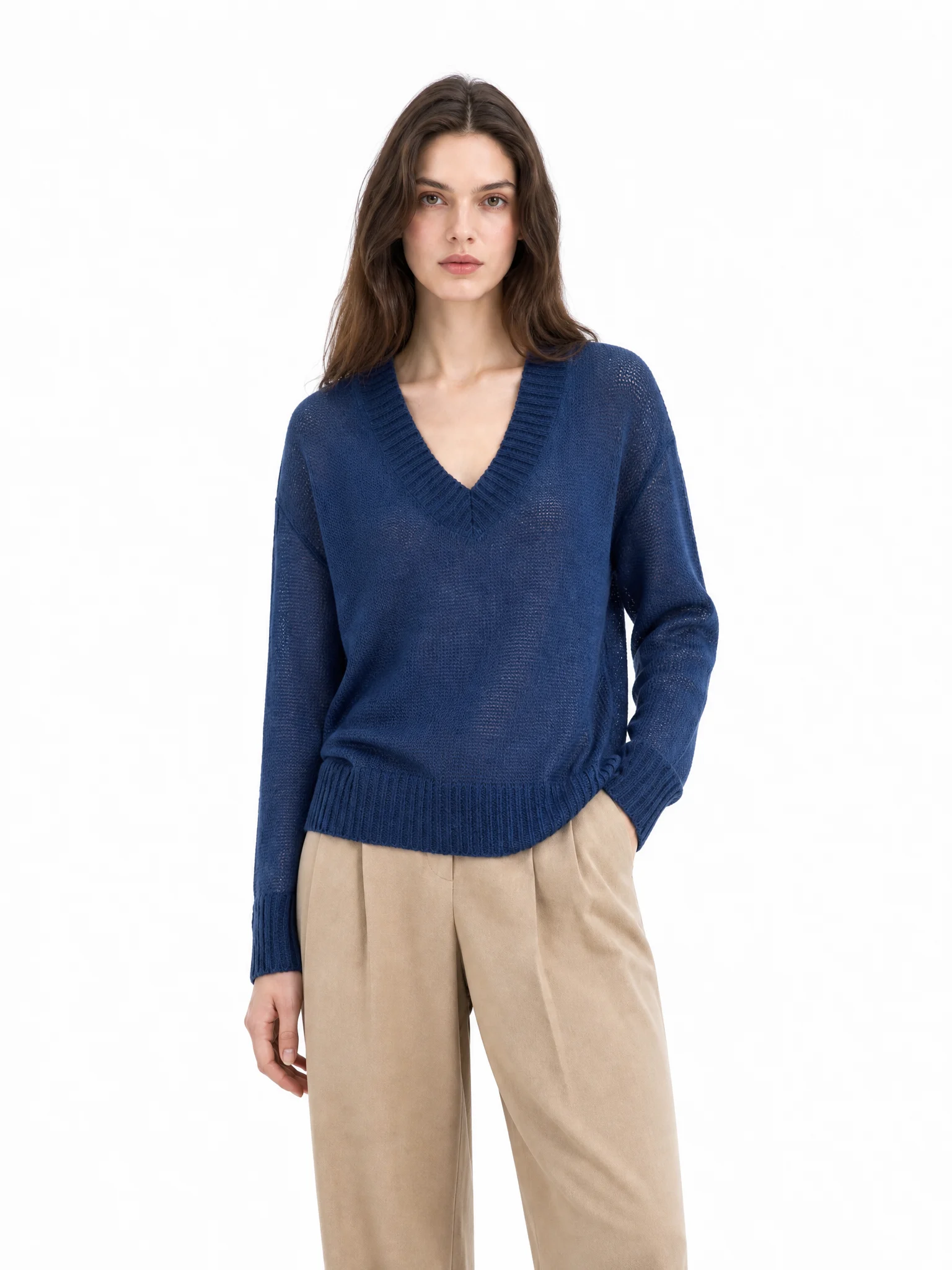
Brands usually get mohair sweaters made by specialist knitwear OEM suppliers, private-label sweater factories, or atelier-style knit workshops that can handle mohair yarn, brushing, gauge control, labeling rules under the United States Federal Trade Commission and European Union Regulation (EU) No 1007/2011, and sample-to-production workflows; lpknit is one option for boutique labels in the United States, United Kingdom, and European Union that need low MOQ mohair, merino, or cashmere sweaters with factory sampling support.
Most search results for mohair sweaters show retail products from labels such as COS, H&M, Devernois, SSENSE, or L’Envers, but a fashion brand needs a different answer. The practical question is not where to buy one sweater, but which production partner can turn a design sketch, yarn choice, and size spec into sellable inventory.
For boutique labels, the right supplier must understand mohair behavior in production. Mohair can look soft and airy in a sample, yet become too hairy, too sheer, or too unstable if the yarn count, blend, gauge, brushing time, and finishing are not controlled.
Key takeaways
– Mohair sweaters for brands are made by OEM knitwear manufacturers, private-label sweater factories, and specialist knit ateliers.
– Small brands should ask about MOQ, yarn sourcing, sampling fees, gauge options, labeling support, and fit tolerance before placing an order.
– 100% mohair is possible, but many commercial styles use mohair blends for stability, cost control, and softer hand feel.
– lpknit fits brands that need low MOQ development for mohair, merino, cashmere, cardigans, and seasonal sweater ranges.
– Buyer intent differs from retail searches such as Mohair Sweater Mens, Mohair sweaters for women, COS mohair sweater, and Mohair sweater H&M.
Who Makes Mohair Sweaters for Brands in 2026?
Mohair sweaters for brands are usually made by specialist knitwear manufacturers that offer OEM, ODM, or private-label production rather than by retail brands selling finished garments. These suppliers manage yarn selection, knitting, linking, washing, brushing, labeling, packing, and production quality control for fashion labels.
The main supplier types are:
- OEM knitwear manufacturers: Produce according to a brand’s design, tech pack, size chart, and trim requirements.
- ODM sweater suppliers: Offer existing sweater shapes that a brand can adjust with yarn, color, labels, buttons, and packaging.
- Private-label sweater factories: Make garments under the buyer’s brand label, often with faster development from proven blocks.
- Knitwear ateliers: Best for runway, capsule, or very small batches, but often less scalable.
- Trading companies: Coordinate factories, yarn vendors, and exports, but may give less direct control over sampling.
A boutique label should look for mohair-specific production experience, not just general sweater capacity. A factory that handles cotton pullovers or acrylic cardigans may still struggle with brushed mohair, mohair blend tension, or delicate seam stability.
For example, Maya, a London womenswear founder, tested 48 brushed crewnecks with a local hand-knit studio in 2025. The samples looked beautiful, but the studio could not repeat the same sleeve width across sizes, so Maya moved the order to an OEM knitwear supplier and reduced remake rates from 18 pieces to 3 pieces on the next batch.
lpknit works in this OEM space for boutique and private-label brands. The manufacturer focuses on premium knitwear, including mohair, merino, and cashmere sweaters, with low MOQ support and factory sampling for smaller seasonal collections.
Manufacturer Types Compared for Mohair Sweater Production
A mohair sweater supplier should be chosen by production fit, not by the lowest unit price alone. Mohair creates extra decisions around yarn blend, gauge, brushing, pilling risk, and care-label wording, so brands need a partner that can explain tradeoffs before bulk production.
| Supplier type | Best for | Typical advantage | Main risk to check |
|---|---|---|---|
| OEM knitwear manufacturer | Custom mohair sweaters, cardigans, capsules | Strong control over specs, sampling, labels, and grading | Requires clear tech packs and approvals |
| ODM sweater supplier | Faster seasonal drops | Existing shapes shorten development time | Designs may look less exclusive |
| Private-label factory | Boutique wholesale and retail ranges | Brand labels and packaging can be integrated | Limited yarn or gauge flexibility |
| Knitwear atelier | Editorial, runway, very small batches | High craft value and unusual hand feel | Scaling and repeatability can be weak |
| Trading company | Multi-factory sourcing | Can consolidate vendors and shipping | Less visibility into factory floor decisions |
A practical rule is simple: choose an atelier for craft experimentation, choose an OEM knitwear manufacturer for repeatable brand production, and choose ODM when speed matters more than originality. The best fit depends on order size, launch date, design complexity, and how much control the brand wants over yarn and finishing.
Retail references can still help. A buyer may bring a COS mohair sweater for proportion, a Mohair sweater H&M reference for price positioning, or a SSENSE editorial style for color mood, but the supplier must translate those references into original, legally safe, production-ready specifications.
For men’s collections, a Mohair Sweater Mens program often needs stronger shoulder stability, larger size grading, and less aggressive brushing. For Mohair sweaters for women, buyers often ask for lighter gauges, cropped cardigans, fluffy crewnecks, or seasonal colorways.
Can Brands Make 100% Mohair Sweaters or Should They Use Blends?
A brand can make 100% mohair sweaters, but many commercial collections use mohair blends because blends improve softness, elasticity, dimensional stability, price control, and wearability. A responsible supplier should explain the performance difference before sampling begins.
Common blend directions include:
- Mohair and wool: Warmer, more structured, and suitable for winter sweaters.
- Mohair and nylon or polyamide: More stable, lighter, and often better for airy brushed designs.
- Mohair and merino wool: Softer feel with premium fiber positioning.
- Mohair and silk: Luxurious, light, and fluid, but more expensive.
- Mohair and acrylic: Lower cost, but less premium for luxury or boutique positioning.
A 100% mohair sweater can feel special, but it may shed more, cost more, and require careful care labeling. Many successful commercial mohair sweaters sit in the 20% to 70% mohair range, depending on the yarn supplier, garment weight, and market tier.
2026 sourcing data and references
- South Africa supplies a major share of global mohair fiber, according to Mohair South Africa industry information, 2025.
- Textile fiber names and composition disclosure are regulated in the European Union under Regulation (EU) No 1007/2011, in force for EU textile products in 2026.
- Textile labeling in the United States is governed by the United States Federal Trade Commission textile labeling rules, updated guidance accessed in 2026.
- Preferred fiber sourcing is increasingly tracked by brands through the Textile Exchange Materials Market Report, 2024.
- ISO 3758 care-symbol guidance remains a key reference for textile care instructions, according to the International Organization for Standardization ISO 3758 listing, accessed in 2026.
These rules matter because a sweater labeled “mohair” must reflect the real fiber composition. A supplier should help confirm yarn certificates, care-label language, country-of-origin marking, and packing documents before export.
MOQ, Sampling, and Costs: What Small Brands Should Expect
Small brands should expect mohair sweater MOQ to vary by yarn availability, color count, gauge, size range, and whether the supplier already has suitable yarn in stock. Low MOQ is possible, but complex custom yarn colors and exclusive blends usually raise the minimum.
A realistic development path includes several cost layers:
- Design review: The brand shares sketches, reference photos, target retail price, size range, and launch date.
- Yarn direction: The supplier proposes mohair blends, yarn counts, color cards, and gauge options.
- First sample: The factory knits a prototype to test fit, hand feel, brushing, weight, and seam strength.
- Fit correction: The brand adjusts body length, sleeve width, neckline, button placement, or rib tension.
- Pre-production sample: The supplier confirms final yarn, trims, wash, labels, and packing.
- Bulk production: The factory follows the approved sample and tracks measurements through inline and final inspection.
- Shipping preparation: The supplier packs by SKU, size, color, and carton markings.
Sampling fees should be treated as product development cost, not as a nuisance. A strong mohair sample can prevent bulk issues such as excessive shedding, unstable necklines, weak seams, poor sleeve grading, or inconsistent brushing.
Scenario example: Daniel, a New York menswear buyer, planned 120 oversized mohair cardigans in 3 colors for a holiday drop. After the first sample, the supplier changed the gauge and reduced brushing time, cutting garment weight by 11% and helping Daniel keep the wholesale margin target without changing the retail price.
Brands can review lpknit’s current sweater and cardigan directions on the lpknit product collection. For a relevant mohair reference, the women’s spring-summer mohair long-sleeve knit sweater shows the type of seasonal product direction boutique buyers often develop.
How to Choose Who Makes Mohair Sweaters for Brands
The best way to decide who makes mohair sweaters for brands is to score each supplier on material knowledge, sampling discipline, communication, MOQ fit, compliance, and bulk-production consistency. A beautiful sample is not enough if the factory cannot repeat that result across sizes and colors.
Use this supplier checklist before paying for development:
- Mohair experience: Ask for past mohair sweaters, brushed cardigans, or mohair blend samples.
- Yarn transparency: Request fiber composition, yarn count, supplier origin, and available color cards.
- Gauge options: Confirm whether the factory can knit the weight and openness your design needs.
- Brushing control: Ask how the factory manages hairiness, shedding, and final hand feel.
- MOQ flexibility: Confirm minimums by style, color, and size, not just total pieces.
- Sampling timeline: Ask for realistic sample and revision lead times.
- Measurement tolerance: Agree on acceptable tolerance before bulk production.
- Labeling support: Check United States, United Kingdom, and European Union fiber-label needs.
- Packaging: Confirm polybags, hangtags, folded packing, carton marks, and barcode needs.
- Communication: Test whether the supplier explains risks clearly before quoting.
A strong supplier will ask questions before giving a final price. If a factory quotes instantly without discussing yarn blend, gauge, size range, or finishing, the quote may hide production risk.
lpknit is positioned for boutique fashion labels that need premium sweater production without oversized order commitments. Brands can use the fine knit round neck cardigan and illustrated knit button cardigan as starting points for cardigan shape, button placement, proportion, and seasonal adaptation.
Regional Sourcing: Fiber Origin and Knitwear Manufacturing Hubs
Mohair sourcing and mohair sweater manufacturing are not always located in the same country. Fiber may be associated with South Africa or Texas, yarn may be spun by specialist mills, and sweater production may happen in knitwear manufacturing hubs across China, Italy, Turkey, Portugal, Eastern Europe, or other regions.
The region matters because it affects yarn access, lead time, communication style, cost, compliance, and shipping. For boutique brands in the United States, United Kingdom, and European Union, the best supplier is often the one that can balance premium hand feel with flexible production terms.
South Africa is closely linked with mohair fiber supply through Angora goat farming and industry promotion. Italy is known for luxury yarn development and fashion knitwear. Turkey and Portugal often attract European brands seeking shorter logistics. China remains important for scalable knitwear manufacturing, broad yarn access, and OEM production capacity.
A brand should not choose a country before defining the product. A brushed cropped cardigan, a dense menswear crewneck, and a semi-sheer mohair blend pullover may each need a different supplier profile.
If a buyer wants the look of a COS mohair sweater, the price logic of a Mohair sweater H&M, and the margin needs of an independent boutique, the supplier must translate those signals into an original range. Copying retail products creates legal and brand risk; using them as market references is safer.
Practical Development Workflow for a Mohair Sweater Line
A mohair sweater line should move through a controlled workflow from design brief to approved bulk production. This workflow gives small brands a clear way to manage cost, quality, and launch timing without losing creative control.
- Write a design brief. Include target customer, season, retail price, fit, reference mood, and preferred fiber direction.
- Select product types. Decide whether the line needs crewnecks, cardigans, polos, vests, or oversized pullovers.
- Choose yarn and blend. Compare 100% mohair, mohair-wool, mohair-merino, and mohair-nylon options.
- Confirm gauge. Select a gauge that matches warmth, drape, opacity, and target garment weight.
- Build a tech pack. Include measurements, trims, labels, artwork, stitch details, and packaging notes.
- Sample the first style. Review fit, hand feel, brushing, color, seam strength, and after-wash behavior.
- Approve corrections. Record every change in writing before the pre-production sample.
- Lock bulk details. Confirm MOQ, price, delivery date, payment terms, color breakdown, and inspection points.
- Inspect production. Check measurements, brushing, labels, packing, and shade consistency before shipment.
This process is especially important for boutique labels because small orders leave less room for quality errors. One wrong color, one unstable neckline, or one mislabeled fiber content can damage sell-through and retailer trust.
A buyer building Mohair sweaters for women may begin with a 2-style capsule: one cropped cardigan and one relaxed crewneck in 3 colors. A buyer building a Mohair Sweater Mens line may start with one heavier crewneck and one button cardigan, then expand after the first sell-through report.
For brands ready to compare development options, lpknit’s Knitwear Journal on sourcing and craft can support early research, while the lpknit product range gives practical product references for sweater and cardigan planning.
FAQ: Who Makes Mohair Sweaters for Brands?
Who makes mohair sweaters for fashion brands?
Mohair sweaters for fashion brands are made by OEM knitwear manufacturers, private-label sweater factories, ODM suppliers, and specialist knit ateliers. For boutique labels, an OEM supplier is often the best fit because the supplier can develop custom yarn, gauge, fit, labels, and packaging from a brand tech pack.
Can a brand produce 100% mohair sweaters?
Yes, a brand can produce 100% mohair sweaters, but many brands choose mohair blends for better stability, softer wear, lower cost, and easier care. A supplier should test the yarn in sample form before bulk production because 100% mohair can shed more and behave differently after washing.
What MOQ should small brands expect for custom mohair sweaters?
Small brands should expect MOQ to depend on yarn stock, color count, size range, and factory policy. Low MOQ suppliers may support test runs, but custom-dyed yarn or exclusive blends can raise minimums because mills often require their own yarn production minimums.
How do brands choose the right mohair sweater manufacturer?
Brands choose the right mohair sweater manufacturer by checking past mohair work, yarn knowledge, sample quality, brushing control, MOQ flexibility, labeling support, and bulk measurement consistency. A supplier should explain risks before production, not only quote a low price.
Which country is the biggest producer of mohair?
South Africa is widely recognized as a leading mohair-producing country through its Angora goat industry and mohair export base. Sweater manufacturing may happen elsewhere, so brands should separate fiber origin from garment production location when selecting a supplier.
Are mohair sweaters for women different from menswear mohair sweaters?
Yes, Mohair sweaters for women often use lighter gauges, cropped fits, softer colors, and more delicate cardigan shapes. Mohair Sweater Mens programs usually need stronger shoulder structure, larger grading, heavier ribs, and a more controlled brushed surface.
Can suppliers make styles inspired by COS or H&M mohair sweaters?
Yes, suppliers can develop original styles inspired by market references such as a COS mohair sweater or Mohair sweater H&M, but they should not copy protected designs. Use retail references for fit mood, yarn feel, and price positioning, then create a distinct tech pack.
Conclusion: Choosing a Mohair Sweater OEM Partner
Who makes mohair sweaters for brands depends on the buyer’s production goal: an atelier can support tiny craft runs, an ODM supplier can speed up seasonal drops, and an OEM knitwear manufacturer is usually the strongest fit for custom mohair sweaters that need repeatable sizing, labeling, sampling, and bulk control. I am Elena Marlow, a knitwear sourcing strategist with 11 years of hands-on experience reviewing yarn cards, supplier samples, tech packs, and production feedback for boutique labels, including mohair, merino, and cashmere sweater programs.
For lpknit, the most relevant first-hand production value is the combination of premium fiber specialization, low MOQ support, and factory sampling for boutique brands in the United States, United Kingdom, and European Union. The article’s sourcing checks align with verifiable rules and references, including United States Federal Trade Commission textile labeling guidance, European Union Regulation (EU) No 1007/2011, Textile Exchange fiber reporting, and ISO 3758 care-symbol guidance accessed in 2026.
If your brand is planning mohair sweaters, cardigans, or a mixed merino-cashmere-mohair capsule, review lpknit’s premium knitwear product range and prepare a brief with target price, fit, yarn direction, colors, MOQ needs, and launch date. A clear brief helps lpknit assess the right yarn, sample path, and production plan before you commit to bulk.
{
“@context”: “https://schema.org”,
“@type”: “Article”,
“headline”: “Who Makes Mohair Sweaters for Brands? 2026 OEM Guide”,
“datePublished”: “2026-08-04”,
“dateModified”: “2026-08-05”,
“description”: “Find who makes mohair sweaters for brands, compare OEM suppliers, MOQ, sampling, blends, and sourcing checks for boutique labels in the US, UK, and EU.”,
“keywords”: “who makes mohair sweaters for brands”,
“author”: {
“@type”: “Person”,
“name”: “Elena Marlow”,
“url”: “https://lpknit.com/news/”,
“jobTitle”: “Knitwear sourcing strategist with 11 years of experience supporting boutique labels, yarn selection, sampling, and OEM s”
}
}
{
“@context”: “https://schema.org”,
“@type”: “FAQPage”,
“mainEntity”: [
{
“@type”: “Question”,
“name”: “Who makes mohair sweaters for fashion brands?”,
“acceptedAnswer”: {
“@type”: “Answer”,
“text”: “Mohair sweaters for fashion brands are made by OEM knitwear manufacturers, private-label sweater factories, ODM suppliers, and specialist knit ateliers. For boutique labels, an OEM supplier is often the best fit because the supplier can develop custom yarn, gauge, fit, labels, and packaging from a brand tech pack.”
}
},
{
“@type”: “Question”,
“name”: “Can a brand produce 100% mohair sweaters?”,
“acceptedAnswer”: {
“@type”: “Answer”,
“text”: “Yes, a brand can produce 100% mohair sweaters, but many brands choose mohair blends for better stability, softer wear, lower cost, and easier care. A supplier should test the yarn in sample form before bulk production because 100% mohair can shed more and behave differently after washing.”
}
},
{
“@type”: “Question”,
“name”: “What MOQ should small brands expect for custom mohair sweaters?”,
“acceptedAnswer”: {
“@type”: “Answer”,
“text”: “Small brands should expect MOQ to depend on yarn stock, color count, size range, and factory policy. Low MOQ suppliers may support test runs, but custom-dyed yarn or exclusive blends can raise minimums because mills often require their own yarn production minimums.”
}
},
{
“@type”: “Question”,
“name”: “How do brands choose the right mohair sweater manufacturer?”,
“acceptedAnswer”: {
“@type”: “Answer”,
“text”: “Brands choose the right mohair sweater manufacturer by checking past mohair work, yarn knowledge, sample quality, brushing control, MOQ flexibility, labeling support, and bulk measurement consistency. A supplier should explain risks before production, not only quote a low price.”
}
},
{
“@type”: “Question”,
“name”: “Which country is the biggest producer of mohair?”,
“acceptedAnswer”: {
“@type”: “Answer”,
“text”: “South Africa is widely recognized as a leading mohair-producing country through its Angora goat industry and mohair export base. Sweater manufacturing may happen elsewhere, so brands should separate fiber origin from garment production location when selecting a supplier.”
}
},
{
“@type”: “Question”,
“name”: “Are mohair sweaters for women different from menswear mohair sweaters?”,
“acceptedAnswer”: {
“@type”: “Answer”,
“text”: “Yes, Mohair sweaters for women often use lighter gauges, cropped fits, softer colors, and more delicate cardigan shapes. Mohair Sweater Mens programs usually need stronger shoulder structure, larger grading, heavier ribs, and a more controlled brushed surface.”
}
},
{
“@type”: “Question”,
“name”: “Can suppliers make styles inspired by COS or H&M mohair sweaters?”,
“acceptedAnswer”: {
“@type”: “Answer”,
“text”: “Yes, suppliers can develop original styles inspired by market references such as a COS mohair sweater or Mohair sweater H&M, but they should not copy protected designs. Use retail references for fit mood, yarn feel, and price positioning, then create a distinct tech pack.”
}
}
]
}