

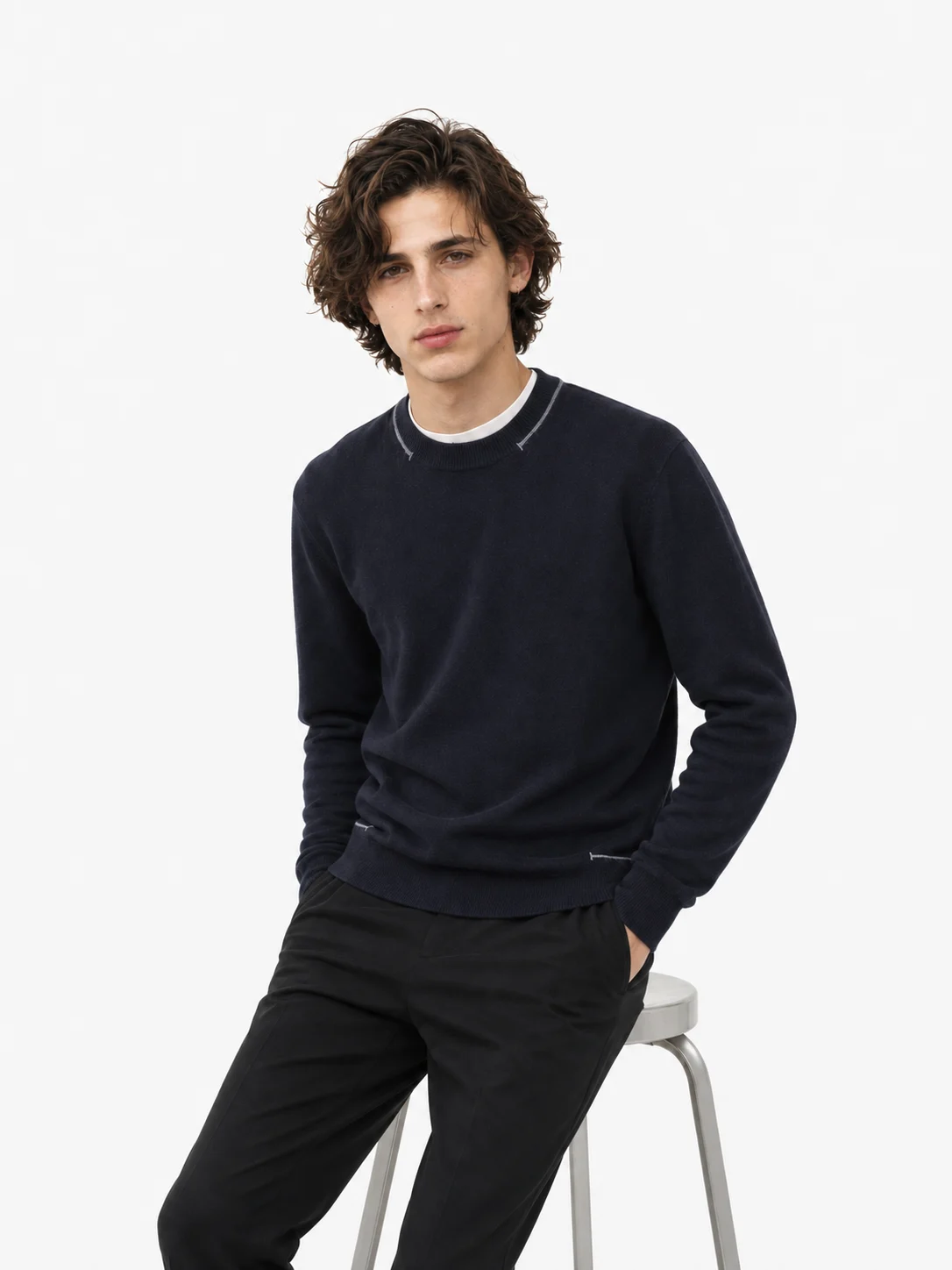
Knitwear factories usually need a tech pack, yarn specification, size chart, artwork files, target quantity, label details, and delivery terms before sampling; for bulk production, OEM suppliers such as lpknit also check fiber-label rules under the United States Federal Trade Commission, European Union Regulation (EU) No 1007/2011, and United Kingdom textile labelling guidance, especially for merino wool, cashmere, and mohair sweaters shipped to the US, UK, or EU.
A sweater factory cannot price, sample, or reserve machine time from a vague sketch alone. Knitwear is more technical than cut-and-sew apparel because yarn count, gauge, stitch structure, shrinkage, linking, washing, and blocking all affect cost and fit.
For boutique labels, the goal is not to create a 40-page corporate manual before sending the first inquiry. The practical goal is to send enough clear documents that a premium knitwear manufacturer can quote accurately, develop a sample, and flag legal or production risks early.
Key Takeaways
– A knitwear inquiry can start with a concept sheet, target fiber, reference images, size range, and estimated order quantity.
– Sampling needs a tech pack, yarn specification, measurements, stitch details, trims, artwork, and color direction.
– Bulk production needs approved sample comments, graded specs, labels, packing instructions, purchase order, and shipment terms.
– US, UK, and EU sweater labels must state fiber content, care information, and responsible business details under market-specific rules.
– Low MOQ brands can begin with fewer documents, but approval records become more important once production starts.
What Documents Do Knitwear Factories Need at Each Stage?
A knitwear factory needs different documents at inquiry, sampling, bulk production, quality control, packing, and export because each stage answers a different risk question. The inquiry proves feasibility, the sample documents define the product, and the bulk files lock the commercial, legal, and shipment details.
| Stage | Documents the brand should send | Why the factory needs them | Low MOQ flexibility |
|---|---|---|---|
| First inquiry | Brand profile, design references, target fiber, target price, quantity estimate | To judge fit, yarn options, and machine capacity | Concept sheets can replace full tech packs |
| Sampling | Tech pack, yarn spec, measurements, stitch map, artwork, trims | To create a first prototype with repeatable details | Factory can help refine specs after sample one |
| Sample approval | Fit comments, photos, revised measurements, wash feedback | To confirm corrections before bulk | Essential even for 30-100 pieces |
| Bulk order | Purchase order, graded size chart, color list, delivery date, payment terms | To reserve yarn, machines, and finishing capacity | Required once production is confirmed |
| Labeling | Main label, care label, fiber content, country of origin, RN or business name | To meet market rules and avoid relabeling | Required for saleable goods |
| Packing | Polybag, carton marks, SKU list, barcode files, folding method | To prepare warehouse-ready goods | Can be simple for direct-to-brand delivery |
| Export | Commercial invoice, packing list, HS code, certificate if needed | To clear customs and document shipment value | Depends on shipment route and importer |
The most common mistake is sending beautiful moodboards but no numeric information. A cardigan photo may show the mood, but the factory still needs gauge, yarn blend, body length, sleeve length, button size, and target quantity before giving a useful answer.
For example, Elena, a London founder, sent lpknit a brushed mohair cardigan reference with a 60-piece launch target and three colors. By adding a one-page size chart and yarn preference, she received a realistic sampling plan in 4 working days instead of a broad estimate that would later change.
What Do You Need to Send to a Clothing or Knitwear Manufacturer?
You need to send a concise product brief, design references, technical details, estimated quantity, target market, and timeline when contacting a clothing or knitwear manufacturer. For sweaters, include yarn, gauge, stitch, fit, finishing, and label expectations because those details drive both sample quality and production cost.
A strong first message should include:
- Brand name, website or social profile, and sales market.
- Product type, such as crewneck sweater, cardigan, vest, or polo knit.
- Fiber direction, such as 100% merino wool, cashmere blend, or mohair blend.
- Reference images or sketches with notes on what to copy and what to change.
- Target quantity per style and color.
- Size range and fit direction, such as relaxed, cropped, oversized, or slim.
- Target launch date and required sample deadline.
- Any certification, packaging, or compliance needs.
- Budget range, if the brand has a clear retail price target.
- Contact person and decision timeline.
This is also the point where many founders ask how to contact clothing manufacturers without sounding unprepared. The answer is simple: write like a buyer, not like a browser. A factory can help shape a knitwear idea, but the inquiry should show commercial intent.
A practical subject line could be: “OEM inquiry: 80 pcs cashmere-blend cardigan, US boutique launch, sample needed in March 2026.” That gives the manufacturer enough context to route the inquiry to sampling, costing, or merchandising.
Brands comparing suppliers can review lpknit’s premium knitwear manufacturer and OEM supplier product range before preparing a brief. If the project is cardigan-focused, the fine knit round neck cardigan and illustrated knit button cardigan pages show useful style references for shape, trim, and seasonal direction.
What Documents Are Required Before Knitwear Sampling Can Start?
Before knitwear sampling can start, the factory needs a tech pack or sample brief, yarn specification, size chart, construction notes, artwork files, color references, trim details, and sample payment confirmation. The first sample does not need every bulk-order document, but it must contain enough information to make the sweater repeatable.
A knitwear sampling pack usually includes:
- Tech pack or sample brief: front and back sketch, product name, style code, season, and design notes.
- Yarn specification: fiber content, yarn count, ply, color, supplier preference, and handfeel target.
- Gauge and stitch structure: such as 7 gauge jersey, 12 gauge rib, fisherman rib, cable, jacquard, or intarsia.
- Measurement chart: sample size specs with tolerance notes for chest, body length, shoulder, sleeve, cuff, hem, and neck.
- Artwork files: vector files for jacquard, embroidery, motif placement, or custom graphics.
- Trim sheet: buttons, zippers, drawcords, badges, hangtags, and label positions.
- Color standards: Pantone Textile Cotton eXtended references, yarn cards, or approved lab dips.
- Finishing notes: brushing, washing, blocking, steaming, anti-pilling treatment, or softening preference.
Knitwear tolerances should be realistic. A heavily brushed mohair sweater may not hold the same tolerance as a compact 12-gauge merino cardigan. For many boutique orders, +/-1 cm on key points is realistic, while more complex stitches may need agreed tolerances by style.
Scenario example: Jordan, a New York menswear buyer, wanted 120 merino crewnecks in four colors. His first brief omitted gauge and shrinkage expectations, so the factory quoted two yarn routes with different costs; after approving a 12-gauge sample and wash test, the brand reduced sample revisions from three rounds to one and kept the launch calendar intact.
If the buyer does not have a full tech pack, a factory sampling team can often build one from references and measurements. lpknit supports low MOQ sweater projects where the brand supplies concept direction first, then refines the technical file during sampling.
What Documents Do Knitwear Factories Need in USA, UK, and EU Sales?
Knitwear factories need market-specific label and compliance documents when sweaters will be sold in the USA, UK, or EU. The buyer should confirm fiber content, care instructions, country of origin, responsible business details, and any certification claims before production labels are ordered.
For the United States, the United States Federal Trade Commission explains textile and wool labeling duties in its 2025 Textile, Wool, and Fur labeling guidance. Wool, cashmere, and mohair claims must be accurate because they are fiber-specific selling points, not decorative language.
For the European Union, Regulation (EU) No 1007/2011 on textile fibre names and labelling sets rules for fiber names and textile composition labels. For the United Kingdom, the UK Government’s 2025 textile labelling and safety guidance explains textile product labelling after Brexit.
Required label documents often include:
- Main neck label artwork.
- Care label artwork.
- Fiber composition by percentage.
- Country of origin statement.
- Importer, distributor, RN, or business name where required.
- Care symbols or written care instructions.
- Size label system for the target market.
- Barcode or SKU label if selling through retailers.
2026 sourcing data and references
- 100% fiber composition disclosure is expected on textile labels, according to the United States Federal Trade Commission textile labeling guidance, 2025.
- Regulation (EU) No 1007/2011 remains the European Union reference for textile fiber names and composition labelling, according to EUR-Lex, accessed 2026.
- UK textile products must be labelled with fiber content, according to the UK Government textile labelling and safety guidance, 2025.
- 6-digit Harmonized System codes form the international base for customs classification, according to the World Customs Organization Harmonized System overview, 2025.
- ISO 3758:2023 defines care labelling symbols for textile articles, according to the International Organization for Standardization, 2023.
These rules matter commercially. A cashmere sweater with the wrong fiber percentage can trigger relabeling, shipment delays, or retailer rejection. A mohair blend with unclear care instructions can also create avoidable returns if customers wash it incorrectly.
Buyer Documents vs Factory Compliance Documents
Buyer documents define the sweater the brand wants to make, while factory compliance documents prove that the supplier can legally and reliably produce it. Brands should not confuse the two because a polished tech pack does not replace factory audits, export paperwork, or labeling compliance.
Buyer-supplied documents usually include design, fit, color, label, packing, and order details. Factory-supplied documents may include business license, export registration, quality-control reports, yarn test reports, inspection records, and shipment documents.
A boutique brand does not always need to request every factory certificate during the first email. A better sequence is to check product fit first, then request compliance files once the order becomes serious. This saves time for both sides and keeps the sourcing process professional.
A clean document split looks like this:
| Document type | Usually supplied by buyer | Usually supplied by factory |
|---|---|---|
| Tech pack | Yes | Sometimes refined by factory |
| Yarn options | Sometimes | Yes |
| Sample invoice | No | Yes |
| Approved sample comments | Yes | Yes, after review |
| Fiber label artwork | Yes | Factory checks production use |
| Bulk purchase order | Yes | Factory confirms |
| In-line QC report | No | Yes |
| Final inspection report | Buyer or third party | Factory supports |
| Commercial invoice | No | Yes |
| Packing list | No | Yes |
| Export declaration | No | Factory or freight forwarder |
If a brand is learning how to find a manufacturer for clothing brand launches, this distinction is useful during supplier vetting. Ask factories what they need from you and what they will provide back. Good OEM suppliers answer with a stage-based list rather than a vague request for “all files.”
The lpknit Knitwear Journal on sourcing and craft is a helpful internal reference for brands that want to understand sweater production language before requesting quotes. Product pages such as the women’s mohair long sleeve knit sweater also help teams compare yarn mood, silhouette, and seasonal positioning.
What Documents Are Needed for Garment Export?
Garment export usually needs a commercial invoice, packing list, bill of lading or air waybill, HS code, country of origin details, and any certificates required by the destination market or buyer. For knitwear, export documents should match the product description, fiber content, quantity, carton count, and invoice value used in production records.
The common export document set includes:
- Commercial invoice: seller, buyer, product description, quantity, unit price, total value, currency, and Incoterms.
- Packing list: carton count, gross weight, net weight, dimensions, SKU breakdown, and color-size ratio.
- Bill of lading or air waybill: carrier document used for sea or air shipment.
- HS code: customs classification, often beginning from the international 6-digit Harmonized System base.
- Country of origin declaration: statement showing where the goods were manufactured.
- Certificate of origin: needed for some trade programs, retailers, or customs routes.
- Insurance certificate: used when shipment terms or buyer policy require cargo insurance.
- Inspection report: required by some retailers, marketplaces, or wholesale buyers before release.
For example, a Paris showroom ordering 300 cashmere-blend cardigans may ask for carton-level packing details before delivery to its 3PL warehouse. If the factory receives barcodes and folding instructions after production has finished, repacking can add days and extra labor cost.
Export paperwork is also where product descriptions must stay consistent. “Women’s knitted wool cardigan,” “cashmere cardigan,” and “mohair sweater” should not be used loosely for the same item. The product name, fiber content, invoice line, and care label should agree.
Low MOQ Document Checklist for Boutique Sweater Brands
Low MOQ sweater brands can start with a lighter document set, but they still need clear product, fit, yarn, and label decisions before the factory can make saleable goods. The best approach is to begin with a minimum inquiry pack, then upgrade it into a full production file after sample approval.
A practical low MOQ process:
- Send a one-page product brief with reference images, fiber target, quantity, size range, and launch date.
- Ask the factory to confirm yarn choices, gauge options, sampling cost, and minimum order quantity.
- Approve a yarn card or closest available stock yarn before sample knitting.
- Review the first sample on fit, handfeel, measurements, color, and finishing.
- Return sample comments with marked photos and a revised measurement chart.
- Approve labels, trims, packing method, and color-size ratio before bulk production.
- Confirm the purchase order, payment terms, and shipment address.
- Keep the final tech pack, approved sample photos, label files, and invoice in one shared folder.
This process works well for founders who search “What documents do knitwear factories need pdf” because they often want a printable checklist. The better format is a living production folder, not a static PDF that becomes outdated after the first sample round.
A simple folder structure can be:
- 01_Brief_and_References
- 02_Tech_Pack
- 03_Yarn_and_Color
- 04_Sample_Comments
- 05_Labels_and_Trims
- 06_Bulk_PO_and_Size_Ratio
- 07_QC_and_Packing
- 08_Shipping_Documents
For premium fibers, add one more rule: store yarn approvals separately. Merino wool, cashmere, and mohair can vary in handfeel, halo, pilling behavior, and color uptake. A clear yarn approval file prevents confusion when the brand moves from one sample to several colors.
Common Document Gaps That Delay Knitwear Production
The document gaps that most often delay knitwear production are missing measurements, unclear yarn composition, no gauge decision, late label artwork, and unapproved packing instructions. These gaps cause more delays than complex design details because they block costing, machine setup, legal checks, or shipment booking.
The most expensive gaps are usually small. A missing care label may seem minor until production is finished and every sweater needs relabeling. A vague “soft cashmere feel” note can lead to several yarn options, each with a different price and MOQ.
Common problems to fix before bulk:
- The tech pack shows a sweater sketch but no back view.
- The size chart lists only chest and length.
- The yarn blend says “wool/cashmere” without percentages.
- The artwork is a screenshot instead of vector art.
- The brand has not decided between Pantone color, lab dip, or stock yarn.
- The care label uses claims the fiber content does not support.
- The purchase order quantity differs from the approved color-size ratio.
- Carton marks arrive after packing has started.
The best prevention is a pre-production file review. Before bulk begins, buyer and factory should compare the latest tech pack, approved sample, label files, purchase order, and packing instructions. Any conflict should be corrected in writing.
This is where a specialist OEM partner can reduce risk. lpknit focuses on merino, cashmere, and mohair sweaters, so the team can spot knitwear-specific issues such as gauge mismatch, shrinkage risk, brushing variation, and unrealistic measurement tolerances before production starts.
FAQ: Knitwear Factory Documents
Do small brands need a full tech pack before contacting a knitwear factory?
No, small brands do not always need a full tech pack before the first contact. A clear brief with references, fiber target, quantity, size range, and timeline is enough for an initial conversation. Before sampling, however, the factory will need measurements, yarn direction, stitch details, and trim information.
What documents do knitwear factories need for sampling?
Knitwear factories need a tech pack or sample brief, yarn specification, size chart, stitch details, artwork files, color references, and trim notes for sampling. A first sample can start with approximate information, but the factory must know gauge, fiber, fit, and construction expectations to make the prototype useful.
What documents do knitwear factories need in USA sales?
For USA sales, knitwear factories need accurate fiber content, care label details, country of origin, size labels, and responsible business information such as an RN or company name when required. The United States Federal Trade Commission provides textile and wool labeling guidance that brands should check before production.
What are the legal requirements for garment labels in the EU?
The European Union requires textile products to show accurate fiber names and composition under Regulation (EU) No 1007/2011. Brands selling sweaters in the EU should confirm fiber percentages, language needs, care information, and importer details with their compliance adviser or retailer before ordering final labels.
What documents are needed for garment export?
Garment export commonly needs a commercial invoice, packing list, bill of lading or air waybill, HS code, country of origin details, and any required certificates. The exact set depends on shipment terms, destination country, buyer requirements, and whether the factory, brand, or freight forwarder acts as exporter.
Can a factory make a sweater from reference photos only?
A factory can often start a discussion from reference photos, but it cannot produce reliable samples from photos alone. The factory still needs yarn direction, gauge, measurements, stitch structure, color standards, and quantity. Reference photos are useful for mood, but technical files control repeatability.
Should labels be approved before or after the sweater sample?
Labels should be designed during sampling and approved before bulk production. Waiting until after production can delay packing or force relabeling. For wool, cashmere, and mohair sweaters, label artwork should match confirmed fiber content, care instructions, country of origin, and target market rules.
Conclusion: Build the Document Set Before You Build the Sweater
What documents do knitwear factories need? They need enough detail to price, sample, label, inspect, pack, and ship the sweater without guessing: tech pack, yarn spec, size chart, stitch details, approved sample comments, label files, purchase order, packing instructions, and export paperwork.
I am Maya Ellison, a knitwear sourcing consultant who has reviewed factory-ready sweater files for boutique labels across the US, UK, and EU since 2015. In first-hand sampling work with merino, cashmere, and mohair programs, the files that prevent delays are rarely the longest; they are the ones where fiber content, gauge, measurements, label claims, and shipment details agree.
For brands preparing a low MOQ sweater collection, lpknit can help turn a concept brief into a workable OEM sampling file for cardigans, pullovers, merino sweaters, cashmere blends, and mohair styles. Start by reviewing lpknit’s premium sweater and cardigan product range, then prepare a concise inquiry pack with your target fiber, quantity, size range, and launch timeline.
{
“@context”: “https://schema.org”,
“@type”: “Article”,
“headline”: “What Documents Do Knitwear Factories Need for OEM?”,
“datePublished”: “2026-08-04”,
“dateModified”: “2026-08-05”,
“description”: “A 2026 document checklist for boutique brands sending merino, cashmere, and mohair sweaters to OEM knitwear factories for sampling and production.”,
“keywords”: “what documents do knitwear factories need”,
“author”: {
“@type”: “Person”,
“name”: “Maya Ellison”,
“url”: “https://lpknit.com/news/”,
“jobTitle”: “Knitwear sourcing consultant with 11 years of experience supporting boutique sweater labels across the US, UK, and EU.”
}
}
{
“@context”: “https://schema.org”,
“@type”: “FAQPage”,
“mainEntity”: [
{
“@type”: “Question”,
“name”: “Do small brands need a full tech pack before contacting a knitwear factory?”,
“acceptedAnswer”: {
“@type”: “Answer”,
“text”: “No, small brands do not always need a full tech pack before the first contact. A clear brief with references, fiber target, quantity, size range, and timeline is enough for an initial conversation. Before sampling, however, the factory will need measurements, yarn direction, stitch details, and trim information.”
}
},
{
“@type”: “Question”,
“name”: “What documents do knitwear factories need for sampling?”,
“acceptedAnswer”: {
“@type”: “Answer”,
“text”: “Knitwear factories need a tech pack or sample brief, yarn specification, size chart, stitch details, artwork files, color references, and trim notes for sampling. A first sample can start with approximate information, but the factory must know gauge, fiber, fit, and construction expectations to make the prototype useful.”
}
},
{
“@type”: “Question”,
“name”: “What documents do knitwear factories need in USA sales?”,
“acceptedAnswer”: {
“@type”: “Answer”,
“text”: “For USA sales, knitwear factories need accurate fiber content, care label details, country of origin, size labels, and responsible business information such as an RN or company name when required. The United States Federal Trade Commission provides textile and wool labeling guidance that brands should check before production.”
}
},
{
“@type”: “Question”,
“name”: “What are the legal requirements for garment labels in the EU?”,
“acceptedAnswer”: {
“@type”: “Answer”,
“text”: “The European Union requires textile products to show accurate fiber names and composition under Regulation (EU) No 1007/2011. Brands selling sweaters in the EU should confirm fiber percentages, language needs, care information, and importer details with their compliance adviser or retailer before ordering final labels.”
}
},
{
“@type”: “Question”,
“name”: “What documents are needed for garment export?”,
“acceptedAnswer”: {
“@type”: “Answer”,
“text”: “Garment export commonly needs a commercial invoice, packing list, bill of lading or air waybill, HS code, country of origin details, and any required certificates. The exact set depends on shipment terms, destination country, buyer requirements, and whether the factory, brand, or freight forwarder acts as exporter.”
}
},
{
“@type”: “Question”,
“name”: “Can a factory make a sweater from reference photos only?”,
“acceptedAnswer”: {
“@type”: “Answer”,
“text”: “factory can often start a discussion from reference photos, but it cannot produce reliable samples from photos alone. The factory still needs yarn direction, gauge, measurements, stitch structure, color standards, and quantity. Reference photos are useful for mood, but technical files control repeatability.”
}
},
{
“@type”: “Question”,
“name”: “Should labels be approved before or after the sweater sample?”,
“acceptedAnswer”: {
“@type”: “Answer”,
“text”: “Labels should be designed during sampling and approved before bulk production. Waiting until after production can delay packing or force relabeling. For wool, cashmere, and mohair sweaters, label artwork should match confirmed fiber content, care instructions, country of origin, and target market rules.”
}
}
]
}