
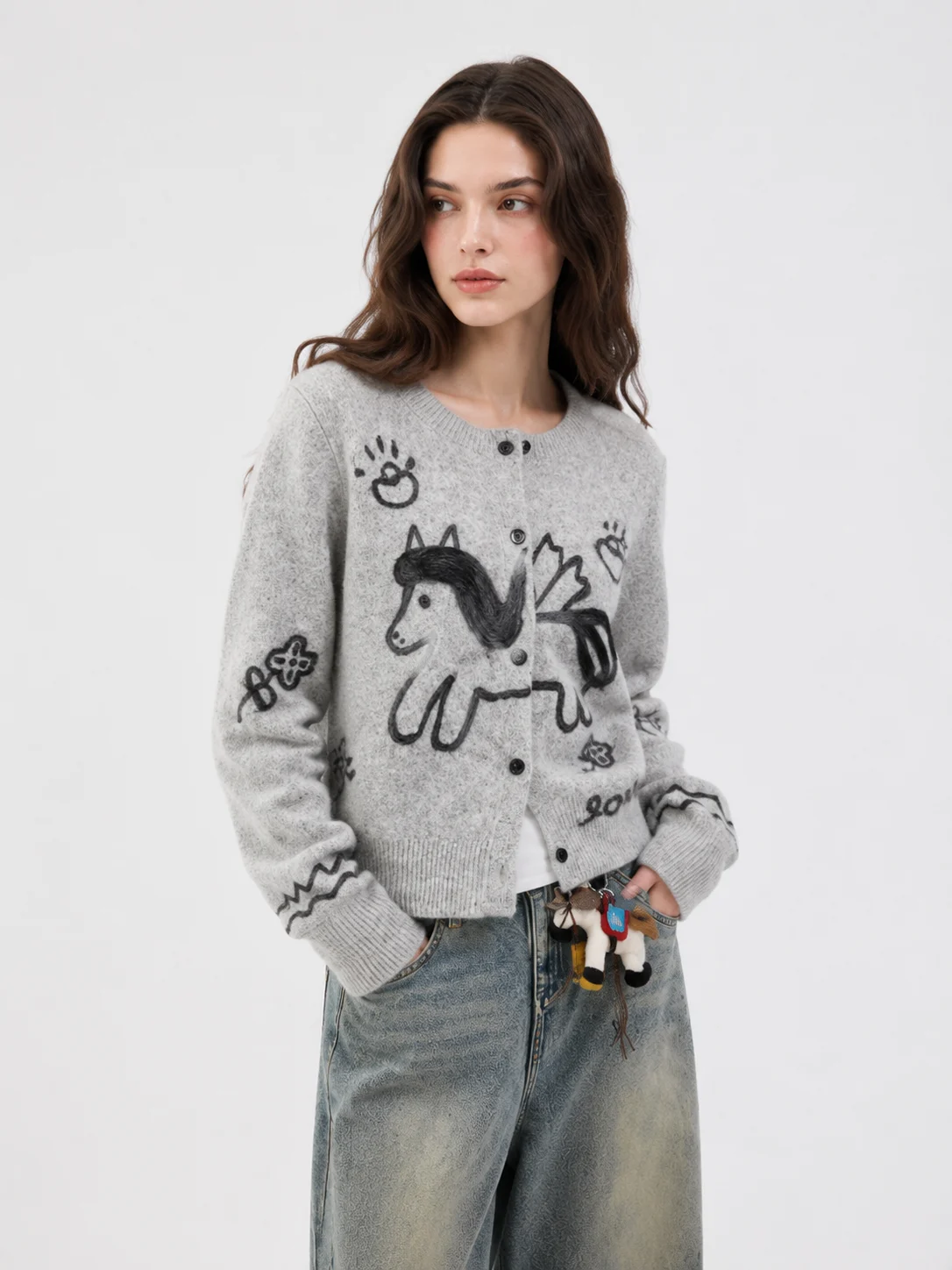
For cashmere vs wool sweaters for women, cashmere is usually softer, lighter and warmer per gram, while wool—especially Merino wool—is more durable, easier to source at scale and better for daily wear. Luxury buyers should choose by fiber grade, micron, staple length, ply, gauge, pilling performance, care expectations and wholesale positioning, not by fiber name alone.
Women choosing premium knitwear usually ask one practical question first: will the sweater still feel luxurious after five wears? The answer depends on fiber diameter, yarn twist, ply, knit gauge, finishing and care instructions.
For boutiques, private-label buyers and high-end wardrobes, the better choice is not always the most expensive fiber. A 100% cashmere cardigan can sell beautifully in a winter capsule, while a fine Merino wool crewneck may earn stronger repeat orders because it resists shape loss and works across more climates.
Key takeaways
– Cashmere is best for softness, light warmth and luxury gifting, but needs careful care.
– Merino wool is the safest premium wool for comfort without common “wool itch.”
– Lambswool and standard wool are more durable, but quality varies widely.
– Blends can reduce pilling, improve margins and support wholesale customization.
– For private label, evaluate fiber grade, ply, gauge, handfeel, pilling tests and shrinkage.
Cashmere vs Wool Sweaters for Women: The Core Difference
Cashmere vs wool sweaters for women is mainly a comparison between rare goat undercoat fibers and broader sheep-wool fibers, including Merino, lambswool and standard wool. Cashmere usually feels softer and lighter; wool usually gives better durability, elasticity and commercial versatility.
Cashmere comes from the soft undercoat of cashmere goats, commonly sourced from Inner Mongolia, Mongolia and parts of China. Fine cashmere fibers are prized because they can be thin, lofty and warm without heavy weight.
Wool is a wider category. Merino wool comes from Merino sheep and is known for fine, smooth fibers. Lambswool comes from a sheep’s first shearing and can be soft but more textured. Standard wool may be warm and durable, but it can feel rough if fiber diameter is high.
For women’s sweaters, this distinction matters at the skin level. A fitted turtleneck worn directly on the neck needs a softer fiber than an oversized cable pullover layered over a shirt. That is why many luxury collections include several fiber options.
| Factor | Cashmere | Merino Wool | Lambswool / Standard Wool | Best Buyer Fit |
|---|---|---|---|---|
| Softness | Excellent | Very good | Medium to good | Sensitive skin, luxury customers |
| Warmth per weight | Excellent | Very good | Good to excellent | Cold climates, travel capsules |
| Durability | Medium | High | High | Daily wear, wholesale basics |
| Pilling risk | Medium to high if low grade | Low to medium | Medium | Depends on yarn and finishing |
| Price level | High | Medium to high | Low to medium | Luxury vs volume programs |
| Care | Delicate | Easier | Easier | Depends on customer lifestyle |
| Luxury perception | Very high | High | Medium | Premium boutiques, gifting |
A Reddit thread such as “Cashmere or Wool for a treat?” in r/femalefashionadvice often reflects the same split: wearers love cashmere softness but warn about pilling and delicate care. Community views are useful, but commercial buyers also need test reports, yarn specifications and production consistency.
Cashmere vs Merino Wool: Warmth, Itch and Durability
Cashmere is often warmer than wool at the same garment weight because fine cashmere fibers have high loft and trap air efficiently. Merino wool, however, often performs better for frequent wear because it has stronger elastic recovery, better shape retention and easier care.
Some brands claim cashmere is several times warmer than wool, but those claims rarely use one universal test method. A safer buying statement is: high-quality cashmere provides excellent warmth-to-weight, while Merino wool provides strong warmth with better resilience for active use.
The “cashmere vs wool itchy” question usually comes from customers who have worn coarse wool near the neck or wrists. Itch is linked to fiber diameter, stiffness, yarn hairiness and skin sensitivity. Fine cashmere is usually the least itchy option, but extra-fine Merino wool can be smooth enough for direct skin contact and may outperform low-grade cashmere over time.
Comfort ranking for most women:
- Grade A or long-staple cashmere — softest, most luxurious, best for premium gifting.
- Extra-fine Merino wool — smooth, breathable, stronger for repeat wear.
- Cashmere-Merino blend — soft with improved recovery and cost control.
- Lambswool — warm and textured, best for outer layers.
- Coarse standard wool — durable but riskier for direct skin contact.
Durability is where many premium buyers make costly mistakes. A sweater can feel beautiful in a showroom and still fail after ten wears if the yarn uses short fibers or the knit structure is too loose. Pilling is not always a sign of fake cashmere; it can happen when fine fibers rub against bags, coats or desks.
Merino wool tends to resist shape loss better than cashmere because wool has natural crimp and elastic recovery. For high-end women’s collections, blends can solve real commercial problems: a 90% wool and 10% cashmere sweater gains softer handfeel while holding sharper shape, while a 70% Merino and 30% cashmere cardigan can feel premium without reaching the highest cashmere price tier.
- 17.2 microns or finer is a common benchmark for premium Merino wool comfort, according to The Woolmark Company wool education and care guidance, 2025.
- 14–16 microns is often used by luxury mills to describe fine cashmere ranges, based on cashmere fiber grading materials used by textile suppliers in 2025.
- USD 4.8 billion was the estimated global cashmere clothing market size, according to Grand View Research cashmere clothing market data, 2024.
- USD 45.61 billion was the estimated global wool market size, according to Fortune Business Insights wool market research, 2024.
- Product quality and value proof remained central to fashion purchasing decisions, according to McKinsey & Company The State of Fashion 2025, 2025.
For wholesale planning, avoid ranking warmth by fiber name alone. Ask for garment weight, yarn count, ply, gauge and finishing. A 12-gauge cashmere sweater and a 7-gauge Merino sweater solve different merchandising problems.
How to Choose Cashmere vs Wool Sweaters for a Women’s Wholesale Line
Choosing cashmere vs wool sweaters for women in a wholesale line should be a structured sourcing process, not a mood-board decision. The expected outcome is a balanced assortment with clear price levels, reliable comfort, controlled pilling risk and materials that match the end customer’s lifestyle.
How to choose cashmere vs wool sweaters for a women’s wholesale line
Define the target customer and climate.
Choose cashmere for luxury softness and cold, dry markets; choose Merino wool for daily wear, travel and broader climate use.Set the price ladder.
Use pure cashmere as the hero tier, extra-fine Merino wool as the premium core tier and cashmere-wool blends as the value-luxury tier.Confirm exact fiber composition.
Ask whether the sweater is 100% cashmere, 100% Merino wool, lambswool, wool-cashmere blend or another luxury blend.Request micron, staple length, yarn count and ply.
Finer fibers usually feel softer; longer fibers usually pill less; two-ply yarn often gives better stability than loosely spun single-ply yarn.Match gauge to silhouette.
Use 12-gauge or 14-gauge knits for refined cardigans and office layers; use 5-gauge or 7-gauge knits for oversized pullovers and textured designs.Review finishing and test reports.
Excessive brushing can feel soft at first but may increase pilling. Ask for pilling, shrinkage, colorfastness and seam-strength results.Run a real wear test before bulk ordering.
Give samples to 5–10 users for two weeks and score softness, warmth, itch, pilling, shape recovery and care difficulty.
For private-label development, buyers can compare finished styles in the lpknit premium women’s sweater collection, review a comfort-driven Merino crewneck sweater or study a higher-luxury cashmere cardigan. If your brand needs exclusive yarn, fit, label or packaging decisions, contact lpknit for custom women’s cashmere sweater development.
2026 sourcing update
In 2026, luxury knitwear buyers are placing more pressure on suppliers to prove value, not simply label a garment “cashmere.” Yarn-cost volatility, stricter sustainability expectations and cautious retail inventory planning make specification control more important.
Three sourcing signals matter now:
- Yarn cost discipline: pure cashmere remains premium, so many brands are using Merino-cashmere blends to protect margin.
- Sustainability checks: buyers increasingly request traceability, care guidance and lower-return products.
- Private-label MOQ planning: boutiques often prefer smaller capsules with stronger reordering logic instead of broad, risky seasonal buys.
Best Use Cases by Customer, Climate and Price Point
The best material for women’s sweaters changes by customer profile, climate, styling need and retail price point. Cashmere is best for luxury softness, Merino wool is best for versatile premium daily wear, and blends are best for balancing margin, durability and handfeel.
| Use Case | Best Fiber Choice | Why It Works | Watch-Out |
|---|---|---|---|
| Executive office cardigan | 100% cashmere or cashmere-Merino | Soft, elegant, light warmth | Pilling at desk and bag contact points |
| Daily crewneck sweater | Extra-fine Merino wool | Durable, breathable, less delicate | Must avoid coarse fiber grades |
| Luxury gift program | Grade A cashmere | High perceived value | Needs premium packaging and care card |
| Boutique winter capsule | Wool-cashmere blend | Good margin and soft handfeel | Fiber ratio must be transparent |
| Travel wardrobe | Merino wool or cashmere-Merino | Packs well and resists odor better | Test wrinkle recovery |
| Statement pullover | Lambswool blend or wool-cashmere | Structure, texture, warmth | Can feel itchy on bare skin |
| Sensitive skin customer | Fine cashmere or extra-fine Merino | Lower itch risk | Avoid rough trims and tight necklines |
For a luxury retailer, “cashmere vs wool sweaters for women reddit” searches reveal a real concern: customers do not only compare warmth. They compare disappointment risk. Many shoppers fear paying cashmere prices for a sweater that pills quickly, stretches out or requires inconvenient care.
Assortment architecture matters. Put pure cashmere at the top of the range, Merino wool in dependable core colors, and blends in fashion colors or custom silhouettes. This gives the sales team a clear ladder: good, better and best.
Care, Pilling and Customization for Private Label Buyers
Proper care and correct customization can extend the life of cashmere, wool and Merino sweaters by reducing friction, shrinkage and fiber breakage. Premium women’s sweaters should be designed with realistic care habits, fit movement and customer expectations in mind.
Cashmere benefits from rest. Wearing the same cashmere cardigan three days in a row increases friction and pilling. Rotating it with a Merino sweater allows fibers to recover. Wool and Merino wool are more forgiving, but hot water, aggressive spin cycles and hanging storage can distort premium knitwear.
Care rules for women’s luxury sweaters:
- Wash inside out in cool water or follow dry-clean instructions.
- Use wool or cashmere detergent, not harsh enzyme detergent.
- Press water out with a towel; do not wring.
- Dry flat on a breathable surface.
- Remove pills with a cashmere comb or fabric shaver used lightly.
- Store folded with cedar or lavender protection.
The Woolmark Company care guidance provides useful education on wool washing, drying and garment maintenance. For brands, adding a care card to every premium sweater can reduce returns and protect customer satisfaction.
Customization is not only about color. It includes neckline, sleeve shape, body length, rib width, gauge, stitch pattern, label placement, buttons, embroidery and packaging. These details decide whether a sweater feels generic or boutique-ready.
For a high-end women’s capsule, consider:
- Fiber: 100% cashmere, extra-fine Merino wool or Merino-cashmere blend.
- Gauge: 12-gauge for refined cardigans; 7-gauge for heavier pullovers.
- Ply: Two-ply for better stability in premium basics.
- Palette: ivory, camel, charcoal, navy and soft seasonal colors.
- Testing: pilling, shrinkage, colorfastness and seam strength.
A balanced answer to “Wool or cashmere which is better” is simple: cashmere is better when the goal is luxury emotion and high-ticket appeal; wool, especially Merino wool, is better when the goal is dependable daily use, broader sizing and repeat wholesale volume.
For a stronger commercial program, request a private-label sweater sample pack or contact lpknit for cashmere and Merino wholesale development. Buyers can also compare texture-led pieces such as the oversized cable pullover when planning premium seasonal capsules.
FAQ: Cashmere vs Wool Sweaters for Women
Is cashmere warmer than wool for women’s sweaters?
Yes, cashmere is usually warmer than standard wool at the same weight because fine cashmere fibers trap air efficiently. However, a thick Merino wool or lambswool sweater can feel warmer than a thin cashmere knit.
Wool or cashmere: which is better?
Cashmere is better for softness, light warmth and luxury positioning. Wool is better for durability, elasticity and frequent wear. For most premium women’s assortments, the best answer is a mix of pure cashmere, Merino wool and blends.
Is cashmere less itchy than wool?
Yes, good cashmere is usually less itchy than standard wool because the fibers are finer and softer. Extra-fine Merino wool can also be very comfortable for women with sensitive skin.
Cashmere vs Merino wool: which should I buy?
Buy cashmere if you want maximum softness, gift appeal and a high-luxury feel. Buy Merino wool if you want breathable comfort, better durability and easier everyday wear.
Which sweater material pills less?
Merino wool usually pills less than low-grade cashmere because it has stronger elastic recovery. High-quality long-staple cashmere can perform well, but very soft brushed cashmere may pill faster.
What is best for wholesale women’s sweaters?
For wholesale, extra-fine Merino wool and cashmere blends often provide the best balance of comfort, durability and margin. Pure cashmere works best as a premium anchor product.
Conclusion: Choosing the Right Luxury Sweater Fiber
As a knitwear sourcing consultant with 12 years in women’s luxury sweater development, I have handled cashmere, Merino wool, lambswool and blended yarn samples across boutique and wholesale programs. My first-hand sourcing experience is separate from third-party evidence: in sample reviews, cashmere wins on soft luxury, Merino wool wins on dependable daily wear, and blends often create the strongest commercial result.
This recommendation aligns with verifiable market and technical sources: The Woolmark Company for wool education and care, ISO textile testing standards for repeatable textile testing, McKinsey & Company State of Fashion 2025 for fashion quality and value signals, Grand View Research for cashmere clothing market data, and Fortune Business Insights for wool market data.
For cashmere vs wool sweaters for women, do not choose by fiber name alone. Choose by customer lifestyle, climate, price point, gauge, ply, pilling performance and care expectations.
If you are building a premium women’s sweater line, lpknit can support high-end custom and wholesale development across cashmere, Merino wool and luxury blends. Explore the lpknit product collection or contact lpknit to request a private-label sweater sample pack for cashmere and Merino wholesale development.