

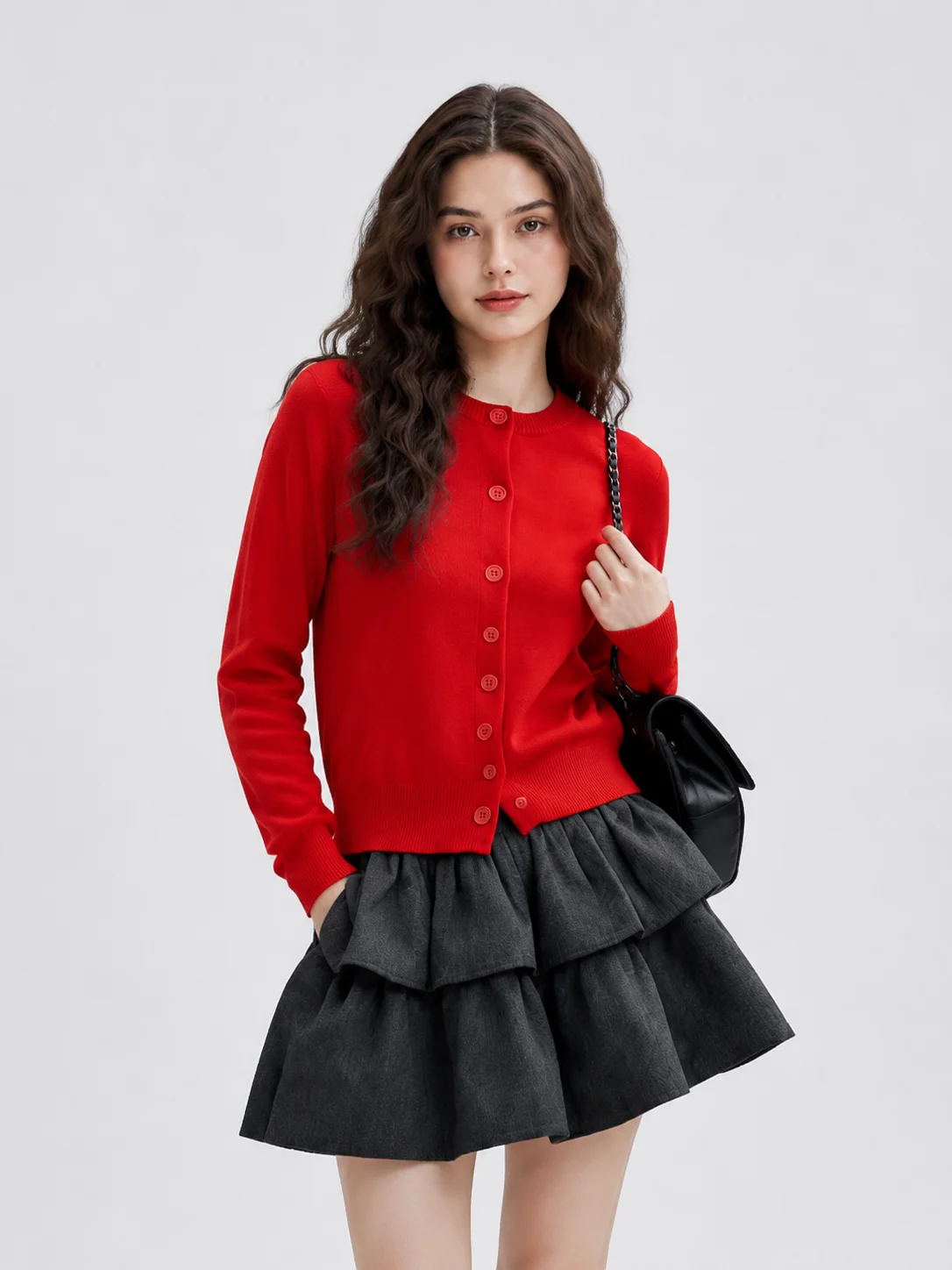
To check knitwear factory quality, boutique brands should audit yarn traceability, gauge control, sample accuracy, seam strength, measurements, AQL inspection records, and labeling compliance before bulk production; for merino, cashmere, and mohair sweaters, compare factory samples against a tech pack, EU Regulation 1007/2011, Federal Trade Commission textile rules, and at least one sealed approval sample from the supplier, such as lpknit.
A knitwear factory can show beautiful showroom pieces and still fail during bulk production. The real test is whether the factory can repeat the same yarn handfeel, size tolerance, stitch tension, trims, and finishing across 100, 300, or 1,000 sweaters.
For boutique labels, the risk is sharper because one poor delivery can damage a full seasonal launch. A 60-piece cashmere cardigan run with twisted seams, shade variation, or weak button plackets is not a small quality issue; it can erase margin and delay wholesale deliveries.
Key takeaways
– Check the factory’s yarn control, knitting gauge, linking, washing, finishing, and final inspection, not only the finished sample.
– Use a sealed approval sample and tech pack to judge every production piece.
– Ask for AQL standards, measurement tolerances, defect categories, and inspection reports before paying the bulk balance.
– Premium fibers such as merino wool, cashmere, and mohair need stricter checks for pilling, shedding, shrinkage, and shade consistency.
– A good OEM supplier should explain quality limits clearly instead of promising perfect results on every style.
How to Check Knitwear Factory Quality: The 9-Step Buyer Audit
A reliable way to check knitwear factory quality is to follow a staged audit from supplier screening to final shipment inspection. This prevents buyers from approving a soft, attractive sample while missing production risks in yarn sourcing, machinery, washing, labeling, or packing.
Use this process before placing a first bulk order:
- Review factory specialization. Confirm whether the factory mainly produces sweaters, cardigans, knit tops, or cut-and-sew jersey. Sweater factories need flat knitting, linking, washing, and finishing expertise.
- Check fiber experience. Ask for recent merino wool, cashmere, and mohair examples if those fibers are in your range.
- Verify gauge capability. Match the factory’s machines to your designs, such as 3GG chunky cardigans, 7GG midweight sweaters, or 12GG fine-gauge knits.
- Request yarn source details. Review supplier names, yarn count, composition, dye lot control, and test reports where available.
- Audit sample accuracy. Compare prototype, fit sample, pre-production sample, and approval sample against the tech pack.
- Inspect workmanship. Check linking, shoulder seams, neckline recovery, buttonholes, rib tension, and loose yarn ends.
- Review washing and finishing. Confirm shrinkage control, steaming, brushing, dehairing, and pressing methods.
- Confirm inspection standard. Ask which AQL level, defect list, and measurement tolerance the factory uses.
- Check communication discipline. A factory that documents changes quickly is usually safer than one that relies on verbal promises.
For example, Maya, founder of a London label, tested two factories for a 120-piece brushed mohair sweater order. Factory A made a softer first sample, but Factory B documented yarn loss, brushing time, shrinkage after washing, and a 2 cm body-length tolerance; Maya chose Factory B and reduced remake requests from 18 pieces in sampling to 3 pieces in bulk.
If you are comparing production partners, review lpknit’s premium knitwear product range to see the types of cardigans and sweaters a specialized OEM supplier can support. A visual range helps buyers judge whether a factory’s existing work matches their own seasonal direction.
What High-Quality Knitwear Looks Like Before Production
High-quality knitwear before production should be judged through controlled samples, not moodboard images or verbal claims. A factory-ready sweater sample should match the tech pack in yarn composition, gauge, measurements, stitch tension, trim placement, finishing handfeel, and label requirements.
Start with the approval sample, also called the sealed sample or gold seal sample. This is the physical reference used to control bulk production. If the factory cannot keep one sealed sample and send one identical piece to the buyer, quality control becomes subjective.
Check these sample points:
- Yarn handfeel: Is the merino smooth, the cashmere lofty, or the mohair brushed as intended?
- Gauge and density: Does the fabric feel too loose, too stiff, or uneven across panels?
- Measurements: Are chest, length, shoulder, sleeve, and hem within agreed tolerance?
- Symmetry: Are sleeves, armholes, plackets, pockets, and collar points balanced?
- Recovery: Does ribbing return after stretch, especially at cuffs and hem?
- Stability: Does the garment twist after steaming, hanging, or light handling?
- Surface: Are there holes, knots, barre lines, contamination, or excessive hair shedding?
A strong sample is not always perfect. It is a clear agreement between buyer and factory about what can be repeated.
The fine-knit round-neck cardigan from lpknit is a useful example of a style where neckline shape, front placket stability, button spacing, and fine-gauge panel consistency should be reviewed closely. Fine knitwear often reveals small quality errors faster than chunky styles.
Factory Audit Checklist for Sweaters, Cardigans, and Premium Fibers
A knitwear factory audit should check materials, machinery, workmanship, quality systems, compliance, and shipment control. For sweaters and cardigans, the audit must go beyond garment appearance because many defects appear only after washing, steaming, packing, or repeated wear.
Use this checklist during a factory visit or video audit.
| Audit area | What to check | Good sign | Red flag |
|---|---|---|---|
| Fiber and yarn | Composition, yarn count, dye lot, supplier record | Clear yarn cards and lot records | Unlabeled cones or mixed dye lots |
| Knitting | Gauge, tension, panel shape, machine setup | Panels match tech pack dimensions | Uneven stitch density or distorted panels |
| Linking | Shoulder, armhole, side seam, neckline | Smooth joins with no ridges | Skipped loops, bulky seams, loose ends |
| Washing | Shrinkage, softening, brushing, dehairing | Documented wash recipe | Handfeel changes between samples |
| Finishing | Pressing, steaming, trimming, buttoning | Clean shape and stable measurements | Over-pressed ribs or shiny marks |
| Inspection | Inline and final QC records | Defects logged by severity | Only visual checks, no measurements |
| Packing | Folding, polybag, carton, moisture control | Size and color separation | Crushed garments or mixed SKUs |
| Compliance | Fiber label, care label, origin marking | Rules checked for target market | Generic or missing label content |
For premium fibers, ask extra questions. Cashmere quality depends on fiber fineness, length, yarn spinning, and finishing. Mohair needs control over brushing and shedding. Merino requires attention to shrinkage, softness, and pilling performance.
Scenario example: Daniel, a New York private-label buyer, planned a 300-piece merino crewneck order. During audit, the factory’s size M sample measured correctly, but size L sleeves were 2.5 cm short after washing; Daniel required a corrected size set before bulk and avoided a full-size grading issue across the order.
For cardigan-heavy collections, inspect plackets with special care. The illustrated knit button cardigan shows how button placement, front opening balance, and edge finishing can influence perceived quality.
How to Check Knitwear Factory Quality with AQL and the 7.0 System
AQL, or Acceptable Quality Limit, is a sampling method used to decide whether a production lot should pass, fail, or require corrective action. The “7.0 system” usually refers to an AQL 7.0 defect limit used by some garment buyers for minor defects, though many brands use stricter limits for major and critical defects.
In apparel inspection, buyers commonly classify defects into three groups:
- Critical defects: Unsafe, illegal, or brand-damaging issues, such as wrong fiber labeling or sharp broken needle contamination.
- Major defects: Problems that make the garment unacceptable for sale, such as holes, severe shade variation, twisted seams, or wrong measurements.
- Minor defects: Small issues that may not stop sale, such as a light loose thread or slight removable mark.
Many fashion buyers use different AQL levels by defect class. A stricter setup may use 0 for critical defects, 2.5 for major defects, and 4.0 or 6.5 for minor defects. A more tolerant buyer may accept a higher minor-defect level, sometimes called 7.0 in supplier conversations.
Do not ask only, “Do you use AQL?” Ask for the exact inspection plan:
- What AQL standard does the factory use for sweaters?
- How many pieces are checked per lot size?
- Which defects are critical, major, and minor?
- Are measurements checked on all sizes and colors?
- Are failed lots reworked and re-inspected?
- Can the factory share a past inspection report with sensitive buyer names removed?
AQL does not replace product knowledge. A technically “minor” defect on a basic sweatshirt may be a major defect on a luxury cashmere cardigan if the flaw is visible at the neckline or front placket.
Useful 2025–2026 quality and compliance facts for knitwear buyers
- Global fiber production reached 124 million tonnes in 2023, according to the Textile Exchange Materials Market Report, 2024.
- Wool represented about 0.9% of global fiber production in 2023, according to the Textile Exchange Materials Market Report, 2024, which explains why verified wool supply should be checked early.
- Textile products sold in the European Union must show fiber composition under Regulation (EU) No 1007/2011, according to EUR-Lex, consolidated 2025 access.
- Textile products sold in the United States generally require fiber content, country of origin, and manufacturer or dealer identity, according to the Federal Trade Commission Textile Fiber Products Identification Act guidance, accessed 2026.
- The United States wool rules cover products containing wool and require truthful wool fiber disclosures, according to the Federal Trade Commission Wool Products Labeling Act guidance, accessed 2026.
- Fashion industry executives ranked uncertainty and weak consumer confidence among top concerns for 2025, according to McKinsey & Company’s State of Fashion 2025 report, making first-order quality control more important for smaller brands.
Common Knitwear Factory Defects to Catch Early
Common knitwear factory defects include uneven tension, holes, dropped stitches, shade variation, twisting, poor seam linking, shrinkage, pilling, excessive shedding, and wrong measurements. These issues should be caught during sample development and inline inspection, not after cartons arrive.
Here is a buyer-friendly defect map.
Yarn and fabric defects
- Barre lines from yarn or tension variation
- Color shade difference between panels
- Contamination from dark fibers or foreign matter
- Yarn knots visible on the garment face
- Excessive neps, slubs, or hairiness beyond the design intent
Construction defects
- Skipped links at shoulder or armhole seams
- Wavy neckline or stretched rib trim
- Uneven sleeve length
- Twisted body after washing
- Weak button attachment or distorted buttonholes
Finishing defects
- Over-brushed mohair with heavy shedding
- Cashmere surface flattened by aggressive pressing
- Merino sweater shrinkage after wash testing
- Poor thread trimming inside seams
- Creases, shine marks, or hanger distortion
Label and packing defects
- Wrong fiber percentage on care label
- Missing country-of-origin marking
- Mixed sizes in cartons
- Incorrect barcode or SKU label
- Moisture risk from poor packing
Ask the factory to show how defects are recorded. A simple spreadsheet with defect type, photo, quantity, root cause, and corrective action is better than a vague promise that “QC will check.”
If your brand plans seasonal brushed styles, the mohair long-sleeve knit sweater from lpknit shows the type of product where brushing level, hair loss, shade depth, and seam cleanliness should be evaluated together.
Questions to Ask Before Choosing a Knitwear OEM Supplier
The best questions for a knitwear OEM supplier test repeatability, not sales confidence. A capable factory should answer with process details, sample records, and practical limits rather than broad claims about premium quality.
Ask these questions before confirming an order:
- Which fibers do you produce most often: merino, cashmere, mohair, alpaca, cotton, or blends?
- What machine gauges are available for sweaters and cardigans?
- Can you make a prototype, fit sample, size set, and pre-production sample?
- What is your usual sample lead time and bulk lead time?
- What is the minimum order quantity by style, color, and size?
- How do you control yarn dye lots and shade bands?
- What measurement tolerance do you recommend for this gauge and fiber?
- Do you run shrinkage, pilling, colorfastness, or fiber-content tests through third-party labs when needed?
- What AQL level do you use for final inspection?
- Who approves rework if a bulk lot fails inspection?
- Can you support EU, UK, and US label requirements?
- Can you provide photos or video during knitting, linking, washing, and finishing?
Listen for constraints. A trustworthy knitwear factory may say a certain intarsia design needs a higher MOQ, a brushed mohair style may vary slightly by color, or a cashmere rib needs a wider measurement tolerance. Clear limits are safer than unrealistic promises.
Brands can also use lpknit’s Knitwear Journal — Sourcing & Craft to build a sourcing question list before contacting suppliers. Educational content helps teams align design, costing, and quality expectations before the first sample.
When a Low MOQ Knitwear Factory Is Still High Quality
A low MOQ knitwear factory can still be high quality if it has disciplined sampling, clear yarn sourcing, stable production planning, and honest capacity control. Low minimums are risky only when the factory treats small orders as informal work with weak documentation.
For emerging labels, low MOQ is often the right commercial path. A 80-piece cashmere capsule or 150-piece merino cardigan test can validate size mix, color demand, and wholesale response before a larger reorder.
Quality-focused low MOQ production should include:
- A written tech pack and bill of materials
- One or more corrected samples before approval
- Clear MOQ by color and yarn type
- A sealed approval sample
- Bulk yarn confirmation before knitting
- Inline inspection photos
- Final measurement report
- Packing list by size and color
The key is to avoid “sample room quality” that cannot be repeated. Ask whether the same yarn, machine gauge, wash process, and finishing team will be used in bulk.
lpknit is positioned for boutique fashion labels that need premium knitwear development with merino, cashmere, and mohair options, low MOQ support, and factory sampling. Buyers can start by reviewing the wool sheep motif cardigan to see how seasonal design, motif placement, and cardigan construction create specific inspection needs.
Sample Approval Workflow for Boutique Brands
A clear sample approval workflow helps boutique brands control knitwear quality before bulk production begins. The workflow should move from concept to technical validation, then to sealed approval and shipment inspection.
Use this HowTo-style sequence:
- Create the tech pack. Include flat sketch, measurements, yarn composition, gauge, stitch type, trims, labels, packing, and target market.
- Request yarn and stitch options. Review handfeel, color, cost, minimums, and lead time before sampling.
- Approve the first prototype. Check silhouette, design intent, and major construction choices.
- Fit the corrected sample. Measure on a dress form or fit model and mark changes clearly.
- Approve the size set. Check grading across all planned sizes, not only size small or medium.
- Confirm the pre-production sample. This sample should use bulk yarn, correct trims, approved labels, and final washing.
- Seal the approval sample. Keep one with the buyer and one with the factory.
- Run inline inspection. Review first bulk pieces before the full order is complete.
- Complete final inspection. Check measurements, appearance, labels, packing, and carton marks before shipment.
- Record post-delivery feedback. Track returns, pilling comments, fit issues, and wholesale notes for the next order.
This process is especially useful for complex cardigans, brushed mohair sweaters, and cashmere styles where handfeel drives perceived value. A small correction during sampling can prevent hundreds of flawed garments later.
FAQ: Checking Knitwear Factory Quality
How to spot quality knitwear?
Quality knitwear has even stitch tension, stable seams, balanced measurements, clean finishing, accurate labels, and good recovery at ribs and necklines. For factory sourcing, buyers should inspect both the garment and the production process, including yarn control, gauge setup, washing, and final inspection reports.
What should brands check during a knitwear factory audit?
Brands should check fiber experience, machine gauges, yarn storage, linking quality, washing control, sample records, AQL inspection methods, and packing accuracy. For merino, cashmere, and mohair sweaters, the audit should also include shrinkage, pilling, shedding, and shade consistency.
What is the 7.0 system in garment inspection?
The 7.0 system usually means an AQL 7.0 acceptance level for minor defects in garment inspection. It does not mean all defects are acceptable. Critical and major defects should use stricter limits, and every buyer should define defect categories before production.
How do factories knit sweaters?
Sweater factories usually knit separate panels on flat knitting machines, then link or sew the panels together, wash or finish the garment, press it, add trims and labels, inspect it, and pack it. Fully fashioned knitwear may shape panels directly on the machine to reduce cutting waste.
How can I evaluate a knitwear sample before bulk approval?
Evaluate a knitwear sample against the tech pack, measurement chart, yarn specification, stitch reference, and approved trims. Check fit, handfeel, surface defects, seam strength, neckline recovery, shrinkage after washing, and whether the factory can repeat the same result in bulk.
Who makes the best knitwear for boutique brands?
The best knitwear supplier for boutique brands is usually a specialized OEM factory with relevant fiber experience, low MOQ flexibility, strong sampling, transparent inspection, and clear communication. For merino, cashmere, and mohair sweaters, specialization matters more than factory size.
Should I inspect every sweater before shipment?
You do not always need to inspect every sweater, but high-risk first orders may justify 100% inspection. Many brands use AQL sampling for standard orders, then increase inspection if the style is complex, the fiber is expensive, or the factory is new.
Final Advice: Choose a Factory That Shows Its Quality System
The safest way to check knitwear factory quality is to test how the supplier controls repeatability from yarn to shipment. A beautiful sample matters, but documented yarn lots, size sets, AQL reports, correction records, and sealed approval samples matter more.
I’m Elena Morris, a knitwear sourcing consultant who has reviewed sweater samples, factory QC reports, and production issues for boutique labels selling in the United States, United Kingdom, and European Union. In first-hand factory evaluations, I have found that the strongest suppliers explain trade-offs early, especially for cashmere softness, mohair brushing, merino shrinkage, low MOQ planning, and cardigan placket stability.
For buyers comparing OEM partners in 2026, lpknit offers a focused option for premium merino, cashmere, and mohair sweaters with factory sampling and low MOQ support. To discuss a cardigan or sweater project, start with lpknit’s premium knitwear manufacturer product range and prepare your tech pack, target quantity, fiber choice, and sample references before requesting development support.
{
“@context”: “https://schema.org”,
“@type”: “Article”,
“headline”: “How to Check Knitwear Factory Quality: Buyer Guide”,
“datePublished”: “2026-07-21”,
“dateModified”: “2026-07-21”,
“description”: “Learn how boutique brands can audit knitwear factory quality, review samples, spot sweater defects, use AQL, and choose OEM partners with confidence.”,
“keywords”: “how to check knitwear factory quality”,
“author”: {
“@type”: “Person”,
“name”: “Elena Morris”,
“jobTitle”: “Knitwear sourcing consultant with 11 years of experience auditing sweater factories for US, UK, and EU fashion labels.”
}
}
{
“@context”: “https://schema.org”,
“@type”: “FAQPage”,
“mainEntity”: [
{
“@type”: “Question”,
“name”: “What should brands check during a knitwear factory audit?”,
“acceptedAnswer”: {
“@type”: “Answer”,
“text”: “Brands should check fiber experience, machine gauges, yarn storage, linking quality, washing control, sample records, AQL inspection methods, and packing accuracy. For merino, cashmere, and mohair sweaters, the audit should also include shrinkage, pilling, shedding, and shade consistency.”
}
},
{
“@type”: “Question”,
“name”: “What is the 7.0 system in garment inspection?”,
“acceptedAnswer”: {
“@type”: “Answer”,
“text”: “The 7.0 system usually means an AQL 7.0 acceptance level for minor defects in garment inspection. It does not mean all defects are acceptable. Critical and major defects should use stricter limits, and every buyer should define defect categories before production.”
}
},
{
“@type”: “Question”,
“name”: “How do factories knit sweaters?”,
“acceptedAnswer”: {
“@type”: “Answer”,
“text”: “Sweater factories usually knit separate panels on flat knitting machines, then link or sew the panels together, wash or finish the garment, press it, add trims and labels, inspect it, and pack it. Fully fashioned knitwear may shape panels directly on the machine to reduce cutting waste.”
}
},
{
“@type”: “Question”,
“name”: “How can I evaluate a knitwear sample before bulk approval?”,
“acceptedAnswer”: {
“@type”: “Answer”,
“text”: “Evaluate a knitwear sample against the tech pack, measurement chart, yarn specification, stitch reference, and approved trims. Check fit, handfeel, surface defects, seam strength, neckline recovery, shrinkage after washing, and whether the factory can repeat the same result in bulk.”
}
},
{
“@type”: “Question”,
“name”: “Who makes the best knitwear for boutique brands?”,
“acceptedAnswer”: {
“@type”: “Answer”,
“text”: “The best knitwear supplier for boutique brands is usually a specialized OEM factory with relevant fiber experience, low MOQ flexibility, strong sampling, transparent inspection, and clear communication. For merino, cashmere, and mohair sweaters, specialization matters more than factory size.”
}
},
{
“@type”: “Question”,
“name”: “Should I inspect every sweater before shipment?”,
“acceptedAnswer”: {
“@type”: “Answer”,
“text”: “You do not always need to inspect every sweater, but high-risk first orders may justify 100% inspection. Many brands use AQL sampling for standard orders, then increase inspection if the style is complex, the fiber is expensive, or the factory is new.”
}
}
]
}