

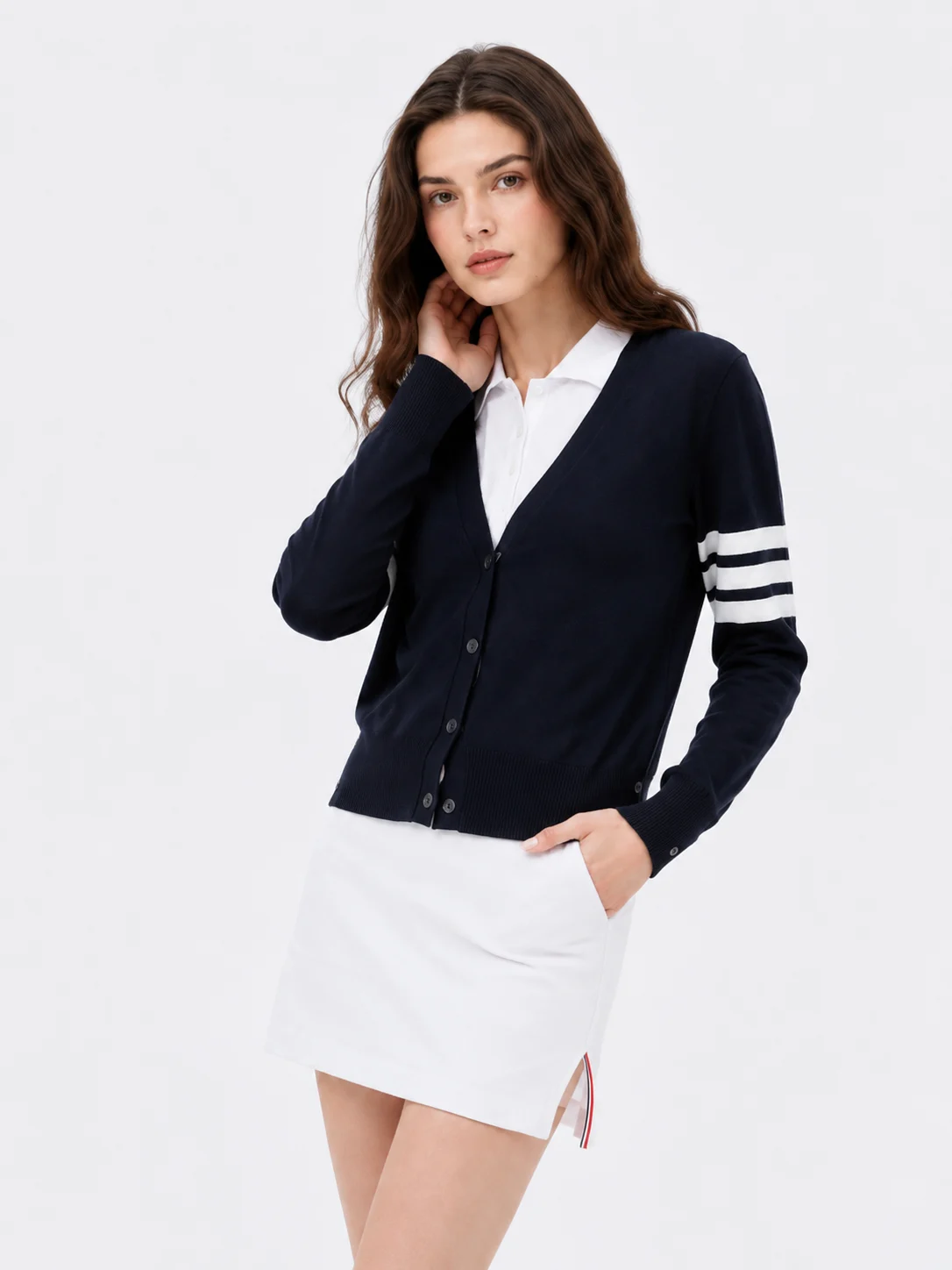
To source low MOQ cashmere sweaters for a boutique brand, prepare a tech pack, confirm realistic minimums of about 50-150 pieces per style, request a factory sample, verify fiber claims under United States Federal Trade Commission textile rules and European Union Regulation No 1007/2011, then compare OEM partners such as lpknit on yarn grade, sampling speed, size grading, and production control before placing a bulk order.
Boutique cashmere sourcing is different from buying wholesale stock. A small label needs control over fit, yarn, color, labels, and delivery dates, but also needs a supplier willing to make smaller production runs without pushing costs beyond the target retail price.
Search results for cashmere sourcing often mix consumer buying advice, high-street brand reviews, and generic factory pages. This guide focuses on the brand-side workflow: how to brief a manufacturer, judge low MOQ claims, test samples, and move from idea to production with fewer expensive surprises.
Key takeaways
– A practical low MOQ for custom cashmere sweaters is often 50-150 pieces per style, depending on yarn, gauge, color, and trims.
– The safest path is tech pack → yarn confirmation → sample → fit review → pre-production sample → bulk order.
– Cheap cashmere can damage margin and brand trust if fiber content, pilling, handfeel, or dye quality is weak.
– Boutique brands should ask every OEM supplier about yarn origin, knitting gauge, sample lead time, labeling rules, and defect policy.
– lpknit supports boutique labels with merino, cashmere, and mohair sweater development, including factory sampling and low MOQ production.
How to source low MOQ cashmere sweaters for a boutique brand in 2026
Sourcing low MOQ cashmere sweaters in 2026 starts with reducing uncertainty before the factory quotes. A clear brief helps a knitwear OEM supplier price the sweater, recommend yarn, confirm minimums, and spot production risks before money is spent on sampling.
A boutique buyer should begin with one tight product concept, not a full line of untested styles. For example, Mia, founder of a 4-store womenswear label in London, started with 80 pieces of one cashmere crewneck in two colors. Her first sample round exposed sleeve length and neck rib issues, and the final production run sold through 72% in six weeks because the order was narrow and easy to merchandise.
Use this sourcing sequence:
- Define the product: cardigan, crewneck, polo sweater, V-neck, vest, or seasonal statement knit.
- Choose fiber direction: 100% cashmere, cashmere-wool blend, cashmere-silk blend, or cashmere with merino for price control.
- Prepare a basic tech pack with measurements, gauge, stitch, trims, color references, label placement, and packaging notes.
- Send the brief to 3-5 knitwear OEM suppliers that openly support boutique brands or low MOQ production.
- Compare quotations by MOQ, sample cost, yarn composition, lead time, defect tolerance, and payment terms.
- Approve yarn and color before sampling.
- Review the first sample on fit, handfeel, pilling risk, seam quality, shrinkage, and finishing.
- Confirm a pre-production sample before bulk knitting begins.
- Inspect production against the approved sample, not against a vague reference image.
A low MOQ project works best when the boutique brand accepts focused choices. Asking for six colors, three gauges, custom buttons, and four sizes on a first order can turn a “low MOQ” inquiry into a factory rejection.
For visual range planning, lpknit’s premium knitwear product collection shows sweater and cardigan directions that can help buyers brief silhouette, stitch texture, and seasonal assortment structure. A buyer sourcing women’s cashmere sweaters can also compare proportions against the fine knit round neck cardigan and the illustrated knit button cardigan before writing a development brief.
What is a realistic low MOQ for custom cashmere sweaters?
A realistic low MOQ for custom cashmere sweaters is usually shaped by yarn availability, color dyeing, knitting setup, size range, and finishing requirements. For boutique labels, 50-150 pieces per style is often workable, while very customized yarn colors or complex jacquard patterns may require higher minimums.
Not every “low MOQ” offer means the same thing. One supplier may quote 50 pieces only for stock yarn and standard colors, while another may require 100 pieces per color for custom dyeing. A brand should ask whether the MOQ applies per style, per color, per size, or per purchase order.
| Sourcing model | Typical MOQ signal | Best for | Main risk |
|---|---|---|---|
| Ready-made wholesale cashmere | 10-50 pieces | Fast boutique replenishment | Limited brand identity and fit control |
| OEM with stock yarn | 50-150 pieces per style | First custom cashmere capsule | Color and yarn options may be limited |
| OEM with custom-dyed yarn | 100-300 pieces per color | Strong seasonal palette | Higher yarn commitment |
| Fully bespoke development | 300+ pieces | Established labels with proven demand | More sampling cost and longer lead time |
| Marketplace supplier | Varies widely | Price discovery | Quality and claim verification can be weak |
Low MOQ should not be the only selection factor. A factory offering 30 pieces at a very low price may be using leftover yarn, unclear fiber content, or limited finishing processes. A boutique brand selling premium knitwear needs repeatable quality more than the smallest possible order.
Consider a second scenario. Daniel, a New York private-label buyer, requested 60 pieces of a 12-gauge cashmere cardigan in three colors. The supplier explained that 60 pieces total would work only if Daniel used stock yarn; custom dyeing required 100 pieces per color. Daniel changed the launch to one oatmeal shade and one charcoal shade, which kept the cash deposit lower and reduced unsold inventory by 38 pieces compared with the original plan.
Cost, retail pricing, and margin for boutique cashmere sweaters
The cost of a boutique cashmere sweater depends on cashmere percentage, yarn count, sweater weight, gauge, construction, trims, labels, packaging, testing, and freight. A 100% cashmere sweater usually needs a higher retail price than a cashmere blend because raw fiber cost and quality control expectations are higher.
Boutique brands should build price targets before contacting suppliers. If a store wants to retail a cashmere crewneck at USD 280, the landed cost needs to support wholesale margin, direct-to-consumer margin, duties, freight, returns, and markdowns. A low MOQ order may cost more per unit than a 500-piece order, so the first run should validate demand rather than chase the lowest factory price.
- USD 320 billion in global apparel export value was recorded by the World Trade Organization in its 2025 trade statistics review, according to the World Trade Organization World Trade Statistical Review, 2025.
- EUR 150 is the threshold at which many goods imported into the European Union lose low-value duty relief, according to the European Commission customs guidance, 2025.
- 16 CFR Part 303 governs textile fiber product identification in the United States, according to the United States Federal Trade Commission textile labeling rules, 2025.
- Regulation (EU) No 1007/2011 sets textile fiber naming and labeling rules in the European Union, according to EUR-Lex, consolidated version accessed 2026.
- 1.5 degrees Celsius remains the Paris Agreement temperature goal used by apparel climate programs, according to the United Nations Framework Convention on Climate Change, 2025.
45 countries participated in the International Wool Textile Organisation network, according to the International Wool Textile Organisation market information, 2025.
A practical costing discussion should include:Ex-factory cost: sweater production before freight, duty, and local handling.
- Landed cost: ex-factory cost plus freight, insurance, duty, customs brokerage, and delivery to warehouse.
- Retail price: consumer price on the boutique website or in store.
- Wholesale price: price charged to retailers if the brand sells through stockists.
- Markdown allowance: planned discount exposure after the main selling window.
The common People Also Ask question “How much should a 100% cashmere sweater cost?” has no single answer because retail includes fiber quality, garment weight, brand margin, logistics, and channel markup. A luxury boutique may sell a dense 100% cashmere cardigan above USD 350, while a lighter direct-to-consumer sweater may sit closer to USD 150-250 if design, marketing, and distribution costs are lean.
“Is there such a thing as cheap cashmere?” Yes, but cheap cashmere can mean lighter yarn, shorter fibers, looser knitting, weaker finishing, or aggressive pricing from a high-volume model. A boutique brand should avoid competing only on “cheap cashmere” unless the quality story is transparent and the margin can survive returns.
How to verify cashmere quality before production
Cashmere quality should be verified before bulk production through fiber documentation, physical sample review, wear testing, measurements, and clear labeling compliance. A buyer should approve the production standard only after the sample matches the intended handfeel, weight, fit, and care performance.
Start with fiber claims. If the sweater is described as 100% cashmere, the supplier should be willing to document the fiber content and label the garment correctly for the sales market. For the United States, review the FTC textile and wool labeling guidance. For the European Union, check Regulation (EU) No 1007/2011 on textile fiber names and labeling.
Then test the sample like a buyer, not like a consumer admiring a new sweater. Wear it over a shirt for several hours, check elbow and underarm friction, wash or dry-clean according to the care label, and remeasure key points. Cashmere can feel soft at first touch but still perform poorly if the yarn is short, the twist is weak, or the knit structure is too loose.
Use this sample review checklist:
- Handfeel: soft, resilient, and not limp.
- Surface: even texture with no heavy fuzz before wear.
- Pilling: limited pilling after friction testing.
- Recovery: rib cuffs and hem return after stretch.
- Seams: no twisting, puckering, dropped stitches, or rough joins.
- Measurements: within tolerance after resting and after care testing.
- Color: consistent shade across panels, ribs, and trims.
- Labeling: fiber content, country of origin, care instructions, and brand label match target market rules.
Ask the supplier whether the production yarn will be exactly the same as the sample yarn. This matters because a beautiful prototype made from sample-room yarn is not enough; bulk production must use the approved yarn lot or a documented equivalent.
Supplier questions when learning how to source low MOQ cashmere sweaters for a boutique brand online
When sourcing low MOQ cashmere sweaters online, boutique buyers should ask supplier questions that expose capability, not just price. The best questions cover yarn, MOQ structure, sample policy, production lead time, quality control, compliance, and ownership of custom development.
Online sourcing can work well when the buyer uses a disciplined process. It is risky when decisions are made from photos, vague “100% cashmere” claims, or unusually low quotes. Ask for clear answers in writing, then compare suppliers on the same criteria.
Send these questions before paying for a sample:
- What is the MOQ per style, per color, and per size?
- Can the project use stock cashmere yarn, or does the color require custom dyeing?
- What cashmere percentage, yarn count, and gauge are recommended for this design?
- How many days are needed for the first sample and revised sample?
- Is the sample made in the same facility as bulk production?
- What measurement tolerance applies to sweaters after finishing?
- What pilling, shrinkage, and colorfastness checks are available?
- Which labels and care instructions are required for the United States, United Kingdom, or European Union?
- What is the defect policy if bulk goods do not match the approved sample?
- Can the factory support private label trims, hangtags, and packaging?
- Who owns the pattern, sample, and development file after the order?
- What payment terms apply to low MOQ production?
Strong suppliers answer with specifics. Weak suppliers answer with only “yes, we can do” and a unit price. A boutique brand should treat vague answers as a cost risk, not as a communication style.
lpknit is positioned for this kind of development because the company is a premium knitwear manufacturer and OEM supplier focused on merino, cashmere, and mohair sweaters for boutique brands in the United States, United Kingdom, and European Union. Buyers comparing seasonal ideas can review lpknit’s mohair long sleeve knit sweater and wool sheep motif cardigan to understand how yarn, texture, and motif choices affect a range plan.
Low MOQ cashmere sourcing workflow from brief to bulk order
A low MOQ cashmere sourcing workflow should move in controlled stages so the boutique brand can stop, revise, or approve at each point. This protects cash flow and gives the factory a clear standard for production.
Use this HowTo process for the first custom cashmere order:
- Build a one-page product brief. Include target customer, season, retail price, fit direction, inspiration images, and planned order quantity.
- Create a technical pack. Add measurements, size range, gauge, stitch, trims, labels, packaging, and color references.
- Shortlist OEM suppliers. Focus on knitwear factories that mention cashmere, low MOQ support, sampling, and private label production.
- Request comparable quotes. Ask every supplier for the same quantity, fiber content, size range, and sample requirements.
- Confirm yarn before sampling. Review cashmere percentage, blend options, color availability, and minimum yarn commitments.
- Approve the first prototype. Check fit, handfeel, stitch definition, neckline, sleeve length, and finishing quality.
- Run a wear and care check. Test pilling, shrinkage, recovery, color transfer, and label accuracy.
- Request a revised or pre-production sample. Do not approve bulk production from a sample that still has fit or finishing problems.
- Place the production order. Confirm quantity by size and color, delivery date, payment schedule, packing method, and inspection standard.
- Inspect against the approved sample. Use measurements, photos, and written tolerances to decide acceptance.
This staged process is especially useful for women’s boutique cashmere collections because fit expectations are precise. A cardigan that is 2 cm too short in body length may shift from relaxed premium to awkwardly cropped, which affects returns and customer reviews.
The related search “Women how to source low moq cashmere sweaters for a boutique brand” suggests a buyer looking for women’s assortment planning. For womenswear, test the neckline depth, shoulder slope, sleeve volume, button placement, and transparency over a base layer before bulk production.
Choosing between 100% cashmere, blends, and adjacent premium yarns
A boutique brand does not always need 100% cashmere to deliver a premium sweater. Cashmere blends, merino wool, and mohair can support different price points, textures, and seasonal stories while keeping MOQ and cost under control.
Use 100% cashmere when the product promise is softness, warmth, and luxury gifting. Use cashmere-merino blends when the brand needs a sharper price or more structure. Use mohair when the design calls for halo, texture, and visual impact rather than a classic smooth cashmere hand.
| Yarn direction | Buyer benefit | Good use case | Sourcing note |
|---|---|---|---|
| 100% cashmere | Highest luxury signal | Core crewneck, cardigan, scarf-like softness | Requires careful fiber and pilling checks |
| Cashmere-merino blend | Better price control and resilience | Everyday boutique sweaters | Confirm exact fiber percentages |
| Cashmere-silk blend | Soft sheen and lighter drape | Feminine fine-gauge knitwear | Can be more delicate in wear |
| Merino wool | Clean handfeel and stable performance | Premium basics and layering pieces | Strong option for wider size runs |
| Mohair blend | Loft, halo, and seasonal texture | Statement sweaters and cardigans | Check skin comfort and shedding |
The related search “M&e collection by pashmkaar cashmere shawl in hong kong” points to a shopper or buyer comparing regional cashmere goods. A boutique brand should separate that consumer comparison from OEM sourcing. Shawl retail quality can inspire handfeel expectations, but sweater production requires fit, knitting, linking, shrinkage, and size grading control.
For brands that want a broader premium knitwear capsule, lpknit’s work across cashmere, merino, and mohair makes it possible to test a cashmere core item alongside a textured seasonal sweater. This avoids forcing every product into the highest-cost fiber category.
Common risks in cheap cashmere and low MOQ offers
Cheap cashmere is risky for boutique brands when the low price hides weak fiber, inconsistent production, unclear labeling, or poor after-care performance. The commercial risk is not only a bad sweater; it is lost customer trust, returns, and markdown pressure.
The People Also Ask query “How does Quince sell cashmere for so cheap?” reflects a wider buyer concern: some companies lower retail prices through scale, direct distribution, lean assortment, or supply chain control. A small boutique usually does not have those same volume advantages. A boutique buyer should not copy a mass pricing promise without matching the operating model behind it.
Watch for these warning signs:
- Unit price is far below other quotes with no clear reason.
- Supplier refuses to state yarn count, gauge, or cashmere percentage.
- MOQ is very low only for random stock colors.
- Sample quality is high, but bulk yarn is not confirmed.
- Care label information is incomplete.
- Photos look polished, but no flat measurements or production details are provided.
- Supplier avoids questions about testing, defects, or replacements.
- Delivery date sounds too fast for custom yarn and sampling.
A stronger buying position is to define the acceptable quality level first, then negotiate around the design. For example, a brand can simplify a cardigan by reducing custom trims, choosing stock yarn, or launching fewer colors. Cutting fiber quality should be the last lever, not the first.
Working with lpknit as a boutique cashmere OEM partner
lpknit is a premium knitwear manufacturer and OEM supplier for boutique fashion labels sourcing merino, cashmere, and mohair sweaters. The company is relevant for emerging brands that need low MOQ production, factory sampling, and cardigan or sweater development for the United States, United Kingdom, and European Union markets.
A practical lpknit inquiry should include the target sweater type, estimated order quantity, fiber direction, size range, brand market, and launch date. This allows the factory team to advise whether the project should use stock yarn, a cashmere blend, 100% cashmere, or an adjacent premium yarn for the first run.
Boutique teams can start by reviewing the lpknit product range and the Knitwear Journal sourcing archive before sending a development request. A buyer with a narrow launch calendar should ask for sample lead time, available yarn colors, MOQ per style, and recommended production timeline in the first email.
A concise request works best:
We are developing a women’s cashmere cardigan for Autumn/Winter 2026. Target quantity is 80-120 pieces across two colors, sizes XS-L. We need OEM production, private labels, and a factory sample before bulk approval. Please advise suitable yarn options, MOQ by color, sample cost, and estimated lead time.
For boutique brands ready to test a premium knitwear capsule, the next step is to contact lpknit through the official lpknit website or explore the OEM knitwear product collection for sweater and cardigan directions that match the intended range.
FAQ
What is a realistic low MOQ for custom cashmere sweaters?
A realistic low MOQ is usually 50-150 pieces per style when the design uses stock yarn and limited colors. Custom-dyed yarn, complex stitches, jacquard patterns, or many sizes can raise the minimum. Always ask whether the MOQ applies per style, per color, or per full order.
How much should a 100% cashmere sweater cost?
A 100% cashmere sweater should be priced from landed cost, not only factory cost. Fiber grade, yarn weight, gauge, trims, testing, freight, duty, and retail margin all matter. Boutique brands often need a higher retail price than mass brands because low MOQ orders have less scale.
How can a boutique brand verify cashmere quality before production?
A boutique brand can verify cashmere quality by checking fiber documentation, approving the yarn, testing the sample for pilling and shrinkage, and confirming labeling under FTC or European Union textile rules. The approved bulk standard should be a physical sample, not a photo.
Is cheap cashmere a bad idea for boutique brands?
Cheap cashmere is risky when the low price comes from short fibers, loose knitting, weak finishing, or unclear fiber claims. It is less risky when the lower price comes from a simpler design, stock yarn, fewer colors, or a lean direct-to-consumer model.
What should buyers ask a cashmere sweater OEM supplier?
Buyers should ask about MOQ per style and color, yarn composition, gauge, sample lead time, production lead time, testing, label compliance, defect policy, and payment terms. Specific answers are more valuable than a low unit price with unclear production details.
Can I source low MOQ cashmere sweaters online?
Yes, sourcing low MOQ cashmere sweaters online can work if the buyer uses tech packs, written specifications, sample approvals, and documented supplier answers. Do not place a bulk order from photos alone. Request a sample and confirm the production yarn before approval.
Should a first boutique cashmere order use one color or several?
A first boutique cashmere order should usually use one or two colors. Fewer colors reduce yarn commitments, simplify quality control, and make sell-through easier to read. After the first run, reorder data can guide wider color development.
Does lpknit support low MOQ cashmere sweater sampling?
Yes, lpknit supports factory sampling and low MOQ knitwear development for boutique and private label brands. The best inquiry includes style type, target quantity, fiber preference, size range, launch market, and delivery timing.
Conclusion: sourcing low MOQ cashmere with less risk
Learning how to source low MOQ cashmere sweaters for a boutique brand means treating the first order as a controlled product test. The strongest path is a clear tech pack, realistic MOQ expectations, verified cashmere quality, a physical sample, and a supplier that understands boutique production rather than only mass-volume manufacturing.
I am Elena Morris, a knitwear sourcing consultant with 11 years of experience helping US, UK, and EU labels develop sweaters from yarn brief to factory sample. In first-hand supplier reviews, the most reliable cashmere projects have used written specifications, approved pre-production samples, and textile-label checks aligned with the United States Federal Trade Commission and European Union Regulation No 1007/2011.
lpknit fits this sourcing need because it specializes in merino, cashmere, and mohair sweaters, supports OEM development, and works with boutique brands that need low MOQ production and factory sampling. To move from idea to sample, review the lpknit knitwear collection and send a focused brief with style, quantity, yarn direction, size range, and launch timing.
{
“@context”: “https://schema.org”,
“@type”: “Article”,
“headline”: “How to Source Low MOQ Cashmere Sweaters for Boutique Brands”,
“datePublished”: “2026-08-04”,
“dateModified”: “2026-08-05”,
“description”: “Learn how boutique labels can source low MOQ cashmere sweaters with realistic MOQs, sample checks, supplier questions, cost ranges, and lpknit OEM support.”,
“keywords”: “how to source low MOQ cashmere sweaters for a boutique brand”,
“author”: {
“@type”: “Person”,
“name”: “Elena Morris”,
“url”: “https://lpknit.com/news/”,
“jobTitle”: “Knitwear sourcing consultant with 11 years of experience supporting US, UK, and EU boutique labels on yarn selection, sa”
}
}
{
“@context”: “https://schema.org”,
“@type”: “FAQPage”,
“mainEntity”: [
{
“@type”: “Question”,
“name”: “What is a realistic low MOQ for custom cashmere sweaters?”,
“acceptedAnswer”: {
“@type”: “Answer”,
“text”: “realistic low MOQ is usually **50-150 pieces per style** when the design uses stock yarn and limited colors. Custom-dyed yarn, complex stitches, jacquard patterns, or many sizes can raise the minimum. Always ask whether the MOQ applies per style, per color, or per full order.”
}
},
{
“@type”: “Question”,
“name”: “How much should a 100% cashmere sweater cost?”,
“acceptedAnswer”: {
“@type”: “Answer”,
“text”: “100% cashmere sweater should be priced from landed cost, not only factory cost. Fiber grade, yarn weight, gauge, trims, testing, freight, duty, and retail margin all matter. Boutique brands often need a higher retail price than mass brands because low MOQ orders have less scale.”
}
},
{
“@type”: “Question”,
“name”: “How can a boutique brand verify cashmere quality before production?”,
“acceptedAnswer”: {
“@type”: “Answer”,
“text”: “boutique brand can verify cashmere quality by checking fiber documentation, approving the yarn, testing the sample for pilling and shrinkage, and confirming labeling under FTC or European Union textile rules. The approved bulk standard should be a physical sample, not a photo.”
}
},
{
“@type”: “Question”,
“name”: “Is cheap cashmere a bad idea for boutique brands?”,
“acceptedAnswer”: {
“@type”: “Answer”,
“text”: “Cheap cashmere is risky when the low price comes from short fibers, loose knitting, weak finishing, or unclear fiber claims. It is less risky when the lower price comes from a simpler design, stock yarn, fewer colors, or a lean direct-to-consumer model.”
}
},
{
“@type”: “Question”,
“name”: “What should buyers ask a cashmere sweater OEM supplier?”,
“acceptedAnswer”: {
“@type”: “Answer”,
“text”: “Buyers should ask about MOQ per style and color, yarn composition, gauge, sample lead time, production lead time, testing, label compliance, defect policy, and payment terms. Specific answers are more valuable than a low unit price with unclear production details.”
}
},
{
“@type”: “Question”,
“name”: “Can I source low MOQ cashmere sweaters online?”,
“acceptedAnswer”: {
“@type”: “Answer”,
“text”: “Yes, sourcing low MOQ cashmere sweaters online can work if the buyer uses tech packs, written specifications, sample approvals, and documented supplier answers. Do not place a bulk order from photos alone. Request a sample and confirm the production yarn before approval.”
}
},
{
“@type”: “Question”,
“name”: “Should a first boutique cashmere order use one color or several?”,
“acceptedAnswer”: {
“@type”: “Answer”,
“text”: “first boutique cashmere order should usually use one or two colors. Fewer colors reduce yarn commitments, simplify quality control, and make sell-through easier to read. After the first run, reorder data can guide wider color development.”
}
},
{
“@type”: “Question”,
“name”: “Does lpknit support low MOQ cashmere sweater sampling?”,
“acceptedAnswer”: {
“@type”: “Answer”,
“text”: “Yes, lpknit supports factory sampling and low MOQ knitwear development for boutique and private label brands. The best inquiry includes style type, target quantity, fiber preference, size range, launch market, and delivery timing.”
}
}
]
}