

Premium sweater sample development is the step-by-step process of turning a brand brief into an approved production-ready sweater through design confirmation, yarn selection, gauge testing, prototype knitting, fit review, costing, pre-production approval, and bulk handoff; for boutique labels working with lpknit, this usually involves merino wool, cashmere, or mohair, must respect textile rules such as United States Federal Trade Commission fiber labeling guidance and European Union Regulation 1007/2011, and commonly takes 2-6 weeks before bulk production planning.
Premium sweater sampling is different from basic cut-and-sew sampling because the fabric is created during development. Gauge, stitch tension, yarn count, washing behavior, trims, and finishing all change the final garment before the first bulk order is placed.
For a boutique brand, the goal is not only to see a nice sample. The goal is to reduce production risk before paying for yarn, booking factory time, and committing to a seasonal launch.
Key takeaways
– Premium sweater sampling starts with a clear brief, not with yarn buying.
– Merino, cashmere, and mohair require different gauge, stitch, and finishing tests.
– A proto sample checks design feasibility; a fit sample checks body shape; a pre-production sample confirms bulk standards.
– Low MOQ sampling helps smaller brands test demand before committing to large stock.
– The best approval process records comments, measurements, photos, and final specs in one file.
What Are the Steps in Premium Sweater Sample Development?
The main steps in premium sweater sample development are brief review, yarn and gauge selection, swatch testing, proto sample knitting, fit correction, costing, pre-production sample approval, and bulk production handoff. Each step should define buyer inputs, factory outputs, and approval criteria before the next stage begins.
Create the design brief and technical reference.
The brand provides sketches, reference photos, target customer, size range, yarn preference, color direction, and planned retail price. A factory such as lpknit uses this to judge whether the sweater is technically realistic for merino wool, cashmere, mohair, or a blend.Confirm yarn, gauge, stitch, and construction.
Premium knitwear quality depends on yarn count, machine gauge, ply, stitch density, and finishing. A 12-gauge merino cardigan will feel lighter and cleaner than a 5-gauge mohair pullover, even if both are described as premium sweaters.Develop swatches before the full sample.
Swatches test stitch definition, handfeel, stretch, recovery, pilling risk, color, and washing behavior. This step prevents a full sweater sample from failing because the stitch or yarn was wrong from the start.Knit the proto sample.
The proto sample checks silhouette, stitch placement, trim size, neckline shape, and first garment balance. It is often reviewed on a mannequin and a live fit model.Review fit and revise measurements.
The fit sample checks body length, sleeve length, shoulder slope, armhole comfort, sweep, and shrinkage after finishing. Fit comments should use measured numbers, not only phrases such as “make it nicer.”Confirm costing and minimum order quantity.
Yarn weight, waste rate, knitting time, trims, handwork, and finishing all affect cost. Low MOQ support matters because a boutique label may need 50-200 units per color instead of 500-1,000.Approve the pre-production sample.
The pre-production sample, often called a PP sample, is the final standard for bulk production. Bulk knitting should not start until the brand approves the sample, measurement spec, color, label placement, and packing method.
For example, a London label founder named Amelia planned a 120-piece cashmere cardigan run for autumn 2026. After a swatch review, the factory changed from a loose 7-gauge structure to a tighter 9-gauge knit, reducing neckline growth after steaming and avoiding a second full proto sample.
What Makes Premium Sweater Sampling Different From Basic Apparel Sampling?
Premium sweater sampling is different because the yarn becomes the fabric during production, while many apparel samples begin with ready-made fabric. That means the factory must control fiber quality, gauge, stitch tension, linking, washing, steaming, and handfeel before the garment can be judged.
A woven shirt sample can often be adjusted by changing pattern pieces. A sweater may need a new stitch program, a new yarn count, or a revised gauge to solve the same problem.
The biggest premium knitwear variables are:
- Fiber: merino wool, cashmere, mohair, alpaca, cotton, or blends.
- Gauge: fine gauge for smooth layering; chunky gauge for texture and warmth.
- Stitch: jersey, rib, cable, jacquard, tuck stitch, pointelle, or brushed texture.
- Finishing: washing, fulling, brushing, steaming, and pressing.
- Trim and closure: buttons, zippers, labels, embroidery, and rib finishes.
A boutique brand should ask the factory to explain why one gauge or yarn count is better for the product. The answer should connect to weight, handfeel, durability, price, and production time.
| Sampling decision | Premium sweater impact | Brand approval question |
|---|---|---|
| Yarn fiber | Controls softness, warmth, price, care, and labeling | Does this match the customer and price point? |
| Machine gauge | Controls thickness, drape, and stitch definition | Is the sweater light, chunky, or mid-weight enough? |
| Stitch structure | Controls stretch, texture, and visual identity | Does the design look like the range plan? |
| Washing and finishing | Controls handfeel, shrinkage, and surface texture | Does the approved sample remain stable after finishing? |
| MOQ and yarn availability | Controls launch size and delivery risk | Can the brand test demand without overbuying? |
Boutique buyers can review lpknit’s premium knitwear product range to compare cardigan, pullover, and seasonal sweater constructions before preparing a sample request.
What Should a Brand Prepare Before Requesting a Premium Sweater Sample?
A brand should prepare a concise tech pack, target price, size range, yarn preference, color direction, reference samples, label artwork, and launch timeline before requesting a premium sweater sample. Clear inputs reduce sampling time because the factory can make technical decisions without guessing the brand’s intent.
A complete request does not need to be complex. It needs to be specific enough for the factory to quote and sample accurately.
Prepare these items before contacting a knitwear OEM supplier:
- Design sketch or reference image with front, back, sleeve, neckline, and trim details.
- Target fiber direction such as 100% merino wool, cashmere blend, or mohair blend.
- Target gauge or weight if known, such as fine layering cardigan or chunky winter pullover.
- Measurement spec for at least one base size.
- Color references using Pantone, yarn shade cards, or approved physical swatches.
- Brand trims including buttons, care labels, main labels, and hangtags.
- Expected quantity by style, color, and size.
- Target delivery date and market season.
A New York buyer named Daniel requested three mohair pullovers for a 90-unit resort capsule. His first brief included only photos, so the first sample was too oversized; after adding body width, sleeve length, and target garment weight, the second sample met the range plan and the brand approved a 120-unit order.
For inspiration on trim placement and button-front construction, brands can review lpknit’s illustrated knit button cardigan and fine knit round neck cardigan.
Yarn, Gauge, and Material Choices in Premium Sweater Sample Development
Yarn, gauge, and material choices in premium sweater sample development determine softness, warmth, drape, durability, cost, and care requirements. Premium sweaters commonly use merino wool, cashmere, mohair, alpaca, cotton, and blends, but each fiber behaves differently during knitting and finishing.
Merino wool is often chosen for smooth handfeel, elasticity, and everyday wear. Cashmere is chosen for softness and luxury positioning, while mohair is chosen for loft, halo, warmth, and a more expressive surface.
Premium sweater material choices should also match the customer’s climate and care habits. A heavy brushed mohair cardigan may suit a winter boutique capsule, while a fine merino cardigan may work better for office layering and travel.
- 59% of global fiber production was polyester, according to Textile Exchange, 2024, which makes natural-fiber positioning important for premium knitwear brands that want clear differentiation.
- 24.8 million tonnes of wool were not produced; global greasy wool production was about 1.03 million tonnes, according to International Wool Textile Organisation market data, 2024, showing why wool is a smaller specialty fiber category than synthetics.
- The United States Federal Trade Commission requires textile products to disclose generic fiber names and percentages, according to FTC textile labeling guidance, 2025, which affects merino, cashmere, mohair, and blended sweater labels.
- European Union Regulation 1007/2011 requires textile fiber names and composition labeling for textile products sold in the European Union, according to EUR-Lex, consolidated version accessed 2026, which matters for EU boutique buyers.
- The global personal luxury goods market reached EUR 363 billion, according to Bain & Company and Altagamma, 2024, supporting continued demand for premium materials and better-made wardrobe pieces.
Useful external references include the Textile Exchange Materials Market Report 2024, the United States Federal Trade Commission textile labeling guidance updated for 2025, and European Union Regulation 1007/2011 on textile fiber names.
Proto Sample, Fit Sample, and Pre-Production Sample Compared
A proto sample tests the first design idea, a fit sample tests body measurements and wearability, and a pre-production sample confirms the exact bulk standard. These sample types should not be treated as the same approval stage because each one answers a different risk question.
The proto sample asks: “Can this sweater be made in this yarn, gauge, stitch, and shape?” It may use available yarn color if the final shade is not ready.
The fit sample asks: “Does this sweater fit the intended customer after knitting, linking, washing, and steaming?” It should be measured against the spec sheet before comments are sent to the factory.
The pre-production sample asks: “Is this the exact garment bulk production should follow?” It should include approved yarn, color, trims, labels, finishing, measurements, and packing.
| Sample type | Main purpose | Typical approval criteria | Common mistake |
|---|---|---|---|
| Proto sample | Check design feasibility | Shape, stitch, gauge, first handfeel | Judging final color before lab dips are ready |
| Fit sample | Correct measurements | Body length, sleeve, shoulder, sweep, neck drop | Giving vague comments without numbers |
| Salesman sample | Present to buyers or showrooms | Visual appeal and range consistency | Ordering too late for market appointments |
| Pre-production sample | Lock bulk standard | Final yarn, trims, labels, specs, packaging | Starting bulk before written approval |
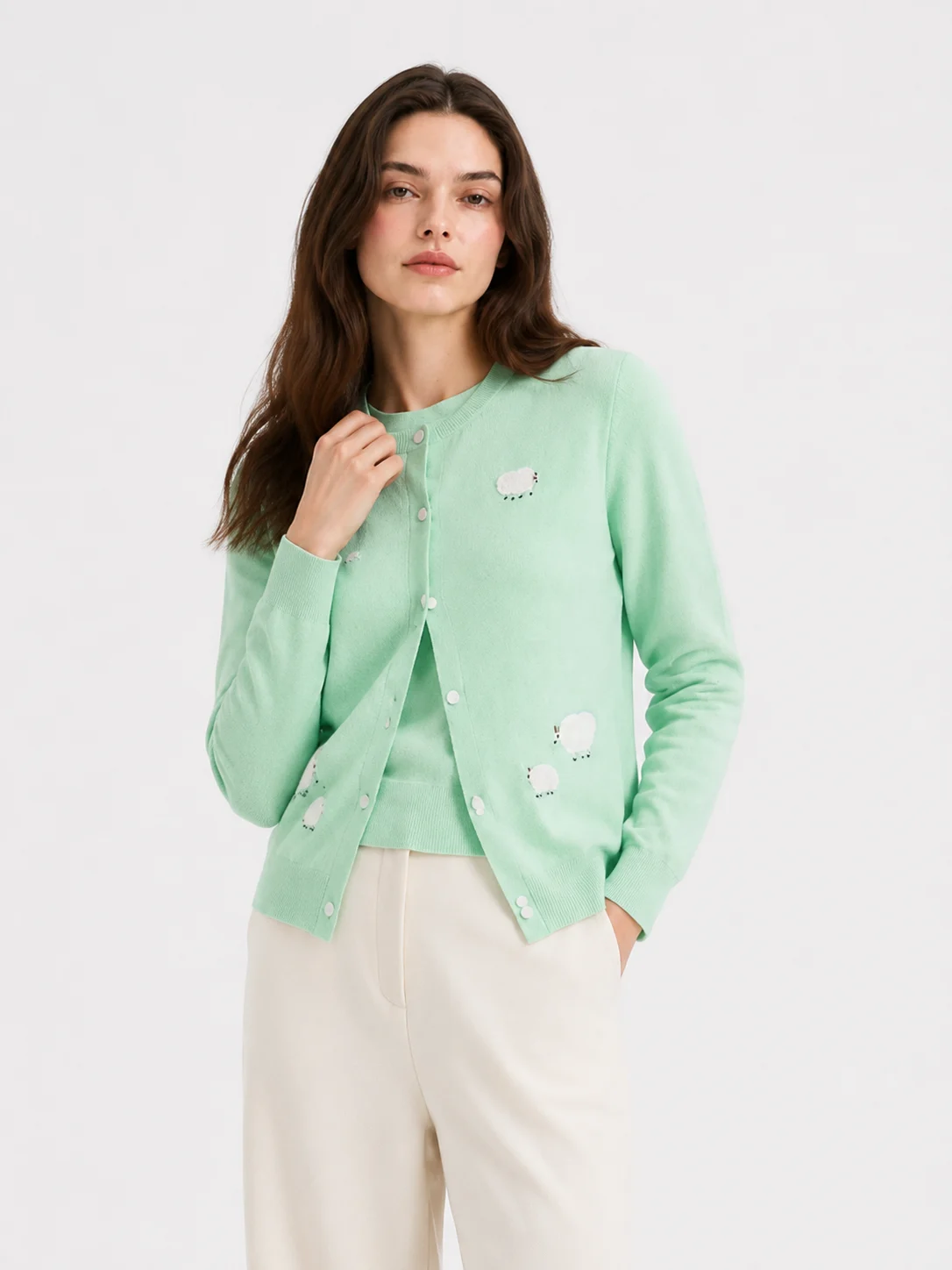
A private-label buyer can use lpknit’s wool sheep motif cardigan as a visual reference for motif placement, knit texture, and cardigan sampling discussion.
How Long Does Premium Sweater Sample Development Usually Take?
Premium sweater sample development usually takes 2-6 weeks, depending on yarn availability, stitch complexity, fit revisions, trim sourcing, and buyer response time. Faster timelines are possible when the brand provides a complete brief and approves each stage within 24-48 hours.
A simple merino sweater in an available yarn can often move faster than a custom cashmere color or complex jacquard cardigan. Mohair can also require extra testing because brushing, loft, and shedding need careful finishing control.
A practical 2026 sampling timeline looks like this:
Day 1-3: Brief review and feasibility check.
The factory reviews sketch, target yarn, gauge, MOQ, size range, and delivery goals.Day 3-7: Yarn and swatch direction.
The factory proposes yarn counts, shade options, stitch swatches, and estimated cost.Day 7-18: Proto sample knitting.
The factory knits panels, links seams, adds trims, washes, finishes, presses, and measures the sample.Day 18-25: Buyer review and fit comments.
The brand reviews handfeel, fit, styling, measurements, and commercial viability.Day 25-35: Fit revision or second sample.
The factory adjusts stitch program, specs, finishing, or trim details.Day 35-42: Pre-production sample approval.
The brand approves the final standard before bulk production planning.
The biggest delay is usually incomplete feedback. A comment such as “make the cardigan more premium” is less useful than “increase body length by 2 cm, reduce sleeve width by 1.5 cm, change rib height from 5 cm to 7 cm, and use a heavier button.”
Common Mistakes That Delay Premium Sweater Samples
The most common premium sweater sample delays come from unclear briefs, late color decisions, unrealistic target prices, missing measurements, and approving a sample before testing handfeel and shrinkage. These mistakes are avoidable when the buyer and factory use the same approval checklist.
A low MOQ order still needs disciplined development. Smaller quantities reduce inventory exposure, but sampling errors can still damage margin and delivery dates.
Avoid these common mistakes:
- Choosing fiber by name only. “Cashmere blend” is not enough; the buyer needs composition, yarn count, handfeel, and care expectations.
- Skipping swatches. Full samples cost more and take longer than stitch trials.
- Ignoring gauge. A design made in 12 gauge will not behave like the same design in 5 gauge.
- Changing color after fit approval. New dye lots can affect timing and sometimes handfeel.
- Approving without measurement records. A photo approval cannot replace a spec sheet.
- Forgetting labeling rules. United States, United Kingdom, and European Union sales require accurate fiber composition and care information.
- Requesting low MOQ too late. Yarn availability and machine planning should be discussed before the sample is approved.
For brands developing seasonal mohair products, lpknit’s spring-summer mohair long sleeve knit sweater shows how fiber texture and silhouette should be considered together.
Premium Sweater Sample Development Checklist for Buyers
A premium sweater sample development checklist helps boutique brands approve each stage with fewer revisions and clearer factory communication. The checklist should cover design, yarn, gauge, measurements, trims, labeling, costing, MOQ, and written approval.
Use this buyer-side checklist before approving bulk production:
- Confirm the final sketch and product name.
- Confirm fiber composition and yarn supplier direction.
- Confirm gauge, stitch, ply, and garment weight target.
- Confirm approved color reference or lab dip.
- Measure the sample flat against the spec sheet.
- Fit the sample on the intended model size.
- Check neckline, armhole, shoulder, sleeve, cuff, hem, and sweep.
- Review linking, seams, buttonholes, labels, and trims.
- Check washing, steaming, brushing, and pilling risk.
- Confirm care label, fiber label, and market compliance.
- Confirm sample cost, bulk unit cost, MOQ, and payment terms.
- Give written approval before yarn booking and bulk knitting.
Brands that need flexible development can contact lpknit through the premium knitwear manufacturer product page and share sketches, target fiber, quantity, and delivery window. lpknit’s factory sampling model is designed for boutique fashion labels that need premium merino, cashmere, or mohair sweaters without oversized initial commitments.
FAQ
What are the main steps in sweater sample development?
The main steps are design brief review, yarn selection, gauge planning, swatch testing, proto sample knitting, fit correction, costing, pre-production sample approval, and bulk handoff. Premium knitwear adds extra control for fiber quality, stitch tension, washing, steaming, and handfeel.
Which material is used to make premium sweaters?
Premium sweaters commonly use merino wool, cashmere, mohair, alpaca, cotton, and selected blends. Merino is valued for elasticity and smooth wear, cashmere for softness, and mohair for loft and texture. The best choice depends on price point, climate, gauge, and care needs.
How long does sweater sample development take?
Sweater sample development usually takes 2-6 weeks. A simple merino style using available yarn can be faster, while custom cashmere colors, mohair brushing, jacquard artwork, or repeated fit changes can extend the timeline.
What is a proto sample in knitwear?
A proto sample is the first physical sweater made to test design feasibility. It checks silhouette, gauge, stitch, construction, and early handfeel. The proto sample is not always made in the final color or final trim.
What is the difference between a fit sample and a PP sample?
A fit sample confirms measurements and wearability, while a PP sample confirms the final bulk production standard. The PP sample should include approved yarn, color, trims, labels, finishing, measurements, and packaging details.
Can a small boutique brand request low MOQ sweater sampling?
Yes, a small boutique brand can request low MOQ sweater sampling when the factory supports flexible production. The brand should provide expected quantity by style, color, and size early because yarn buying and machine planning affect cost and timing.
What information should a brand send to a knitwear factory?
A brand should send sketches, reference photos, target fiber, gauge preference, measurement spec, color direction, trim artwork, expected quantity, target price, and delivery date. Clear information helps the factory quote accurately and reduce sample revisions.
Conclusion: Turning a Premium Sweater Sample Into a Production Standard
The answer to what are the steps in premium sweater sample development is simple in structure but detailed in execution: confirm the brief, test yarn and gauge, make a proto sample, correct fit, approve costing, lock the PP sample, and hand the approved standard to bulk production. The quality of each decision affects the final sweater’s softness, shape, price, delivery timing, and customer return rate.
I am Maya Ellison, a knitwear sourcing consultant with 11 years of experience reviewing merino, cashmere, and mohair sweater samples for boutique and private-label brands. In factory sampling projects, I have seen one clear pattern: the best results come when the buyer gives measurable comments and the factory records every approved change before production begins.
lpknit is a premium knitwear manufacturer and OEM supplier serving United States, United Kingdom, and European Union boutique brands with low MOQ production and factory sampling for merino, cashmere, and mohair sweaters. To develop a cardigan or sweater sample with a production-focused partner, review lpknit’s premium knitwear product range and prepare your sketch, target fiber, quantity, and launch timeline before sending an inquiry.
{
“@context”: “https://schema.org”,
“@type”: “Article”,
“headline”: “What Are Steps in Premium Sweater Sample Development?”,
“datePublished”: “2026-08-04”,
“dateModified”: “2026-08-05”,
“description”: “A practical 2026 guide to premium sweater sample development for boutique brands, covering yarn, gauge, fit, costing, PP samples, and factory approval.”,
“keywords”: “what are the steps in premium sweater sample development”,
“author”: {
“@type”: “Person”,
“name”: “Maya Ellison”,
“url”: “https://lpknit.com/news/”,
“jobTitle”: “Knitwear sourcing consultant with 11 years of experience in merino, cashmere, and private-label sweater development.”
}
}
{
“@context”: “https://schema.org”,
“@type”: “FAQPage”,
“mainEntity”: [
{
“@type”: “Question”,
“name”: “What are the main steps in sweater sample development?”,
“acceptedAnswer”: {
“@type”: “Answer”,
“text”: “The main steps are design brief review, yarn selection, gauge planning, swatch testing, proto sample knitting, fit correction, costing, pre-production sample approval, and bulk handoff. Premium knitwear adds extra control for fiber quality, stitch tension, washing, steaming, and handfeel.”
}
},
{
“@type”: “Question”,
“name”: “Which material is used to make premium sweaters?”,
“acceptedAnswer”: {
“@type”: “Answer”,
“text”: “Premium sweaters commonly use merino wool, cashmere, mohair, alpaca, cotton, and selected blends. Merino is valued for elasticity and smooth wear, cashmere for softness, and mohair for loft and texture. The best choice depends on price point, climate, gauge, and care needs.”
}
},
{
“@type”: “Question”,
“name”: “How long does sweater sample development take?”,
“acceptedAnswer”: {
“@type”: “Answer”,
“text”: “Sweater sample development usually takes 2-6 weeks. A simple merino style using available yarn can be faster, while custom cashmere colors, mohair brushing, jacquard artwork, or repeated fit changes can extend the timeline.”
}
},
{
“@type”: “Question”,
“name”: “What is a proto sample in knitwear?”,
“acceptedAnswer”: {
“@type”: “Answer”,
“text”: “proto sample is the first physical sweater made to test design feasibility. It checks silhouette, gauge, stitch, construction, and early handfeel. The proto sample is not always made in the final color or final trim.”
}
},
{
“@type”: “Question”,
“name”: “What is the difference between a fit sample and a PP sample?”,
“acceptedAnswer”: {
“@type”: “Answer”,
“text”: “fit sample confirms measurements and wearability, while a PP sample confirms the final bulk production standard. The PP sample should include approved yarn, color, trims, labels, finishing, measurements, and packaging details.”
}
},
{
“@type”: “Question”,
“name”: “Can a small boutique brand request low MOQ sweater sampling?”,
“acceptedAnswer”: {
“@type”: “Answer”,
“text”: “Yes, a small boutique brand can request low MOQ sweater sampling when the factory supports flexible production. The brand should provide expected quantity by style, color, and size early because yarn buying and machine planning affect cost and timing.”
}
},
{
“@type”: “Question”,
“name”: “What information should a brand send to a knitwear factory?”,
“acceptedAnswer”: {
“@type”: “Answer”,
“text”: “brand should send sketches, reference photos, target fiber, gauge preference, measurement spec, color direction, trim artwork, expected quantity, target price, and delivery date. Clear information helps the factory quote accurately and reduce sample revisions.”
}
}
]
}