

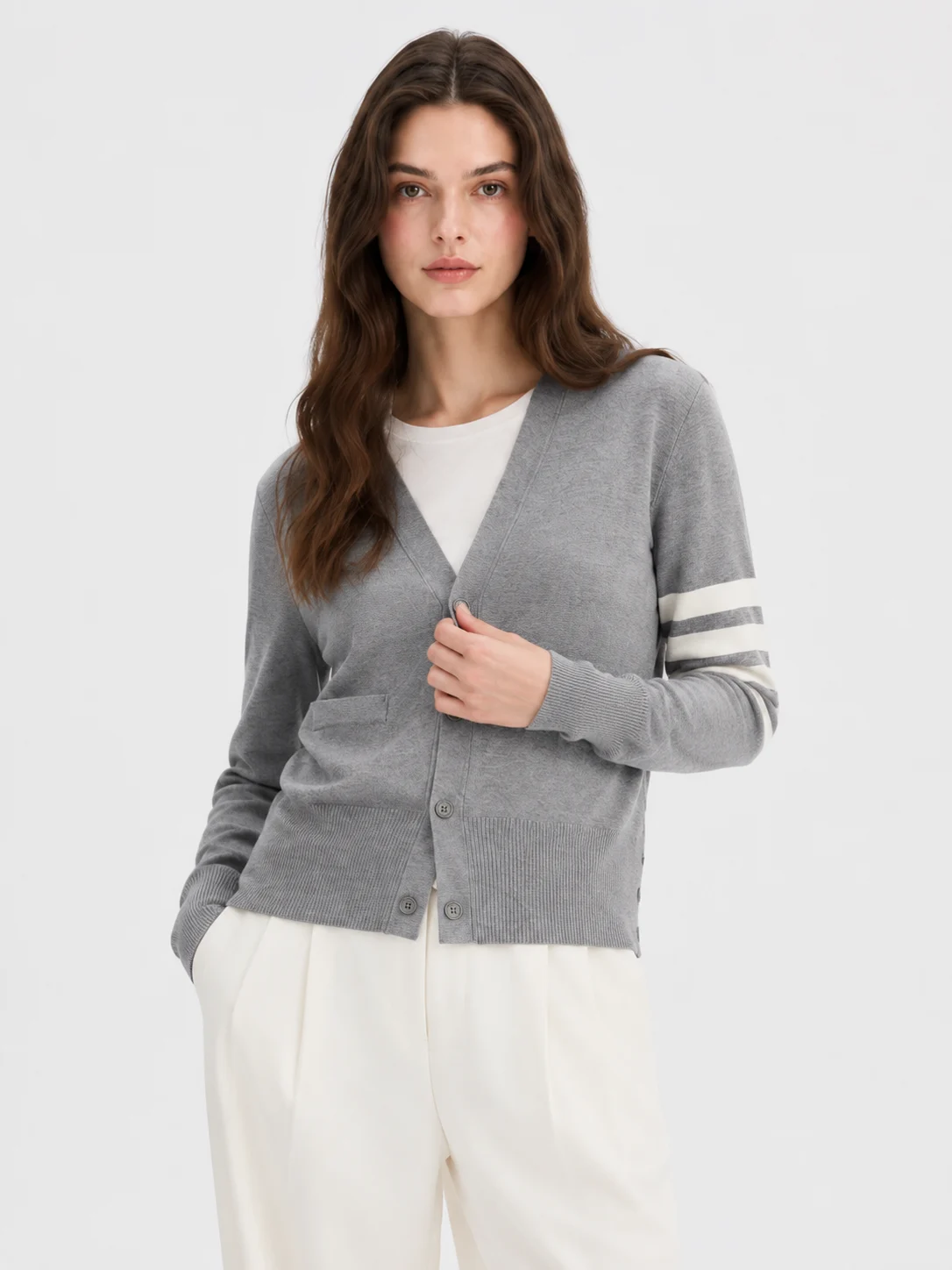
Yes, are merino sweaters good for travel is an easy “yes” for most mild, cool, and mixed-weather trips because Merino wool balances warmth, breathability, odor resistance, and packability better than many cotton or acrylic knits; brands such as lpknit, Unbound Merino, and Woolmark Company all emphasize Merino’s comfort advantages, while Transportation Security Administration (TSA) carry-on rules and one-bag travel discussions on Reddit r/onebag make repeat-wear clothing especially useful for lighter packing.
A Merino sweater is not just a cold-weather item. The right crewneck, cardigan, V-neck, or mock neck can work as an airplane layer, a dinner sweater, a hotel-lobby cover-up, or a soft midlayer under a coat.
The key is choosing the right knit weight and silhouette for the trip. A dense winter sweater can feel bulky in a carry-on, while a fine-gauge Merino crewneck can replace two cotton tops and one synthetic fleece on many itineraries.
Key takeaways
– Merino sweaters are best for repeat wear, especially on 3- to 10-day trips with changing temperatures.
– Fine-gauge Merino packs better than chunky cable knit, but heavier knits are warmer for winter travel.
– Cashmere feels more luxurious, while Merino is usually more practical for moisture, odor, and frequent wear.
– Crewnecks and cardigans are the safest travel styles because they layer easily and suit casual or polished outfits.
– Air, steam, and spot-cleaning often work between washes, which helps travelers avoid hotel laundry.
Why Are Merino Sweaters Good for Travel in Cold and Mild Weather?
Merino sweaters are good for travel because Merino wool regulates temperature, resists odor, feels softer than many traditional wools, and can be worn more than once between washes. That mix matters on flights, city walks, rail trips, business travel, and shoulder-season vacations where the weather changes during the day.
Merino wool comes from Merino sheep and is known for fine, crimped fibers. Fine fibers help the fabric feel smoother against skin than coarse wool. This is why Merino shows up in both outdoor base layers and premium everyday knitwear.
For a traveler, the biggest benefit is range. A Merino sweater can be warm in a 48°F / 9°C morning, comfortable in a heated café, and breathable enough for a cool 62°F / 17°C evening walk. Cotton often feels damp when temperatures shift, while many synthetics trap odor faster.
The travel value becomes clear when packing light. One neutral Merino crewneck can work with jeans, tailored trousers, a slip skirt, or a travel dress. A style-conscious shopper can pack fewer pieces without looking like every outfit came from a hiking store.
If you have read an “Are merino sweaters good for travel reddit” thread, the common pattern is simple: frequent travelers like Merino because it helps them pack less. The missing detail is that sweaters need different selection rules than Merino T-shirts. A sweater has more structure, more warmth, and more styling power.
Travel and Merino data points for 2026 planning
- Merino wool can absorb up to 35% of its weight in moisture vapor before feeling wet, according to The Woolmark Company, 2025.
- Superfine Merino is commonly classified around 18.5 microns or finer, according to The Woolmark Company fiber guidance, 2025.
- Wool accounted for about 1% of global fiber production, according to the Textile Exchange Materials Market Report, 2024.
- Polyester represented about 57% of global fiber production, according to the Textile Exchange Materials Market Report, 2024, which explains why synthetic travel layers are far more common.
- Carry-on liquids in the United States remain limited to 3.4 oz / 100 ml per container, according to the Transportation Security Administration 3-1-1 liquids rule, 2025, so travel-size wool wash or no-rinse detergent is useful.
- Many European short-haul airlines list cabin bags near 55 × 40 × 20 cm for standard overhead luggage, according to International Air Transport Association cabin baggage guidance referenced by airlines in 2025, making compact layers valuable.
Useful sources: The Woolmark Company’s Merino wool guidance, Textile Exchange Materials Market Report, and TSA 3-1-1 liquids rule.
When a Merino Sweater Is Not the Best Travel Layer
A Merino sweater is not the best travel layer when the trip is extremely hot, very wet, highly abrasive, or built around daily rugged outdoor use. Merino is versatile, but it is still a natural-fiber knit that needs more care than a technical rain shell or cheap synthetic fleece.
If you are traveling through tropical humidity, a Merino T-shirt may outperform a sweater. A sweater can feel too warm when daytime temperatures stay above 80°F / 27°C and nights do not cool down. In that case, pack a light cardigan only if air conditioning is strong.
Merino also needs protection from friction. Heavy backpacks, rough Velcro, and unlined shoulder straps can cause pilling over time. A smooth jacket layer or careful bag choice helps preserve the knit.
For adventure trips with mud, rain, and frequent laundering, Merino should work as a comfort layer, not the only layer. Pair the sweater with a waterproof shell, quick-dry base layer, or washable travel tee. This protects the sweater and keeps packing practical.
A chunky cable knit can be beautiful, but it may take too much luggage space. If the trip includes only one cold night, a fine-gauge pullover or cardigan is usually smarter. Save the oversized cable sweater for winter road trips, cabin stays, or checked-luggage travel.
How to Choose the Best Merino Wool Travel Clothes by Sweater Style
The best Merino wool travel clothes depend on weather, trip length, outfit needs, and how often you plan to rewear the piece. For sweaters, the best choice is usually a fine- to mid-gauge Merino crewneck or cardigan in a neutral color.
Here is a practical comparison for choosing the best wool sweater for travel.
| Sweater style | Best travel use | Packing score | Styling strength | Watch-outs |
|---|---|---|---|---|
| Merino crewneck | Flights, city walks, dinners, office travel | High | Very high | Less adjustable than a cardigan |
| Merino cardigan | Airplanes, museums, hotels, changing indoor temps | High | High | Buttons can add bulk |
| Merino V-neck | Business casual, layered shirts, mild weather | High | High | Neckline may feel less warm |
| Merino mock neck | Cool cities, minimalist outfits, winter layering | Medium | Very high | Can feel warm indoors |
| Chunky cable pullover | Cold cabins, road trips, winter weekends | Low to medium | Very high | Bulkier in carry-on luggage |
| Cashmere cardigan | Luxury travel, dinners, low-activity trips | Medium | Very high | More delicate than Merino |
For most travelers, start with a crewneck. The lpknit Merino crewneck is the easiest silhouette to style because it works with denim, tailored pants, skirts, and coats. It is also less fussy than a deep V-neck on cold flights.
Choose a cardigan if you run warm or move between outdoor and indoor temperatures. A cardigan can open at the airport, close on the plane, and layer over a dress at dinner. If you prefer a softer luxury layer, compare Merino with the lpknit cashmere cardigan before deciding.
Choose a mock neck when the destination is cool and your wardrobe is minimal. A mock neck can replace a scarf in mild cold and looks polished under a wool coat. For travelers who like a statement knit, the lpknit oversized cable pullover is better for low-movement winter trips than one-bag flights.
Quick definition: knit gauge
Knit gauge describes how fine or chunky a knitted fabric is. Fine-gauge sweaters are smoother and easier to pack; chunky-gauge sweaters are warmer and more textured but take more space.
Are Merino Sweaters Good for Travel Compared with Cashmere, Cotton, and Synthetics?
Merino sweaters are usually better for practical travel than cashmere, cotton, and many acrylic blends because Merino offers a stronger balance of odor control, temperature regulation, durability, and repeat wear. Cashmere wins on softness and luxury, but Merino often wins on resilience.
Searchers often ask, “Is cashmere as good as Merino wool for travel?” The honest answer is: cashmere is excellent for refined, low-friction travel, while Merino is better for active, repeat-wear travel. Cashmere is warmer by weight and feels plush, but it can be more delicate in backpacks, airplane seats, and frequent wear.
Cotton is comfortable at home but less ideal for travel layers. Cotton absorbs moisture and dries slowly, so it can feel clammy after a long walk or a rushed airport connection. Cotton sweaters also need washing sooner if worn repeatedly.
Synthetic fleece is practical, warm, and quick-drying. It is often cheaper than Merino. The trade-off is that many synthetic layers hold odor faster and look less polished in restaurants, offices, or galleries.
Unbound Merino built much of its brand around travel basics, especially T-shirts and compact apparel. That makes Unbound Merino a useful reference point for travelers researching the best Merino wool travel clothes. lpknit approaches the same fiber from a wardrobe-staple angle: premium sweaters, tops, and jumpers designed to look natural in everyday seasonal outfits.
| Fabric | Best for travel? | Main advantage | Main drawback |
|---|---|---|---|
| Merino wool | Yes, especially mixed weather | Breathable, odor-resistant, polished | Needs gentle care |
| Cashmere | Yes, for luxury and low activity | Very soft and warm | More delicate |
| Cotton | Sometimes | Familiar comfort | Slow drying |
| Acrylic | Sometimes | Low cost | Less breathable, can pill |
| Polyester fleece | Yes, for outdoor utility | Quick drying, rugged | More technical look |
| Mohair blend | Selectively | Airy warmth and texture | Fibers may feel fuzzy to some wearers |
If style matters, Merino has a major advantage. A simple Merino sweater looks at home in a museum, café, client meeting, or train station. That is why the best wool sweater for travel is often not the most technical garment; it is the piece you can wear five different ways.
How to Pack, Wash, and Refresh a Merino Sweater While Traveling
A Merino sweater should be packed folded or rolled loosely, aired after each wear, spot-cleaned when needed, and washed gently only when the garment is truly dirty. This method protects the fibers and reduces the need for hotel laundry.
Follow this travel-care process:
- Wear a base layer when possible. A thin T-shirt under the sweater reduces direct contact with sweat, sunscreen, and deodorant.
- Air the sweater overnight. Hang the Merino sweater on a chair or hanger in a ventilated room.
- Spot-clean small marks. Use cool water and a small amount of wool-safe detergent on cuffs, hems, or food spots.
- Steam without soaking. Hang the sweater in the bathroom during a warm shower to relax wrinkles.
- Wash only when needed. Use cool water, gentle wool wash, and light hand pressure.
- Press water out with a towel. Do not wring the knit, because twisting can distort the shape.
- Dry flat. Lay the sweater on a clean towel away from direct heat.
How many times can you wear a Merino sweater before washing it? Many travelers can wear a Merino sweater 3 to 7 times before a full wash if the sweater is layered over a shirt and aired between wears. Heavy sweating, smoke, food spills, or humid weather shorten that window.
For a 7-day trip, one Merino crewneck and one cardigan can cover most cool-weather outfits. Wear one on the plane and pack the other flat near the top of the bag. Add a compact lint comb if the sweater is a soft brushed knit.
Do not pack Merino in a fully compressed cube for weeks. Light compression is fine for a flight, but long crushing can set wrinkles. If you are packing a textured piece such as cable knit or mohair, give it more space.
For shopping or style planning, browse the broader lpknit premium knitwear collection and compare yarn, neckline, and weight before the trip.
Travel Scenarios: What Actually Works in a Carry-On
Merino travel sweaters work best when the itinerary includes repeated outfit needs, temperature changes, and limited luggage space. Real packing decisions are easier when you match the sweater to the trip instead of asking whether Merino is “good” in the abstract.
Scenario 1: Maya, 34, travels from New York to Paris for 6 days in October.
Maya packs one black Merino crewneck, one white tee, one silk blouse, dark jeans, tailored trousers, and a trench coat. The crewneck is worn on the overnight flight, again for a museum day, and once more for dinner under the trench. Result: Maya skips one bulky hoodie and keeps her carry-on under 10 kg.
Scenario 2: Daniel, 41, takes a 9-day Tokyo and Kyoto rail trip in March.
Daniel packs a Merino cardigan, a mock neck, two T-shirts, and a light rain shell. The cardigan handles train rides and hotel breakfasts, while the mock neck works for colder temple visits. Result: Daniel does laundry once for base layers but never needs to wash the sweaters.
Scenario 3: Alina, 29, goes to Lisbon for 5 warm spring days.
Alina considers a chunky sweater but packs a fine-gauge V-neck instead. Daytime highs reach 70°F / 21°C, so the sweater is used only on two breezy evenings. Result: the light V-neck earns its place, but a heavy cable pullover would have been too much.
These examples show the main rule: Merino is most useful when it replaces multiple less-versatile layers. If the sweater only works for one outfit or one hour of the day, choose a lighter knit or leave it behind.
The “Are merino sweaters good for travel reddit” discussion often focuses on odor resistance and one-bag packing. That advice is useful, but Reddit comments rarely consider silhouette. A crewneck, cardigan, and mock neck can behave very differently in the same suitcase.
For a style-conscious traveler, color matters too. Black, navy, oatmeal, charcoal, camel, and soft gray pair with the most outfits. Bright colors can work, but they reduce mix-and-match options on longer trips.
FAQ: Are Merino Sweaters Good for Travel?
Are merino sweaters good for travel in both cold and mild weather?
Yes, Merino sweaters are good for travel in both cold and mild weather when the knit weight matches the forecast. Fine-gauge Merino works well for mild evenings, flights, and air-conditioned interiors. Midweight Merino is better for cool cities and winter layering under a coat.
Is cashmere as good as merino wool for travel?
Cashmere is as good as Merino for softness and luxury, but Merino is usually more practical for active travel. Merino handles moisture, repeat wear, and temperature shifts better. Cashmere is best for low-friction trips, dinners, hotels, and polished outfits.
How many times can you wear a merino sweater before washing it?
Most travelers can wear a Merino sweater 3 to 7 times before washing if it is layered over a base shirt and aired overnight. Wash sooner after heavy sweat, food spills, smoke exposure, or humid weather. Smell and fabric feel are better guides than a fixed number.
How do you wash merino while traveling?
Wash Merino while traveling with cool water, wool-safe detergent, and gentle hand pressure. Do not wring the sweater. Press water out with a towel, reshape the knit, and dry it flat. For short trips, airing and spot-cleaning are often enough.
What type of merino sweater is best for packing?
A fine-gauge Merino crewneck is usually the best sweater for packing because it is compact, versatile, and easy to style. A cardigan is better if you need adjustable warmth. A mock neck is best for cooler destinations, while chunky cable knits suit winter road trips.
Are merino sweaters itchy?
Merino sweaters are less itchy than many traditional wool sweaters because Merino fibers are finer. Sensitivity still varies by person, yarn quality, and knit finish. If your skin is reactive, choose fine Merino, wear a base layer, or test the neckline and cuffs first.
Is Unbound Merino better than a premium knitwear brand for travel?
Unbound Merino is strong for travel basics and compact Merino apparel, while a premium knitwear brand such as lpknit is better for timeless sweater styling. The better choice depends on whether you need technical packing efficiency, polished seasonal outfits, or both.
Conclusion — should you pack one?
As a knitwear editor who has tested Merino, cashmere, cotton, and synthetic sweaters across flights, rail trips, work travel, and winter weekends, I would pack a Merino sweater for most 2026 trips under 10 days. My own best results come from a fine-gauge crewneck or cardigan worn over a base tee, aired overnight, and washed only when needed.
The facts support that choice: The Woolmark Company reports Merino’s moisture-management properties, Textile Exchange reports wool’s small share of global fiber production, and TSA’s 3-1-1 rule makes low-laundry packing more useful for carry-on travelers. If you want a polished travel layer rather than technical-looking gear, explore the lpknit Merino crewneck or compare it with other lpknit sweaters, tops, and jumpers before your next itinerary.