
What makes a sweater high quality is verified fiber content, resilient yarn, dense knitting, neat seams, stable ribbing, balanced fit, and realistic care. Fiber matters, but it is not enough. A strong 2026 buy may use merino wool, cashmere, mohair, cotton, or a purposeful blend, then prove its value through even stitches, secure finishing, low early pilling, and shape recovery after gentle stretch.
Updated and reviewed: February 20, 2026. Next review reminder: late 2026 or early 2027 to update fiber-market statistics, FTC/eCFR references, European Union labeling references, and cashmere-source guidance if newer reports are released.
A sweater can look polished on a hanger and still pill, sag, or twist after five wears. Use the quick tests below before judging price, softness, or brand reputation.
| Quality test summary | High-quality sign | Warning sign |
|---|---|---|
| Fiber label | Exact fiber names and percentages | Vague “cashmere feel” or “wool-like” wording |
| Knit density | Even stitches with no random thin patches | Loose, uneven, or see-through areas |
| Rib recovery | Cuffs and hem spring back after stretch | Ribbing stays widened after one pull |
| Seams | Flat shoulder and side seams | Twisted seams or rippled neckband |
| Pilling risk | Smooth, stable surface with modest halo | Heavy fuzz before wear |
| Care fit | Instructions match your routine | Fragile care for an everyday sweater |
2026 knitwear quality data points to know
- Global fiber production reached 124 million tonnes in 2023, according to the Textile Exchange Materials Market Report 2024.
- Polyester accounted for about 57% of global fiber production in 2023, also reported by the Textile Exchange Materials Market Report 2024, so shoppers should check soft sweaters for synthetic-heavy blends.
- Wool represented about 1% of global fiber production in 2023, according to Textile Exchange, which helps explain why high-grade wool often costs more.
- A cashmere goat typically produces about 150–200 grams of dehaired cashmere per year, according to the Cashmere and Camel Hair Manufacturers Institute 2025 guidance.
- The Federal Trade Commission Textile Fiber Products Identification Act rules, 16 CFR Part 303, current in 2024 eCFR and used in 2026, require textile labels to disclose fiber names and percentages.
- European Union Regulation (EU) No 1007/2011, still relevant in 2026, sets textile fiber-name and composition-labeling rules for products sold in the European Union.
What Makes a Sweater High Quality Beyond the Fiber Label?
What makes a sweater high quality is the combined performance of fiber, yarn spinning, knit density, finishing, and fit stability. A sweater labeled “100% wool” can still feel scratchy, pill fast, or stretch out if the yarn and construction are weak.
Start with the care label. Under the FTC textile labeling rules, apparel sold in the United States must identify fiber content by generic name and percentage. That helps you separate a real merino wool sweater from a garment described only as “wool feel.”
A high-quality knit usually has these traits:
- Clear fiber content: merino wool, cashmere, mohair, cotton, or a purposeful blend.
- Even knit surface: stitches look consistent across body and sleeves.
- Good recovery: cuffs and hem stretch, then return.
- Balanced weight: the sweater feels substantial for its gauge.
- Clean finishing: seams lie flat, with few loose threads.
- Care realism: instructions match the fiber and intended use.
One common shopping comparison is two black crewnecks at different prices. The cheaper knit may feel soft but contain mostly acrylic, show loose side seams, and stay stretched at the cuff. The better merino sweater may feel denser, recover faster, and keep its shape longer.
For a real starting point, browse lpknit’s premium knitted sweaters, tops and jumpers and compare fiber, neckline, silhouette, and layering use before focusing on softness alone.
Best Sweater Material for Winter: Merino, Cashmere, Mohair, Cotton, and Blends
The best sweater material for winter is usually merino wool, cashmere, lambswool, alpaca, mohair, or a thoughtful blend. These fibers balance warmth, breathability, comfort, and structure better than many acrylic-heavy knits.
Merino wool is a strong all-rounder. It is warm, breathable, and smoother than many traditional wools. Fine merino works well under coats because it adds warmth without heavy bulk.
Cashmere is prized for softness and warmth at low weight. Good cashmere should feel plush but not flimsy. Very thin cashmere can form holes or lose structure when the yarn is weak.
Mohair, from the Angora goat, is known for loft, shine, and a fuzzy halo. It can feel airy and warm, but some wearers find it tickly. Judge mohair by softness at the neck, shedding level, and seam stability.
Cotton is breathable and useful in spring, mild winters, and cool offices. It is less insulating than wool and can stretch when heavy or wet.
| Material | Best use | Quality signs | Watch-outs |
|---|---|---|---|
| Merino wool | Everyday winter layering | Smooth handfeel, springy recovery | Very fine gauges can snag |
| Cashmere | Soft luxury warmth | Plush loft, dense yarn | Thin low-grade cashmere may pill fast |
| Mohair | Textured statement knits | Airy halo, secure seams | Can shed or feel itchy |
| Lambswool | Warm casual sweaters | Firm body, rustic warmth | May feel scratchier |
| Cotton | Mild weather and indoor wear | Clean stitch definition | Can stretch and dry slowly |
| Wool-synthetic blend | Durability and value | Clear percentages, good recovery | Too much acrylic reduces breathability |
The best material is also personal. A warm lambswool pullover may outperform a soft cotton-acrylic cardigan if you need winter insulation and strong shape retention. To compare seasonal options, start with the lpknit knitwear collection and review available merino, cashmere, mohair, and blended knits by use case.
What Makes a Sweater High Quality for Women’s Wardrobes?
What makes a sweater high quality for women’s wardrobes is fabric integrity, flattering drape, stable proportions, and repeat styling value. A women’s sweater should hold its shoulder line, keep the neckline neat, and layer without bunching.
Fit quality is different from size. A sweater may be the correct size and still have poor proportions. Watch for pulling armholes, twisting side seams, or a hem that rides up. Better women’s knitwear considers bust ease, sleeve length, shoulder placement, and rib tension together.
Useful timeless silhouettes include:
- Crewneck sweaters for shirts, trousers, denim, and wool coats.
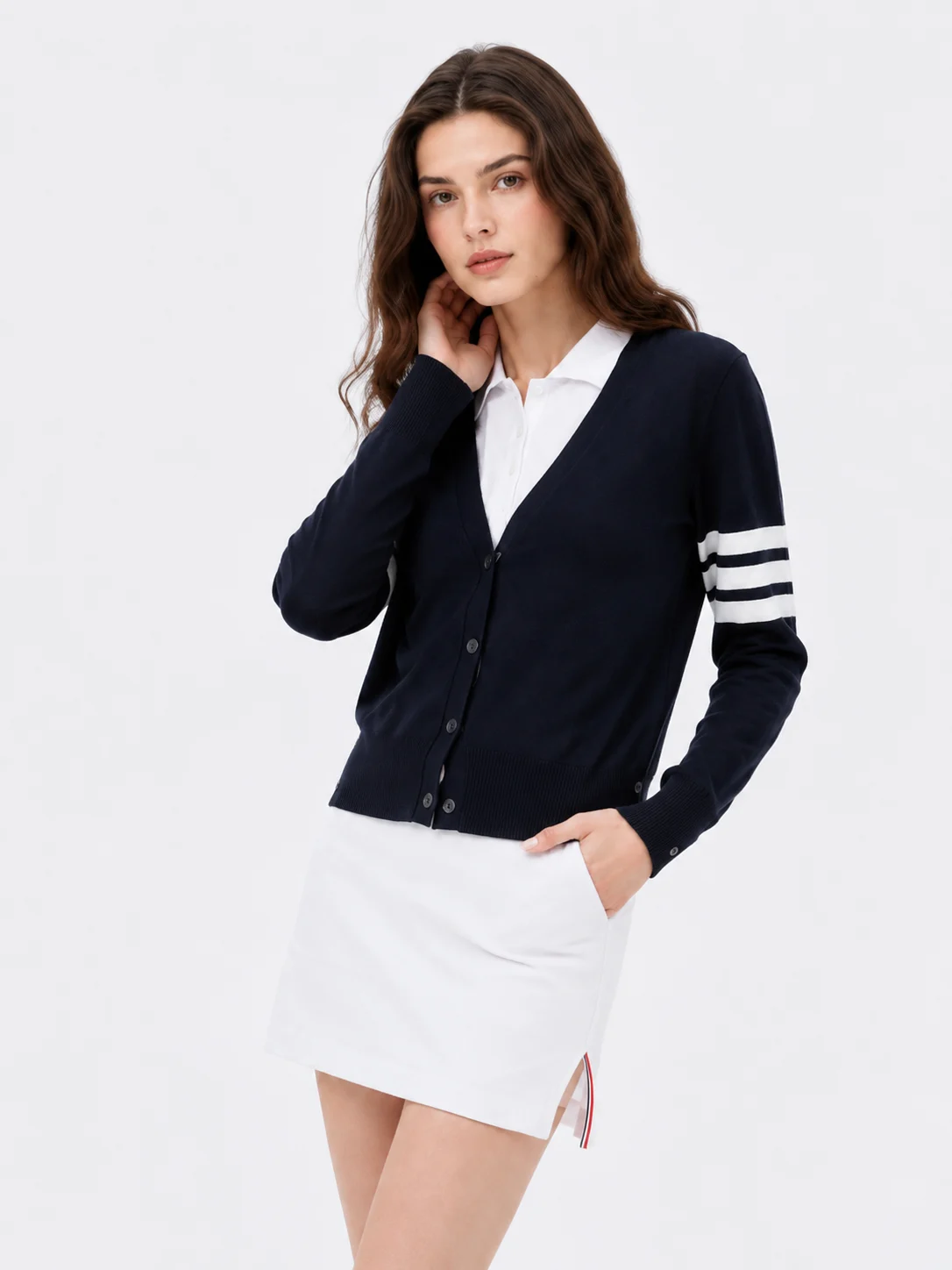
- Cardigans for office layering, travel, and changing temperatures.
- Pullovers for simple cold-weather outfits.
- V-neck knits for scarves, necklaces, and collared shirts.
- Mock neck sweaters for warmth without a full turtleneck.
A good cardigan should not gape between buttons when worn closed. Button bands should feel firm, not stretched or rippled. Oversized sweaters need attention too. A relaxed silhouette should look intentional, not stretched out.
For current wardrobe options, compare lpknit’s seasonal knitwear collection by fiber, neckline, and intended season. You can also check the lpknit homepage for collection updates and brand-level styling direction.
Construction Details That Reveal Real Knitwear Quality
Construction details reveal real knitwear quality because seams, ribs, gauge, and finishing determine whether a sweater survives regular wear. A premium sweater should feel stable when gently stretched and should show even stitches across the body, sleeves, neckline, and hem.
Start with the seams. Shoulder seams take stress from bags, coats, and movement, so they should be reinforced and smooth. Side seams should hang straight. Twisting can signal cutting, linking, or tension problems.
Then check the ribbing. Cuffs, hem, and neckline should stretch and return. If the rib remains loose after one gentle pull, the sweater may bag out quickly.
Definition: knit gauge
Gauge is the fineness of a knit, often described by stitches per inch or machine gauge. Fine-gauge sweaters look sleek and layer easily. Chunky-gauge sweaters offer texture and warmth but need strong yarn and secure seams.
Use this quick construction test:
- Hold the sweater at eye level. Check whether the hem and side seams hang straight.
- Stretch the cuff gently for two seconds. Release it and see if the rib returns.
- Look through the knit toward light. Thin patches may signal weak density.
- Inspect inside seams. Loose loops or messy finishing can become holes.
- Rub a hidden area lightly. Excess fuzz or instant pills suggest higher abrasion risk.
- Check the neckline. It should sit flat without rippling.
- Read the care label. Confirm the instructions match the fiber content.
These steps take less than five minutes in a store. Online, zoom into cuff, hem, neckline, and texture photos. If a product page does not show composition, care, or close-up knit detail, ask customer service before buying.
How Can You Tell If a Sweater Will Pill or Lose Shape?
A sweater is more likely to pill or lose shape when it uses short fibers, loose yarn twist, low knit density, weak ribbing, or high-friction blends. Pilling is not automatic proof of bad quality, but fast, heavy pilling after a few wears is a warning sign.
Pills form when loose fiber ends work out of the yarn and tangle on the surface. Soft fibers such as cashmere and merino can pill at first, especially under arms or where bags rub. Better yarns usually pill less over time after gentle de-pilling.
No sweater material is fully pill-proof. Tightly spun merino, quality cotton, and some wool-nylon blends often resist pilling better than loose, fuzzy, short-staple yarns.
Look for these pilling risk signals:
- Very fuzzy surface before wear: may pill or shed quickly.
- Loose, airy knit: can snag and distort.
- Low-density cashmere: soft but fragile.
- High acrylic content: can form stubborn pills.
- Bag friction zones: crossbody straps and backpacks increase abrasion.
Shape loss is separate. A sweater stretches when yarn lacks elasticity, ribbing is weak, or the garment is dried incorrectly. Fold sweaters instead of hanging them. Wash less often, air between wears, and use a wool comb or fabric shaver carefully. For seasonal tips, see lpknit’s knitwear news and styling notes.
How Much Should a High-Quality Sweater Cost in 2026?
A high-quality sweater in 2026 often costs more because premium fibers, better yarn spinning, denser knitting, skilled linking, and careful finishing raise production costs. Price alone does not prove quality, but very low prices can limit fiber grade or finishing time.
| Price range | What you may get | Quality expectation |
|---|---|---|
| Under $50 | Acrylic, polyester, cotton blends | Check pilling and shape carefully |
| $50–$120 | Better cotton, wool blends, some merino | Good value if construction is solid |
| $120–$250 | Merino, lambswool, cardigans, entry cashmere | Strong everyday quality possible |
| $250–$500 | Higher-grade cashmere, alpaca, mohair | Inspect density and seams |
| $500+ | Luxury fibers, complex knitting, designer markup | Quality varies; verify build |
A $300 sweater is not automatically better than a $160 sweater. The better buy is the garment you will wear often, care for properly, and still like after two winters. Cost per wear is a practical quality test.
For example, a $220 merino crewneck worn 32 times in one winter costs $6.88 per wear before future seasons. A $45 acrylic sweater that looks tired after eight wears costs $5.63 per wear and may need replacing sooner.
When comparing brands, do not rely only on reputation. Everlane, COS, Uniqlo, Naadam, J.Crew, and lpknit serve different style and price needs. The best purchase is the sweater where material, construction, fit, and care demands match real life.
A Five-Minute Checklist for Buying a High-Quality Sweater
A five-minute sweater checklist helps shoppers judge quality in-store or online without textile training. The goal is to confirm fiber content, fabric density, seam strength, rib recovery, pilling risk, fit stability, and care practicality before purchase.
Use this numbered checklist before buying:
- Read the full fiber label. Look for exact percentages, not vague words.
- Match material to use. Choose merino for daily winter wear, cashmere for soft warmth, mohair for texture, and cotton for mild weather.
- Check knit density. Avoid random thin spots or weak open areas.
- Test rib recovery. Gently stretch cuffs and hem, then release.
- Inspect seams. Shoulder, side, and sleeve seams should be neat and secure.
- Assess handfeel honestly. Softness is good, but limpness can signal weak yarn.
- Check fit points. Neckline, shoulder, armhole, sleeve length, and hem should stay balanced.
- Review care instructions. Avoid pieces you will not wash or dry correctly.
- Estimate cost per wear. A $180 sweater worn 60 times costs $3 per wear.
- Compare alternatives. Review at least two sweaters at similar prices.
Shop winter-ready knitwear: start with the lpknit knitwear collection to review available sweaters, tops, and jumpers, then compare material, silhouette, care guidance, and layering role before choosing.
FAQ: What Shoppers Ask About Sweater Quality
Is 100% cashmere always the highest-quality sweater?
No, 100% cashmere is not always the highest-quality sweater. Cashmere quality depends on fiber length, fineness, yarn strength, knit density, and finishing. A dense merino sweater can outlast a thin, loosely spun cashmere sweater.
What makes a sweater high quality according to Reddit shoppers?
Reddit shoppers often point to natural fibers, vintage construction, dense knits, and durability. That advice is useful, but incomplete. A better test also checks seams, rib recovery, pilling risk, gauge, care label accuracy, and shape retention.
What is the best sweater material for winter?
The best sweater material for winter is usually merino wool, cashmere, lambswool, alpaca, or a warm wool blend. Merino is versatile and breathable, cashmere is soft and light, and lambswool is warm and sturdy.
What sweater material does not pill?
No sweater material is fully pill-proof. Tightly spun merino wool, quality cotton, and some balanced wool-nylon blends often resist pilling better than loose cashmere, fuzzy acrylic, or low-density knits.
How do I know if a sweater will stretch out?
A sweater may stretch out if the ribbing has weak recovery, the knit feels loose, or the garment is heavy and stored on a hanger. Test cuffs and hems by stretching gently, then watching whether they return.
Are synthetic blends bad in premium sweaters?
Synthetic blends are not automatically bad. A small amount of nylon, elastane, or recycled synthetic fiber can improve strength or recovery. The concern is when synthetics dominate a sweater marketed as premium natural-fiber knitwear.
How often should I wash a wool or cashmere sweater?
Wool or cashmere sweaters do not need washing after every wear unless stained or sweaty. Air the sweater between wears, spot-clean when possible, and follow the care label. Gentle washing and flat drying help preserve shape.
A high-quality sweater is easiest to recognize when you evaluate fiber content, yarn feel, knit density, seams, rib recovery, fit, pilling risk, and care instructions together. I’m Elena Marlow, a knitwear buyer and textile content specialist who has reviewed merino, cashmere, mohair, cotton, and blended sweaters during seasonal range planning. In product checks, the longest-lasting knits are rarely just the softest on day one; they are the ones with stable construction and realistic care needs.
lpknit focuses on premium knitted sweaters, tops, and jumpers for seasonal wardrobes, with timeless silhouettes such as crewnecks, cardigans, pullovers, V-necks, and mock necks. For a practical next step, compare the label, knit surface, and fit details in the lpknit collection and choose the sweater whose material, construction, and silhouette match how you will actually wear it in 2026.