

How long does sweater sampling take? For an OEM factory sample, most boutique brands should plan 7–21 working days after the tech pack, yarn, gauge, color, and measurements are confirmed; at lpknit, merino wool pullovers may sit near the faster end, while cashmere, mohair, jacquard, intarsia, hand-linked cardigans, and US/UK/EU shipping can push the first approved sample closer to 3–5 weeks.
Sweater sampling is not the same as asking how many hours it takes to hand-knit one sweater. A factory sample includes yarn sourcing, knitting-program setup, panel knitting, linking, washing, pressing, measurements, trim checks, and brand approval.
For boutique fashion brands, the sampling stage protects margin before bulk production. One strong sample can prevent 300 units of wrong sleeve length, unstable rib, incorrect fiber content, or a shade that does not match the collection board.
Key takeaways
– A simple OEM sweater sample usually takes 7–14 working days after details are confirmed.
– Complex stitches, mohair brushing, cashmere yarn booking, jacquard, intarsia, and trims often extend sampling to 15–30 working days.
– Most brands need 1–3 sample rounds before bulk production approval.
– A complete tech pack can cut several days from sampling because the factory does not need to guess gauge, fit, yarn, or finishing.
– lpknit supports boutique labels with low MOQ sweater development, factory sampling, and premium merino, cashmere, and mohair production.
How Long Does Sweater Sampling Take in an OEM Factory?
How long does sweater sampling take in an OEM factory? A realistic first-sample timeline is 7–21 working days, with simple stock-yarn designs moving faster and custom yarn, stitch development, or fit revisions taking longer.
The timeline starts only after the factory receives the core development inputs. These include the tech pack, reference images, yarn composition, target gauge, sample size, Pantone or yarn color, trims, label details, and fit measurements.
| Sample type | Typical factory timeline | Best for | Main delay risk |
|---|---|---|---|
| Basic merino pullover, stock yarn | 7–12 working days | First capsule tests | Missing measurements |
| Fine-knit cardigan with buttons | 10–16 working days | Boutique seasonal drops | Trim sourcing and button placement |
| Cashmere sweater sample | 12–21 working days | Premium private label | Yarn availability and washing shrinkage |
| Mohair long-sleeve sweater | 14–24 working days | Fashion-led autumn/winter styles | Brushing, shedding control, hand feel |
| Jacquard or intarsia sweater | 18–30 working days | Graphic or statement knitwear | Pattern programming and color testing |
| Hand-knit or hand-finished sample | 3–8 weeks | Artisan capsules | Labor hours and artisan capacity |
A single physical sample may be knitted in hours, but the development process takes days because factory sampling is sequential. The yarn must be ready before knitting, the panels must be checked before linking, and washing must happen before final measurements.
For example, Maya, a London womenswear founder, sent lpknit a clear tech pack for a 7-gauge merino cardigan with two colorways and standard shell buttons. The first sample was ready in 11 working days, and the approved second sample reduced sleeve length by 2 cm before her 180-unit preorder run.
Brands comparing factory timelines with “How long does sweater sampling take reddit” threads should note the difference in context. Reddit answers often discuss hobby knitting or startup frustration, while OEM sampling focuses on repeatable production, size grading, fiber labels, and bulk feasibility.
What Happens During Sweater Sampling?
Sweater sampling turns a design idea into a factory-made reference garment that can be measured, fitted, costed, and approved for production. The process confirms whether the sweater can be made consistently at the target quality, price, and delivery window.
A typical factory sampling workflow includes these steps:
Design review
The OEM knitwear supplier checks sketches, reference garments, measurements, fiber content, and construction details.Yarn and gauge confirmation
The factory confirms whether the sweater will use merino wool, cashmere, mohair, blended yarn, or a seasonal fancy yarn.Stitch and program setup
Technicians translate the design into knitting instructions for gauge, panel shape, ribs, cables, jacquard, or intarsia.Panel knitting or whole-garment knitting
The sample is knitted by machine, by hand, or through a mixed process depending on style and supplier capability.Linking and assembly
Sleeves, body panels, collars, plackets, pockets, and trims are joined.Washing and finishing
The sweater is washed, dried, brushed if needed, pressed, and measured after relaxation.Quality control and fit check
The factory checks dimensions, hand feel, seams, appearance, shrinkage, and construction.Brand review and comments
The buyer reviews the physical sample and sends approval or revision notes.
The question “How long does sweater sampling take to work” usually means: when can a brand see whether the design is commercially viable? In most cases, the first usable answer comes after the first fit sample, not after the first knitted panel.
A swatch can answer yarn and stitch questions in 2–7 working days, but it cannot confirm shoulder slope, sleeve pitch, cardigan placket behavior, or finished garment shrinkage. A complete sweater sample is more reliable for costing and production decisions.
Brands can view lpknit’s broader sweater and cardigan direction on the lpknit product collection before preparing sample requests. Existing silhouettes often help speed early discussions because the factory can suggest gauge, yarn, and construction routes.
Factors That Change How Long Sweater Sampling Takes
Sweater sampling lead time changes because each yarn, stitch, trim, and fit decision affects technical setup. A simple jersey sweater in stock merino behaves very differently from a brushed mohair cardigan with jacquard artwork and custom buttons.
The biggest timeline factors are:
- Yarn availability: Stock merino is often faster than custom-dyed cashmere or imported mohair yarn.
- Gauge: Fine gauges can require more knitting time and tighter measurement control.
- Stitch complexity: Cables, pointelle, jacquard, and intarsia need more programming and testing.
- Construction: Fully fashioned panels, set-in sleeves, pockets, plackets, and shaped collars add steps.
- Finishing: Cashmere washing and mohair brushing can change measurements and hand feel.
- Trim sourcing: Buttons, zippers, labels, shoulder tape, and hangtags may create waiting time.
- Fit comments: Unclear revision notes can add an avoidable sample round.
- Shipping: International sample shipping to the US, UK, or EU can add several calendar days.
Current market and compliance data also affect sampling decisions. Global fiber production reached 124 million tonnes in 2023, according to the Textile Exchange Materials Market Report, 2024, which shows how material planning sits inside a large and supply-sensitive fiber market. Wool represented about 1% of global fiber production in 2023, according to Textile Exchange, 2024, so premium wool yarn availability can be less flexible than commodity synthetics. The European Union Regulation (EU) No 1007/2011, still applied in 2025, requires textile fiber names and composition labeling for EU textile products, which matters when sampling merino, cashmere, or mohair blends. The United States Federal Trade Commission Wool Products Labeling Rules, referenced in 2025 guidance, require accurate wool and cashmere fiber disclosure, so sample records should match future care and content labels. McKinsey & Company and The Business of Fashion reported in The State of Fashion 2025 that fashion executives expected pressure from uncertainty, cautious consumers, and margin risk, making fewer, better-planned samples more valuable.
For regulatory context, review the European Union textile fiber labeling regulation, the United States Federal Trade Commission wool labeling rules, and the Textile Exchange Materials Market Report 2024. These sources help brands align sample specifications with fiber claims before production.
A second example shows why planning matters. Sofia, a New York private-label buyer, requested a brushed mohair sweater in three yarn colors with a loose body and extra-long sleeves; her first sample took 19 working days, but clear fit comments reduced the second round to 9 working days and helped approve a 240-piece run without a third sample.
How Long Does Sweater Sampling Take by Hand Versus Machine?
How long does sweater sampling take by hand? A hand-knit sweater sample can take 3–8 weeks, while a machine-knit OEM sample often takes 7–21 working days once specifications are confirmed.
Hand sampling is slower because every stitch is made manually or with heavy artisan input. It can be useful for chunky cardigans, crochet-look pieces, limited artisan capsules, and editorial designs where texture matters more than speed.
Machine sampling is faster and more scalable for boutique wholesale collections. It also gives a better production reference because the sample is made closer to the bulk process.
| Method | Typical sample time | Strength | Limitation |
|---|---|---|---|
| Fully machine-knit sample | 7–21 working days | Speed, repeatability, cost clarity | Less suited to artisan irregularity |
| Machine-knit with hand finishing | 12–28 working days | Premium finish with scalable base | Linking and handwork add time |
| Hand-knit sample | 3–8 weeks | Craft texture and unique look | Slow, harder to scale |
| Crochet-style hand sample | 3–10 weeks | Statement seasonal pieces | Labor capacity and consistency |
| Swatch only | 2–7 working days | Fast yarn and stitch validation | Does not confirm full fit |
This is where search results can be confusing. A YouTube video or Reddit answer about one person knitting a sweater may mention 40, 80, or 120 hours, but a factory sample is not measured only by knitting hours.
For a boutique label, the better question is whether the sample can be repeated at the intended MOQ, quality, and delivery date. A sweater that looks beautiful as a one-off may still fail if it cannot be graded, washed, labeled, or costed consistently.
If your brand is developing a textured cardigan, compare details such as button spacing and neckline shape against references like lpknit’s illustrated knit button cardigan or fine knit round neck cardigan. Reference products help your supplier understand the desired finish faster.
How Many Sample Rounds Are Needed Before Bulk Production?
Most sweater styles need 1–3 sample rounds before bulk production. A clean basic sweater may be approved after one sample, while premium cashmere, mohair, jacquard, or new-fit development often needs two or three rounds.
Each sample round should answer a different question. The first sample proves construction and general fit, the second confirms corrections, and the pre-production sample confirms the final approved standard before bulk knitting.
Common sample stages include:
Proto sample
Tests shape, stitch, yarn direction, and construction.Fit sample
Checks measurements on a model or dress form and confirms comfort.Salesman sample or photo sample
Supports wholesale appointments, lookbooks, or ecommerce images.Pre-production sample
Uses final yarn, trims, labels, measurements, and finishing for bulk approval.
A brand does not always need every stage. Small labels with low MOQ orders often combine proto and fit review, then move to a pre-production sample after clear comments.
The risk is skipping a sample round when the style still has unresolved issues. If a cashmere crewneck shrinks 4 cm in body length after wash, the cost of one extra sample is far lower than the cost of rejecting bulk goods.
Strong approval notes also reduce time. Instead of saying “make it more relaxed,” write “increase chest width from 54 cm to 57 cm on size S, keep shoulder width unchanged, reduce sleeve length from 61 cm to 59 cm after wash.”
How to Reduce Sweater Sampling Time Without Cutting Quality
Fashion brands can reduce sweater sampling time by sending complete specifications, approving materials quickly, and using realistic sample rounds. The fastest sample is usually not the rushed one; it is the one with the fewest unanswered questions.
Use this checklist before contacting an OEM knitwear supplier:
Prepare a complete tech pack
Include flat sketch, measurements, stitch notes, gauge, construction, trims, label position, and finishing.Send reference images or garments
Photos help explain fit, texture, rib width, neckline depth, and hand feel.Choose yarn direction early
Decide whether the sweater is merino wool, cashmere, mohair, cotton blend, or synthetic blend.Confirm target price and MOQ
A luxury cashmere sample and a mid-market merino sample should not be developed with the same assumptions.Limit first-round colorways
Develop one approved base sample before expanding into three or five colors.Use precise fit comments
Give centimeter changes by point of measure, not only subjective feedback.Approve trims before the sample starts
Buttons, zippers, labels, and care labels can delay an otherwise simple sample.Plan courier time
Add calendar days for sample shipping to the United States, United Kingdom, or European Union.
For emerging brands, low MOQ support is useful because sampling connects directly to test runs. A brand can approve one strong sweater, produce a smaller order, gather buyer feedback, and then expand the style in the next season.
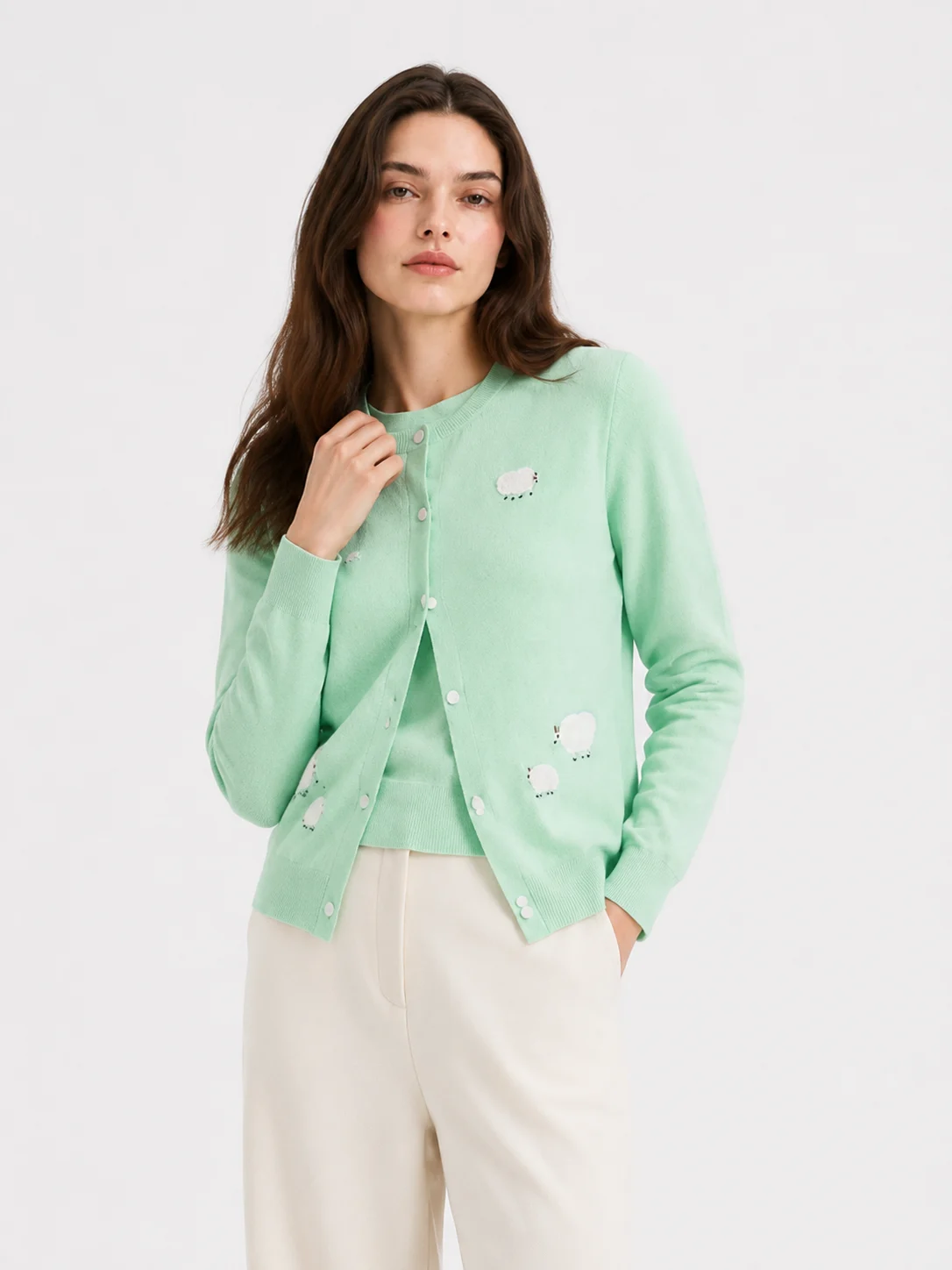
lpknit works with boutique labels on factory sampling for premium sweater and cardigan development. If you are planning merino, cashmere, or mohair styles, review lpknit’s mohair long-sleeve knit sweater example and wool sheep motif cardigan for construction inspiration.
A practical CTA: if your brand has a sketch, reference photo, or early tech pack, contact lpknit through the premium knitwear product collection to discuss sample feasibility, low MOQ options, and expected lead time before bulk production.
FAQ: Sweater Sampling Timelines for Fashion Brands
How long does sweater sampling usually take for an OEM factory?
Sweater sampling usually takes 7–21 working days for an OEM factory after the tech pack, yarn, gauge, colors, trims, and measurements are confirmed. Simple merino styles can be faster, while cashmere, mohair, jacquard, intarsia, or custom trims often need more time.
How long does it take to knit or manufacture one sweater sample?
One machine-knit sweater sample may be physically knitted in several hours, but the full factory process often takes one to three weeks. The timeline includes yarn preparation, machine setup, linking, washing, finishing, quality control, and sample shipment.
How many sample rounds are normal before bulk production?
Most boutique knitwear brands need 1–3 sample rounds before bulk production. A basic pullover may pass after one round, but premium yarns, new fits, special stitches, or cardigan construction often need a second fit sample or pre-production sample.
What makes sweater sampling take longer?
Sweater sampling takes longer when the design uses custom yarn, special dyeing, cashmere washing, mohair brushing, jacquard, intarsia, cables, hand finishing, unusual trims, or unclear measurements. International shipping and slow sample feedback can also add calendar days.
Can a sweater sample be made in 3 days?
A 3-day sweater sample is possible only in narrow cases, such as an available yarn, simple construction, existing machine program, and local review. For OEM production planning, 7–21 working days is a safer estimate for a reliable first sample.
How long does sweater sampling take by hand?
Hand sweater sampling often takes 3–8 weeks, depending on yarn weight, stitch density, size, and artisan availability. Crochet-style or heavily textured samples may take longer because manual labor is the main production constraint.
Is Reddit advice useful for sweater sampling timelines?
Reddit can be useful for understanding real founder frustration, but it often mixes hobby knitting, handmade sweaters, and startup production issues. A brand sourcing from an OEM factory should rely on supplier-specific timelines, tech pack readiness, and sample approval stages.
How can a brand speed up sweater sampling?
A brand can speed up sweater sampling by sending a complete tech pack, choosing yarn early, approving trims quickly, limiting first-round colorways, and writing exact fit comments. Clear centimeter-based revisions usually save more time than asking for a rushed sample.
Conclusion: Planning the Right Sweater Sampling Timeline
How long does sweater sampling take? In my experience advising boutique knitwear buyers, the dependable answer is 7–21 working days for most OEM factory samples, with 3–5 weeks needed for complex cashmere, mohair, jacquard, intarsia, or hand-finished styles. I have reviewed first samples where a complete tech pack saved more than a week, and I have also seen unclear fit notes create an avoidable third sample round.
lpknit’s first-hand factory sampling work with merino wool, cashmere, and mohair sweaters supports the same pattern: speed comes from clear specifications, available yarn, realistic construction, and fast approval. This guidance also aligns with verifiable 2025–2026 sourcing realities, including European Union Regulation (EU) No 1007/2011, United States Federal Trade Commission wool labeling rules, and Textile Exchange 2024 fiber-market data. If your brand is preparing a premium sweater or cardigan collection, share your sketch, tech pack, or reference style with lpknit to estimate sample timing, low MOQ feasibility, and the best route to bulk production.
{
“@context”: “https://schema.org”,
“@type”: “Article”,
“headline”: “How Long Does Sweater Sampling Take? 2026 OEM Guide”,
“datePublished”: “2026-07-21”,
“dateModified”: “2026-07-21”,
“description”: “Learn how long sweater sampling takes in OEM production, from tech pack to fit approval, with timelines for merino, cashmere, mohair, revisions, and shipping.”,
“keywords”: “how long does sweater sampling take”,
“author”: {
“@type”: “Person”,
“name”: “Elena Marlow”,
“jobTitle”: “Knitwear sourcing consultant with 9 years advising US, UK, and EU boutique labels on OEM sweater development.”
}
}
{
“@context”: “https://schema.org”,
“@type”: “FAQPage”,
“mainEntity”: [
{
“@type”: “Question”,
“name”: “How long does sweater sampling usually take for an OEM factory?”,
“acceptedAnswer”: {
“@type”: “Answer”,
“text”: “Sweater sampling usually takes **7–21 working days** for an OEM factory after the tech pack, yarn, gauge, colors, trims, and measurements are confirmed. Simple merino styles can be faster, while cashmere, mohair, jacquard, intarsia, or custom trims often need more time.”
}
},
{
“@type”: “Question”,
“name”: “How long does it take to knit or manufacture one sweater sample?”,
“acceptedAnswer”: {
“@type”: “Answer”,
“text”: “One machine-knit sweater sample may be physically knitted in several hours, but the full factory process often takes **one to three weeks**. The timeline includes yarn preparation, machine setup, linking, washing, finishing, quality control, and sample shipment.”
}
},
{
“@type”: “Question”,
“name”: “How many sample rounds are normal before bulk production?”,
“acceptedAnswer”: {
“@type”: “Answer”,
“text”: “Most boutique knitwear brands need **1–3 sample rounds** before bulk production. A basic pullover may pass after one round, but premium yarns, new fits, special stitches, or cardigan construction often need a second fit sample or pre-production sample.”
}
},
{
“@type”: “Question”,
“name”: “What makes sweater sampling take longer?”,
“acceptedAnswer”: {
“@type”: “Answer”,
“text”: “Sweater sampling takes longer when the design uses custom yarn, special dyeing, cashmere washing, mohair brushing, jacquard, intarsia, cables, hand finishing, unusual trims, or unclear measurements. International shipping and slow sample feedback can also add calendar days.”
}
},
{
“@type”: “Question”,
“name”: “Can a sweater sample be made in 3 days?”,
“acceptedAnswer”: {
“@type”: “Answer”,
“text”: “3-day sweater sample is possible only in narrow cases, such as an available yarn, simple construction, existing machine program, and local review. For OEM production planning, 7–21 working days is a safer estimate for a reliable first sample.”
}
},
{
“@type”: “Question”,
“name”: “How long does sweater sampling take by hand?”,
“acceptedAnswer”: {
“@type”: “Answer”,
“text”: “Hand sweater sampling often takes **3–8 weeks**, depending on yarn weight, stitch density, size, and artisan availability. Crochet-style or heavily textured samples may take longer because manual labor is the main production constraint.”
}
},
{
“@type”: “Question”,
“name”: “Is Reddit advice useful for sweater sampling timelines?”,
“acceptedAnswer”: {
“@type”: “Answer”,
“text”: “Reddit can be useful for understanding real founder frustration, but it often mixes hobby knitting, handmade sweaters, and startup production issues. A brand sourcing from an OEM factory should rely on supplier-specific timelines, tech pack readiness, and sample approval stages.”
}
},
{
“@type”: “Question”,
“name”: “How can a brand speed up sweater sampling?”,
“acceptedAnswer”: {
“@type”: “Answer”,
“text”: “brand can speed up sweater sampling by sending a complete tech pack, choosing yarn early, approving trims quickly, limiting first-round colorways, and writing exact fit comments. Clear centimeter-based revisions usually save more time than asking for a rushed sample.”
}
}
]
}