UK vs EU knitwear supplier options are best compared by factory capability, minimum order quantity (MOQ), sampling, yarn access, delivery route, and total landed cost—not location alone. A UK factory may simplify communication for a UK brand, while an EU supplier may suit a particular product or sourcing need. Verify the factory, materials, sample process, written minimums, customs terms, and delivery costs before choosing.
For a boutique label, the right supplier is the one that can make the intended garment to specification at a workable order size and cost. Location can affect visits, shipping, and customs, but it does not guarantee quality, low minimums, or a short production schedule.
This guide compares UK and EU knitwear sourcing for private-label and original equipment manufacturing (OEM) buyers. It explains how to assess samples, compare landed costs, and shortlist suppliers for merino, cashmere, or mohair collections.
Key takeaways
– Compare named factories and production capabilities, not country reputations.
– Ask for MOQ by style and colour; these can differ.
– Approve a production-representative sample and written specification before bulk production.
– UK-EU customs and origin rules can affect cross-border deliveries.
– Include freight, tax, and quality controls when comparing unit prices.
What UK vs EU knitwear supplier options mean for boutique brands
UK vs EU knitwear supplier options include UK-based factories, EU-based manufacturers, and suppliers coordinating production across more than one country. Identify the actual factory, contracting company, and shipping origin before comparing quotations.
“European manufacturer” might describe a design office, agent, or factory in different countries. Ask where knitting, linking, washing, finishing, and packing take place. These details help you assess visits, lead times, and which market rules may apply.
Search by production capability as well as location: fully fashioned knitwear, cut-and-sew knitwear, private label, OEM, or sample development. Request the same basic information from each candidate, including factory address, product examples, minimums, sample terms, and delivery conditions.
For example, a London label planning a 60-piece merino capsule might compare a UK factory requiring 100 units per colour with an EU supplier willing to consider a 60-piece test run. The latter may fit the launch better, provided the sample, yarn availability, freight, and import terms also work.
UK vs EU knitwear supplier options: side-by-side comparison
A UK or EU supplier can be the better fit depending on order size, product complexity, yarn requirements, and delivery destination. This comparison identifies questions to verify with each supplier; it does not imply fixed regional advantages.
| Decision factor | UK-based supplier | EU-based supplier | What to verify |
|---|---|---|---|
| Communication and visits | May be convenient for UK brands | Depends on country, travel, and working arrangements | Factory address and meeting options |
| Production expertise | Varies by factory and machinery | Varies by factory and manufacturing cluster | Similar products, equipment, and processes |
| MOQ | Depends on capacity, yarn, colour, and style | Depends on capacity, yarn, colour, and style | Minimum per style, colour, and size ratio |
| Sampling | May be convenient for UK-based development | Can work remotely with clear specifications | Fee, revisions, courier cost, approval process |
| Yarn choice | Depends on mills and sourcing network | Depends on mills and sourcing network | Fibre composition, counts, colours, stock status |
| Delivery to UK | Domestic delivery may avoid an import step | Import formalities may apply to Great Britain | Incoterm, customs, duty, VAT, dispatch point |
| Delivery to EU | Import requirements may apply | Route and seller location affect requirements | Shipping origin and destination obligations |
| Quality assurance | Depends on written standards and inspection | Depends on written standards and inspection | Tolerances, defect rules, testing, records |
Separate factory location from production capability. Request the factory name and address, and ask which operations happen in-house or through partners.
A comparable quote specifies the same garment, yarn composition, gauge, finishing, quantity, and delivery terms. If one supplier quotes a finished, packed sweater and another excludes finishing or freight, their prices are not directly comparable. Ask for sampling, labels, packaging, freight, brokerage, duties, and taxes to be itemised where possible.
How MOQ and sampling shape a first knitwear order
MOQ and sampling are supplier-specific commercial terms, not dependable UK-versus-EU averages. A factory may set one minimum for a style and another for each colour because yarn purchasing, machine setup, and production planning differ.
Ask whether the minimum applies per style, colour, or total order. Confirm whether available yarn stock can support a smaller run, whether custom dyeing changes the minimum, and how the supplier handles leftover yarn or units.
Treat sampling as a defined development process. A sample fee alone does not establish whether pattern development, yarn sourcing, revisions, or a pre-production sample are included. Agree in writing what each stage covers and whether sample costs are credited against bulk production.
Sample-order checklist
- Share a tech pack with measurements, construction, stitch or gauge references, and finishing requirements.
- Confirm fibre composition, yarn specification, colour reference, and approved substitutions.
- Request a development sample and assess fit, hand feel, weight, measurements, and workmanship.
- Agree the number and cost of revisions, sample dispatch method, and approval deadline.
- Approve a pre-production sample matching the bulk specification.
- Confirm size breakdown, labelling, packaging, tolerances, and inspection arrangements.
- Get a written quotation covering MOQ, lead-time assumptions, payment schedule, and delivery terms.
Suppose a small label wants 48 mohair cardigans in two colours. One supplier may require 48 pieces per colour, while another may accept 24 per colour using stocked yarn. The lower commitment may reduce inventory risk, but the buyer should confirm whether that yarn can be replenished consistently for repeat orders.
Comparing merino, cashmere, and mohair suppliers
A knitwear supplier’s material capability should be verified through specifications and samples, not inferred from a country or product photograph. For merino, cashmere, and mohair, request composition details, yarn sourcing information, available colours, and relevant fibre or chemical documentation.
A “cashmere sweater” description does not establish whether the garment is pure cashmere or a blend. Ask for exact fibre percentages and documentation appropriate to your product and sales markets. Material choice also affects price, feel, performance, and production options.
Questions for each supplier
- Which yarn mills or spinners can supply the proposed fibre and colour?
- Is the yarn stocked, made to order, or subject to a dyeing minimum?
- What gauge, construction, and finishing method are proposed?
- Can the factory provide composition or other requested test documentation?
- What care instructions and label wording suit the finished product?
- How does production control pilling, shrinkage, colour consistency, and measurement variation?
A start-up comparing two merino sweater quotations should request the same yarn specification and sample finish from both suppliers. If one quote uses a different blend or gauge, the lower price does not establish better value: the garments are not like-for-like.
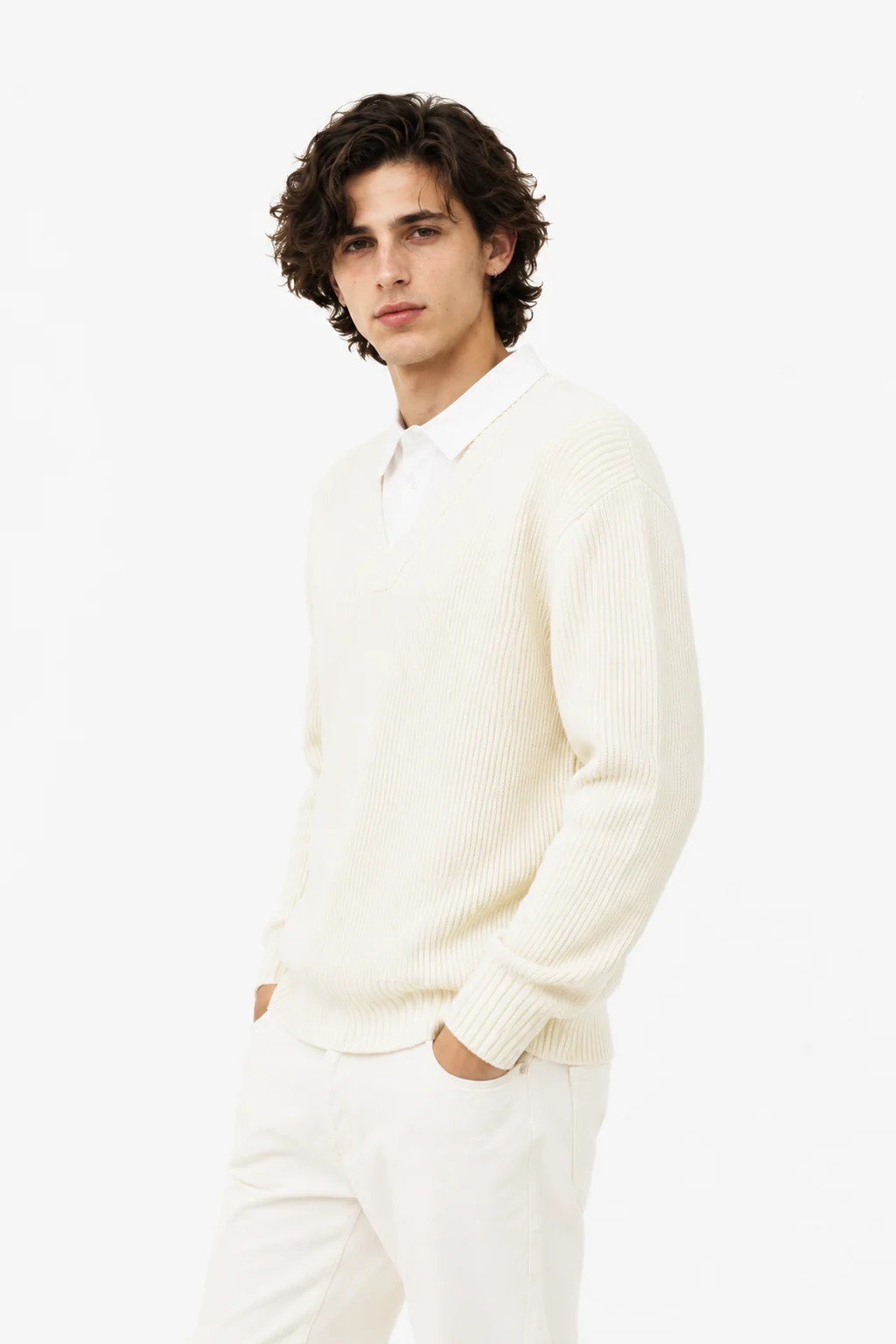
For product examples, see lpknit’s knitwear product range, including its fine-knit round-neck cardigan and mohair long-sleeve sweater. These published pages demonstrate product examples, not independent verification of factory capacity, minimums, or material testing. Confirm that the proposed specification and production terms meet your needs.
UK-EU shipping, customs, and landed cost
A knitwear order crossing the UK-EU border may require customs declarations and may incur duties or import VAT, depending on the goods, destination, origin, and delivery terms. A supplier’s location alone does not determine the final charge: confirm shipping origin and responsibility for each import step.
The UK-EU Trade and Cooperation Agreement provides preferential tariff treatment for qualifying goods that meet applicable rules of origin. Preference is not automatic. Ask whether the garment qualifies and what origin information the supplier can provide; consult a customs professional for a product-specific assessment.
Request the Incoterm and named delivery place on every quotation. Clarify who books freight, makes customs declarations, pays import charges, and handles missing paperwork or delays. Compare total landed cost—not just the factory’s ex-works price.
Dated rules and reference points for UK-EU knitwear orders
- UK and EU, from 1 January 2021: The UK-EU Trade and Cooperation Agreement has applied provisionally since this date; preferential tariffs depend on meeting product-specific origin rules. Source: UK Government, Trade and Cooperation Agreement, 2021.
- EU, from 13 December 2024: Regulation (EU) 2023/988, the General Product Safety Regulation, has applied since this date. Source: European Commission, General Product Safety Regulation, 2024.
- EU: Textile fibre names and fibre-composition labelling are governed by Regulation (EU) No 1007/2011. Source: EUR-Lex, Regulation (EU) No 1007/2011, 2011.
- UK: Textile product labelling guidance covers fibre-content information. Source: UK Government, Textile products: labelling and fibre composition, accessed 2 November 2026.
- Great Britain imports: Importers may need to account for customs duties and import VAT. Source: UK Government, Import goods into the UK, accessed 2 November 2026.
These sources describe rules and government guidance, not a determination for a particular sweater or shipment. Requirements may change and depend on product and destination. Verify current labelling, safety, customs, and tax obligations with the relevant authority or adviser before ordering.
A practical framework for choosing a supplier
The most reliable way to choose between UK vs EU knitwear supplier options is to compare the same evidence from each candidate. Use a simple scorecard rather than relying on broad claims such as “European quality” or “local means faster.”
- Set the brief: define garment type, fibre, target retail price, launch date, quantity, and destination markets.
- Shortlist by capability: confirm the supplier makes the required construction and works with the intended yarn.
- Request matching quotes: use the same tech pack, quantity, colours, packaging, and delivery terms.
- Test sampling: assess technical understanding, sample accuracy, revisions, and dispatch timing.
- Check production controls: ask how measurements, defects, yarn lots, finishing, and inspection are managed.
- Calculate landed cost: include sampling, unit cost, freight, brokerage, duties, taxes, and requested compliance testing.
- Approve the production file: record the final sample, specification, tolerances, labels, packaging, and delivery schedule.
Score suppliers from 1 to 5 on capability, MOQ fit, sample quality, communication, quality controls, delivery plan, and landed cost. Weight the criteria that matter most to your launch. A new label with limited cash may prioritise minimums and sampling; a repeat-order brand may focus on capacity and consistency.
lpknit describes itself as a premium knitwear manufacturer and OEM supplier focused on merino, cashmere, and mohair, with low-MOQ support (from 1 piece per colour on catalogue styles and 100 pieces per style on custom designs) and factory sampling. These are brand-stated services, not independently audited claims. Review its published knitwear products and request written confirmation of MOQ, sample terms, production location, and delivery conditions for your design.
Frequently asked questions
Who are some wholesale knitwear suppliers in the UK?
UK wholesale and private-label options include factories, knitwear specialists, and sourcing companies. Check whether a supplier offers wholesale stock, OEM development, or made-to-order manufacturing; these models have different minimums and design control. Request the production address, sample terms, and a quotation for your exact product.
Is EU XL the same as UK XL?
EU XL and UK XL are not guaranteed to match across brands or factories. Size labels cannot replace garment measurements, fit blocks, or grading rules. Share a measurement chart in centimetres, confirm tolerances, and approve a sample in the target size range.
What are the best UK knitwear brands?
“Best” depends on whether you want finished garments or production for your own label. A consumer fashion brand is not necessarily a factory or wholesale supplier. For manufacturing, evaluate the producer’s capabilities, product examples, MOQ, sample process, and commercial terms.
Where can small brands find wholesale or private-label knitwear suppliers in Europe?
Search supplier websites, trade directories, trade events, and professional referrals. Shortlist by garment type, fibre, and service model, then verify the actual factory and request comparable quotations. Ask whether the supplier supports OEM development, private label, or only ready-made wholesale stock.
How do knitwear supplier MOQs and sampling options differ?
MOQs and sampling vary by supplier, yarn, colour, construction, and capacity. A factory may accept a small total order but set a separate minimum for each colour. Request a written breakdown of sample fees, included revisions, minimums, and available-yarn options.
How do UK-EU customs affect a knitwear order?
Cross-border goods may require customs declarations, and charges depend on destination, classification, origin, and delivery terms. The UK-EU Trade and Cooperation Agreement can provide preferential tariffs for qualifying goods that meet origin rules. Confirm eligibility, documents, and responsibility for charges before ordering.
Which should a small brand choose: a UK or EU knitwear supplier?
Choose the supplier whose verified capability, MOQ, sample quality, delivery plan, and landed cost suit your collection. A UK location may suit some UK brands’ communication or delivery needs; an EU factory may suit others’ product or sourcing requirements. Location alone proves neither quality nor lower cost.
This guide draws on lpknit’s published product information and the cited UK and EU authorities; it distinguishes the supplier’s own descriptions from independently published rules.
Before choosing a partner, compare at least two suppliers using the same tech pack and delivery terms. To request a discussion with lpknit, use its published knitwear range as a product reference and prepare your style, yarn, quantity, colours, target delivery date, and destination. Ask for written confirmation of sampling, MOQ, production location, and landed-cost responsibilities before placing an order.