Pure cashmere sweaters use cashmere as their only fiber, while cashmere blends combine it with fibers such as merino wool, silk, or other wool. Pure cashmere can feel exceptionally soft and light; a well-made blend may offer a different balance of warmth, durability, drape, and price. Check the exact fiber percentages, yarn construction, and labeling rules before comparing garments.
The best choice depends on how a sweater will be worn, how it is made, and what the label actually says. Fiber percentage matters, but it does not tell the whole story: yarn quality, knit structure, garment weight, and finishing also affect comfort and performance.
For shoppers, the decision is often about feel and value. For boutique fashion brands, it also involves collection positioning, repeatability, sampling, and a cost that works at the planned retail price.
Key takeaways
– Pure cashmere is made from cashmere fiber alone; a blend contains cashmere plus one or more other fibers.
– A higher cashmere percentage does not automatically mean a better sweater.
– Merino blends can suit frequent wear; silk blends can add smoothness and drape.
– Read fiber percentages and care instructions before comparing prices.
– Brands can compare yarns and finished samples before committing to a collection.
What Is a Cashmere Blend?
A cashmere blend is a textile made with cashmere fiber and at least one other fiber, such as merino wool, silk, or another wool. The label should identify the fiber composition and percentages, so “cashmere blend” alone is not enough information to judge quality.
For example, a sweater labeled 90% wool and 10% cashmere is quite different from one labeled 70% cashmere and 30% silk. The first is primarily wool; the second is primarily cashmere. Both may use the word “cashmere” in product copy, but they offer different material proportions and likely different prices.
In the United States, the Federal Trade Commission’s Textile Fiber Products Identification Act and rules in 16 CFR Part 303 set requirements for textile product fiber-content labeling. In the European Union, Regulation (EU) No 1007/2011 sets rules for textile fibre names and labeling. Check the rules that apply where a garment is sold, and consult qualified compliance advice for a product launch.
A cashmere blend is not a single material standard. To compare products, look for:
- Each fiber’s name and percentage.
- Whether the garment is knitted from a blended yarn or uses different yarns in separate areas.
- Garment weight, gauge, and construction.
- Care instructions and any stated limitations.
- Country-of-origin details where provided or required.
Cashmere Blend vs Pure Cashmere Sweaters: What Changes?
Cashmere blend vs pure cashmere sweaters differ in fiber composition, but the practical result depends on the specific fibers and how the yarn and garment are engineered. “Pure” describes composition, not a guarantee of superior softness, longevity, or warmth.
| Factor | Pure cashmere | Cashmere-merino blend | Cashmere-silk blend | Cashmere-wool blend |
|---|---|---|---|---|
| Fiber content | Cashmere only | Cashmere and merino wool | Cashmere and silk | Cashmere and other wool |
| Typical feel | Soft, warm, and light when well made | Can feel springier or more structured | Often smooth with a fluid drape | Varies with the wool and yarn |
| Warmth | Depends on garment weight and knit structure | Depends on proportions, yarn, and construction | Depends on proportions and knit structure | Depends on wool type and construction |
| Everyday suitability | Depends on use and care | Can be suitable for regular rotation | Often selected for a smoother, lighter look | Varies by blend and garment design |
| Price comparison | Often higher, but quality varies | May cost less or be comparable | Varies with silk content and quality | Varies with fiber quality and proportions |
These are general tendencies, not guarantees. A dense, well-finished blend can outperform a loosely knitted pure-cashmere garment in a particular use. Ask for the full fiber composition and assess the garment rather than relying on a material name alone.
Softness and feel
Softness depends on fiber characteristics and yarn processing, as well as the wearer’s sensitivity. A carefully selected blend may feel smooth against the skin, while a low-quality yarn made mostly from cashmere may still feel rough or inconsistent.
A buyer comparing women’s cashmere sweaters should check the neckline, cuffs, and underarm seams, where irritating or bulky construction can affect comfort. If possible, try the garment over a bare arm or use a swatch to assess its feel.
Warmth and weight
A sweater’s warmth depends on more than its fiber label. Fiber properties, yarn thickness, stitch density, garment weight, fit, and layering all contribute to how warm a garment feels in use.
A fine-gauge cashmere-silk cardigan may work as a light indoor layer, while a heavier cashmere-merino sweater may feel more substantial. Compare garments of similar weight and knit structure before concluding that one fiber ratio is warmer.
Pilling and durability
Pilling can occur when short fibers work loose and tangle on a garment’s surface. Fiber length, yarn twist, knit structure, friction, and use all influence the result. Blending fibers does not automatically prevent pills, just as pure cashmere is not automatically fragile.
Check high-friction areas such as underarms and sides. For a brand evaluating a new style, wear testing and following the recommended care routine can reveal more than a quick inspection of a new sample.
Which Blend Suits Everyday Wear, Warmth, or Layering?
The most suitable cashmere blend depends on the intended use, desired hand feel, and garment design. Cashmere-merino may suit shoppers who want a more structured sweater for regular rotation; cashmere-silk may suit lighter designs where a smooth drape is important.
Use these as starting points, not fixed rules:
- Everyday rotation: Compare cashmere-merino and cashmere-wool options for structure and feel, then check the care label and finished garment.
- Lightweight layering: Consider a fine-gauge cashmere-silk or cashmere-merino style, depending on the desired drape.
- Softness-focused luxury: Evaluate high-quality pure cashmere alongside high-cashmere blends. Composition alone cannot confirm the feel.
- More accessible pricing: A blend with a lower cashmere percentage may help manage cost, but compare its actual hand feel and performance before positioning it as an alternative.
- Cold-weather weight: Compare finished garment weight, stitch density, and fit as well as fiber content.
Example: everyday wardrobe. Hypothetical example: Maya, a London-based buyer, is choosing sweaters for a small workwear range. She compares a pure-cashmere crewneck with a cashmere-merino sample in the same gauge and similar weight. If the blend holds its shape better in wear tests and still meets her softness target, she may choose it for the higher-volume style and keep pure cashmere for a premium item.
Example: seasonal capsule. Hypothetical example: Daniel is developing a six-style autumn capsule for an independent US label. He requests samples in two yarn options before confirming production. If the cashmere-silk version gives the intended drape but exceeds his target cost, a second blend can help the team test whether a different composition meets both the design brief and margin.
Does a Higher Cashmere Percentage Mean Better Quality?
No. A higher cashmere percentage tells you how much of the textile’s fiber content is cashmere, not the quality of that cashmere or the finished sweater.
When evaluating quality, look at the complete product:
- Verify the label. Confirm that the fiber names and percentages are clearly stated and consistent with the claims.
- Inspect the yarn and knit. Look for even stitches, consistent texture, and clean finishing at seams, cuffs, and edges.
- Assess the fabric in use. Note whether the sweater feels comfortable, maintains its intended shape, and suits its planned wear.
- Review care and testing needs. Follow the care label; for a brand, establish appropriate internal checks and performance criteria before production.
- Compare like with like. Similar garment weights, gauges, and constructions make price and hand-feel comparisons more useful.
The International Organization for Standardization’s ISO 17751 series covers quantitative analysis of cashmere, wool, and other animal fibers using light or electron microscopy. ISO 17751-1:2016 describes the light-microscope method. Buyers who need to verify fiber identity or composition can ask a qualified textile-testing laboratory about suitable methods for their product and market.
For retail buyers, a label and a clear return policy are useful starting points. For brands, supplier documentation and independent testing can help substantiate composition claims. Neither a soft touch nor a premium price proves that a garment is high quality.
How Much Should a Good Cashmere Sweater Cost?
There is no universal price that defines a good cashmere sweater. Retail price depends on fiber quality, yarn, garment weight, construction, production volume, design, brand positioning, and distribution costs.
Compare products with similar fiber percentages, weights, and construction. A lightweight cashmere-silk cardigan should not be judged against a heavier pure-cashmere sweater without accounting for the material and design differences. Also check whether the quoted price is retail or wholesale and whether it includes taxes, shipping, or other costs.
For brands, a commercial comparison should include more than the unit price:
- Yarn and fiber composition.
- Sampling and development costs.
- Minimum order quantity (MOQ).
- Production lead time and capacity.
- Labeling, packaging, and quality-control requirements.
- Landed cost, target retail price, and expected margin.
A lower-cost blend may help a brand offer a more accessible price point, while pure cashmere may support a higher-end position. The right decision depends on customer expectations and whether the finished sample delivers the intended feel and appearance.
How Should Brands Source and Sample Cashmere Knitwear?
Brands can reduce material and fit uncertainty by sampling the proposed yarn and garment before placing a production order. A sample lets the team assess composition, hand feel, gauge, fit, finishing, and care needs against the design brief.
A practical development process:
- Set the product brief. Define the target customer, season, silhouette, target price, and intended use.
- Specify fiber options. Request exact compositions for pure cashmere and relevant blends, rather than a general “cashmere blend” description.
- Review the sample. Check measurements, weight, gauge, hand feel, stitch definition, and finishing.
- Wear-test the garment. Evaluate comfort, shape retention, and surface changes under realistic use and care.
- Confirm commercial terms. Review MOQ, sample charges, timing, production capacity, labeling, and quality expectations.
- Approve a production reference. Record the approved sample and specifications so the production team has a clear standard.
Dated standards and regulations to check:
– The United States Federal Trade Commission’s textile fiber-content labeling rules appear in 16 CFR Part 303; confirm current requirements for the US market before launch.
– European Union Regulation (EU) No 1007/2011 establishes textile fibre names and labeling requirements in the EU; confirm that the product label meets applicable rules.
– International Organization for Standardization standard ISO 17751-1:2016 specifies a light-microscope method for quantitative analysis of cashmere, wool, and other animal fibers.
– These references describe labeling and testing frameworks, not a universal retail price, durability score, or sweater-quality rating.
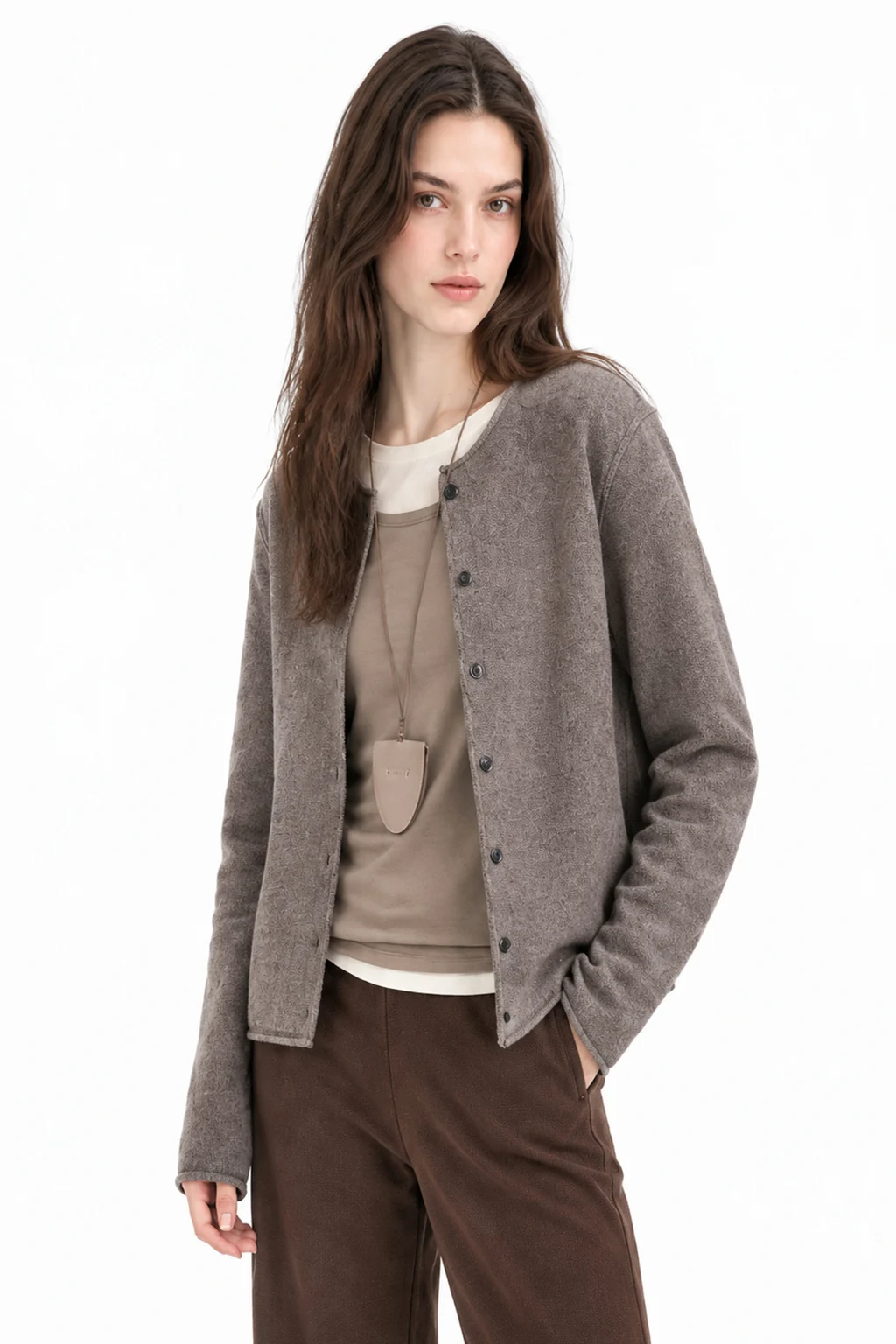
For development, lpknit’s knitwear product range includes options for boutique and private-label collections. Buyers can review a fine-knit round-neck cardigan or an illustrated knit button cardigan as style references. The Knitwear Journal also covers sourcing and knitwear development topics.
Compare a cashmere–mohair blend on the intended silhouette
A cashmere–mohair blend deserves its own sample comparison when a collection calls for a visible halo or a textured surface. Compare it with the pure-cashmere option using the intended neckline, sleeve and garment shape. Review the surface, drape and comfort with the layers the customer is likely to wear.
Ask for the exact fibre composition, yarn reference and finishing description for each sample. Keep the approved swatch with the garment, and compare the quoted specification rather than assuming a blend is cheaper or more durable. The approved label and product description should describe the actual composition; a blend should not be presented as pure cashmere.
Frequently Asked Questions
What are the main differences between cashmere and a cashmere blend?
Pure cashmere uses cashmere fiber alone, while a cashmere blend combines cashmere with another fiber, such as merino wool, silk, or other wool. A blend’s feel and performance depend on its exact composition, yarn, and construction. Check the garment label rather than relying on the phrase “cashmere blend.”
How can buyers tell whether cashmere is high quality?
Buyers should check fiber-content labeling, inspect the knit and finishing, and assess the garment’s feel and construction. Softness alone is not proof of quality. Brands that need to verify fiber composition can ask a qualified laboratory about testing methods, including methods covered by ISO 17751.
Which cashmere blend is best for everyday wear?
There is no single best blend for every wearer. Cashmere-merino or cashmere-wool can be useful starting points for a more structured everyday sweater, while the finished garment’s weight, fit, care requirements, and wear performance matter just as much as its fiber ratio.
Is pure cashmere warmer than a cashmere blend?
Not always. Warmth depends on garment weight, stitch density, fit, layering, and the fibers used. Compare sweaters with similar constructions and intended use. A dense blend may feel warmer in practice than a lightweight pure-cashmere garment.
How much should a good cashmere sweater cost?
A good sweater does not have one universal price. Retail cost reflects fiber quality, yarn, weight, construction, design, production, and distribution. Compare similar garments and check fiber percentages, care instructions, and construction before using price as a quality signal.
Does a higher cashmere percentage always mean a better sweater?
No. The percentage describes fiber composition, not fiber grade, yarn quality, construction, or durability. A high-cashmere sweater can be poorly made, and a well-made blend can suit a particular use better. Evaluate the finished garment and supporting product information.
What should a fashion brand request when sampling cashmere knitwear?
A brand should request exact fiber percentages, yarn and garment specifications, sample timing, MOQ, and any relevant production or testing information. The sample should be reviewed for fit, hand feel, gauge, finishing, and care needs before production approval.
The practical choice between cashmere blend vs pure cashmere sweaters comes down to composition, construction, intended use, and price—not fiber percentage alone. For brands comparing materials, lpknit offers premium knitwear manufacturing and factory sampling support for merino, cashmere, and mohair styles. Explore lpknit’s product range or discuss a sample for your next collection.