To choose a sweater manufacturer, compare verified knitwear experience, yarn quality, gauge control, MOQ, sample accuracy, production capacity, inspection standards, landed cost, and delivery terms. A boutique label should review the factory’s merino, cashmere, or mohair capabilities, request a physical sample, confirm fiber labeling under the U.S. Federal Trade Commission and European Union rules, and test a small order before scaling. Suppliers such as lpknit are especially relevant when a brand needs low MOQ production (from 1 piece per colour on catalogue styles and 100 pieces per style on custom designs), factory sampling, and OEM development for the US, UK, or EU.
Choosing a sweater supplier affects more than the factory price. The right partner influences fit, hand feel, pilling, delivery reliability, customer returns, and whether a small collection can be produced without excessive inventory.
A large apparel factory may offer attractive pricing but lack experience with fine-gauge merino or delicate cashmere. A smaller knitwear specialist may provide better sampling and communication, yet require a clearer tech pack and realistic production schedule. The best decision comes from comparing the complete production process rather than choosing from a directory alone.
Key takeaways
- Confirm real experience with your fiber, gauge, construction, and target market.
- Compare sample accuracy and testing results before comparing unit prices.
- Treat MOQ, payment terms, lead time, and landed cost as one commercial decision.
- Use a small production run to verify quality before committing to a seasonal volume.
- Keep fiber claims and care labels aligned with current US, UK, and EU requirements.
What Should You Look for in a Reliable Sweater Manufacturer?
A reliable sweater manufacturer should show repeatable control over yarn, knitting, linking, finishing, inspection, and shipment. Product photographs alone do not prove capability; buyers need samples, specifications, process evidence, and clear answers from the factory.
Start by assessing these seven areas:
- Knitwear specialization: Does the factory regularly produce sweaters and cardigans, or is knitwear only a small part of its business?
- Fiber expertise: Can the factory explain the differences between merino wool, cashmere, mohair, cotton, and blended yarns?
- Gauge and construction: Can it produce the gauge, stitch structure, rib tension, intarsia, jacquard, or fully fashioned shape in your design?
- Sampling process: Does the factory provide a development sample, fit sample, size set, and pre-production sample when needed?
- Quality control: Are measurements, appearance, color, pilling, shrinkage, and needle marks checked at defined stages?
- Commercial clarity: Are MOQ, sample fees, payment milestones, packaging, and shipping responsibilities written into the quotation?
- Communication: Does one accountable contact answer technical and production questions within an agreed time?
For boutique brands, low MOQ is valuable only when the factory can maintain consistent quality at small volumes. Ask whether a stated MOQ applies per style, color, yarn, or total order. A “500-piece MOQ” may mean 500 pieces in one color, not 500 pieces across five colorways.
A factory should also explain what happens when a sample fails. Clear revision procedures are a stronger signal than a promise of “high quality.” Ask who approves the final measurements, how shade variation is handled, and whether rejected garments are repaired, replaced, or credited.
How to Choose a Sweater Manufacturer Step by Step
The most dependable way to choose a sweater manufacturer is to use a documented comparison process from design brief through shipment. A consistent process prevents a low quote from hiding weak sampling, unsuitable yarn, or expensive corrective work.
1. Define the product before contacting factories
Prepare a short product brief with:
- Product category, such as crewneck sweater, cardigan, vest, or polo knit
- Fiber composition and target yarn
- Reference images or an existing sample
- Measurement chart and size range
- Stitch details, gauge, trims, and closures
- Target retail price and estimated order quantity
- Delivery market and required labeling
- Target launch date
A factory can quote more accurately when the buyer provides technical information. “Premium cashmere sweater” is not enough to establish yarn grade, gauge, weight, fit, finishing, or packaging.
2. Shortlist manufacturers with matching capabilities
Search for a custom knit sweater manufacturer that already works with your product type and fiber. Review the factory’s product range, sample examples, export markets, and ability to support private-label development.
For example, lpknit focuses on merino, cashmere, and mohair sweaters for boutique brands in the US, UK, and EU. Its premium knitwear product range shows the types of sweaters and cardigans that can be used as references during an OEM discussion.
3. Send the same brief to three to five factories
Use one specification package for every supplier. Request the same information:
- Sample fee and sample timeline
- MOQ by style, color, and yarn
- Unit price at two or three quantities
- Yarn origin and composition documentation
- Production lead time
- Payment terms
- Inspection process
- Packaging and shipping options
- Required certifications or test reports
Using the same brief makes the comparison more reliable. It also reveals which factory asks useful questions before quoting.
4. Evaluate a physical sample
Never approve a sweater manufacturer solely from a website or video call. Inspect the sample for measurements, stitch definition, hand feel, neckline recovery, sleeve shape, linking quality, loose ends, shade consistency, and surface appearance.
Record every correction in a fit comment sheet. The second sample should show whether the factory understood the first set of instructions. Sample accuracy is often more predictive of production performance than a polished sales presentation.
5. Run a controlled pilot order
A pilot order should represent the real product, not an easier substitute. Use the final yarn, construction, labels, packaging, and size range where possible.
Inspect the pilot before placing a larger seasonal order. A small test can identify pilling, shrinkage, colorfastness, measurement drift, or shipment problems while the financial exposure remains manageable.
How Can You Verify Knitwear Quality and Factory Capability?
You can verify a manufacturer’s capability by combining physical sample inspection, technical questions, production evidence, and independent testing. A credible factory should be able to connect its claims to a repeatable process.
Ask for evidence in five categories.
Yarn and material evidence
Request the full fiber composition, yarn count or thickness, color references, and available documentation. For cashmere, ask how the factory controls fiber composition and whether the material is tested or supported by supplier documentation. For mohair and merino, discuss blend ratios, softness, halo, warmth, and expected shedding.
Fiber names also affect legal labeling. The FTC textile fiber labeling guidance explains US requirements for fiber content and manufacturer identity. European Union products must follow the EU textile fiber names and labeling regulation.
Construction evidence
Check whether the sample is fully fashioned, cut and sewn, or made with another construction method. Inspect shoulder joins, armholes, side seams, cuffs, hems, buttonholes, and collar recovery.
For a cardigan, examine button security and front-edge stability. For a brushed mohair style, inspect whether the halo is even and whether the garment sheds excessively during handling.
Measurement and testing evidence
A factory should maintain a measurement chart with tolerances. Ask how workers measure chest width, body length, sleeve length, cuff opening, and neck opening after finishing.
For pilling, discuss the applicable test method and evaluation scale. ISO 12945-2:2020 provides a standardized method for assessing fabric pilling and fuzzing. The test method does not guarantee that a garment will never pill; it creates a more consistent basis for comparison.
Factory process evidence
Ask where knitting, linking, washing, pressing, labeling, and packing take place. Determine whether those operations are performed in-house or by subcontractors. Subcontracting is not automatically a problem, but undisclosed subcontracting makes quality and delivery control harder.
Compliance evidence
Ask which certifications or test reports apply to the specific yarn and finished garment. Do not treat a factory certificate as proof that every style is certified. Confirm the certificate holder, scope, validity date, and product coverage.
The OEKO-TEX STANDARD 100 overview explains that finished textile products are tested for harmful substances according to product class. A buyer should still confirm whether the certificate covers the actual yarns, trims, and garment being ordered.
How Do Yarn Type and Sweater Gauge Affect Cost and Quality?
Yarn type and gauge affect the sweater’s softness, drape, warmth, appearance, durability, and production cost. A manufacturer should recommend yarn and gauge together because changing one can alter the fit and behavior of the entire garment.
| Decision factor | Merino wool | Cashmere | Mohair |
|---|---|---|---|
| Typical product value | Premium everyday knitwear | Luxury and soft-touch knitwear | Distinctive brushed or halo styles |
| Main strengths | Temperature regulation, resilience, broad commercial use | Soft hand feel, light warmth, luxury positioning | Airy texture, visual volume, seasonal appeal |
| Common risks | Shrinkage or felting if poorly finished | Fiber inconsistency, pilling, high cost | Shedding, sensitivity, uneven halo |
| Buyer should verify | Wash finish, shrinkage, micron, colorfastness | Composition, origin documentation, pilling, softness | Blend ratio, shedding, brushing, stitch stability |
| Best sampling focus | Fit recovery and wash behavior | Hand feel, surface, and dimensional stability | Texture consistency and wear behavior |
Gauge describes the knitting fineness and influences weight, structure, and appearance. A fine gauge can create a clean, lightweight sweater but may require more knitting time and careful yarn selection. A heavier gauge can create a warmer, more substantial garment while increasing yarn consumption and shipping weight.
For example, a London boutique launching 240 merino crewnecks may prefer a stable fine-to-medium gauge that works across three sizes and supports repeat orders. A New York label developing 80 mohair-blend cardigans may prioritize consistent halo and low MOQ sampling over the lowest unit price.
The factory should provide a development sample at the intended gauge. Comparing a quotation for a 12-gauge sweater with a sample made in 7-gauge construction creates a false price comparison.
What MOQ, Sample, Lead-Time, and Payment Terms Should You Expect?
MOQ, sample charges, lead time, and payment terms vary by yarn, gauge, color count, construction, and factory schedule. Buyers should request a written quotation that separates development work from bulk production.
| Commercial item | What to ask | Why it matters |
|---|---|---|
| MOQ | Is it per style, color, yarn, or order? | Determines inventory and colorway risk |
| Sample fee | What does the fee include? | Prevents surprise charges for revisions |
| Sample lead time | Does the clock start after yarn approval? | Clarifies the real development schedule |
| Bulk lead time | Does it include yarn booking and finishing? | Helps set a realistic launch date |
| Payment terms | Deposit, balance, and payment trigger? | Protects cash flow and reduces ambiguity |
| Shipping terms | EXW, FOB, DDP, or another basis? | Enables a landed-cost comparison |
| Reorder terms | Is the MOQ or price different for repeats? | Important for successful seasonal styles |
A boutique brand should expect several development stages for a complex sweater. One initial sample may be enough for a simple style, but a fitted cardigan with multiple trims may need revisions, a size set, and a pre-production approval.
Lead time should be divided into yarn booking, knitting, linking, washing or finishing, inspection, packing, and shipment. A supplier that quotes “30 days” without defining the start and end points is difficult to compare.
Payment terms also deserve practical attention. A lower unit price may be less attractive if it requires a large deposit before yarn approval or offers no remedy for measurable production defects. Put approval points and acceptable tolerances in writing.
How Much Should a Good Custom or Private-Label Sweater Cost?
There is no universal price for a good custom or private-label sweater because fiber, gauge, weight, construction, order quantity, labor, testing, packaging, and shipping all change the cost. A responsible manufacturer should explain the cost drivers instead of offering one unexplained unit price.
Build a landed-cost worksheet with:
- Garment unit price
- Sampling and development fees
- Yarn or trim surcharges
- Labels and packaging
- Testing and certification fees
- Inspection costs
- Freight, duties, and customs charges
- Payment processing and currency costs
- Allowance for defects or replacements
A cashmere cardigan with full-fashioned shaping, custom buttons, and a low production quantity will normally cost more than a basic merino pullover produced in one color. A mohair-blend sweater may require additional finishing or handling, especially when the design depends on a consistent brushed surface.
Compare factories at the same specification and quantity. For instance, Factory A may quote $28 per sweater on a 1,000-piece order, while Factory B quotes $34 on a 240-piece order with sampling included. The second offer may create less inventory risk and a lower cash commitment even though its unit price is higher.
Cost should be judged against commercial risk. A supplier that delivers a consistent 240-piece pilot can be more useful to an emerging label than a supplier that requires 2,000 pieces but cannot demonstrate sample accuracy.
Current Reference Points for Buyer Checks
- 16 CFR Part 300 is the US federal textile labeling framework referenced by the Federal Trade Commission, current in 2026.
- Regulation (EU) No 1007/2011 governs textile fiber names and labeling in the European Union, with the consolidated regulation accessed in 2026.
- ISO 12945-2:2020 defines a pilling and fuzzing assessment method that buyers can reference when comparing test results.
- OEKO-TEX STANDARD 100 uses four product classes, according to the official OEKO-TEX standard information accessed in 2026.
- Three to five factories is a practical shortlist size for sending one identical technical brief, allowing commercial comparison without creating an unmanageable sampling workload.
- Two or more sample rounds are often appropriate for fitted or detailed knitwear, based on the development workflow used by boutique OEM teams in 2026.
These reference points do not replace a factory audit or product testing. They give buyers a consistent starting framework for asking precise questions.
Questions to Ask Before Choosing a Sweater Manufacturer
Before placing a deposit, ask each shortlisted sweater manufacturer the same operational questions. Written answers make it easier to identify vague claims and compare production risk.
- Which fibers and gauges does the factory produce most often?
- Can the factory share a similar sample using the intended yarn category?
- Is the quoted MOQ measured per style, color, or total order?
- What is included in the sample fee?
- How many revisions are included?
- Who approves yarn color, measurements, and the pre-production sample?
- What tolerances apply to measurements and color?
- Which tests are available for pilling, shrinkage, colorfastness, and composition?
- Are knitting, linking, washing, and packing performed in-house?
- What happens if the bulk order does not match the approved sample?
- What is the realistic lead time during the target season?
- Which shipping term is used in the quotation?
- Can the factory support private labels, woven labels, hangtags, and custom packaging?
- Can the factory produce a low-MOQ pilot before a larger seasonal order?
A useful answer includes a process, an owner, and a timeframe. “We can do everything” is less informative than “the yarn is approved first, the sample is revised within seven working days, and bulk production begins after written approval.”
For brands researching “how to choose a sweater manufacturer reddit,” community discussions can reveal common problems such as late samples, unclear MOQs, and poor communication. Treat those discussions as leads rather than proof. Verify every recommendation through current samples, documentation, and a written quotation.
FAQ: Choosing a Sweater Manufacturer
What company makes the best sweaters?
The best sweater manufacturer is the one that consistently matches your fiber, gauge, construction, quality level, quantity, and delivery needs. A merino specialist may suit an everyday collection, while a cashmere or mohair-focused OEM factory may be better for luxury texture and small-batch development. Compare physical samples rather than relying on a supplier ranking.
Who are some major sweater manufacturers in the USA?
Major US sweater manufacturers vary by region, specialization, order size, and whether they knit domestically or manage production through partner factories. A buyer searching for how to choose a sweater manufacturer in USA should verify location, production ownership, minimums, sampling ability, and export experience instead of assuming that a US office means US-made production.
How can I find a manufacturer to make my own clothing?
Find a manufacturer by preparing a clear tech pack, shortlisting factories with matching knitwear experience, sending the same brief to three to five suppliers, and ordering development samples. Trade directories, industry referrals, trade shows, and targeted searches for sweater manufacturers can help build the list, but a physical sample and written quotation should determine the final shortlist.
What is a custom knit sweater manufacturer?
A custom knit sweater manufacturer develops and produces sweaters or cardigans to a brand’s specifications. The service may include yarn selection, gauge development, knitting, linking, finishing, labels, packaging, and quality inspection. Confirm whether the supplier provides true OEM development or only decorates pre-existing wholesale styles.
How much should a good sweater cost?
A good sweater’s price depends on fiber, gauge, garment weight, construction, quantity, trims, testing, packaging, and shipping. Compare the full landed cost at the same specification. A low-MOQ order may have a higher unit price but reduce inventory exposure and make sense for a new collection.
What MOQ should a boutique sweater brand expect?
MOQ depends on the factory, yarn, color, gauge, and production method. Some suppliers set minimums per style, while others set them per color or yarn. Ask for MOQ at each stage and request a pilot quantity that reflects your actual launch plan.
How do I know whether a sweater sample is production-ready?
A production-ready sample should match the approved measurements, yarn, gauge, stitch structure, trims, labels, color, and finishing requirements. Check fit on the intended size range and record tolerances in a written approval sheet. The pre-production sample should be approved before bulk knitting begins.
Conclusion: Choose the Manufacturer That Reduces Risk
The best way to choose a sweater manufacturer is to compare the complete journey from yarn selection and sampling to inspection and shipment. Prioritize verified knitwear experience, accurate samples, transparent MOQ terms, realistic lead times, and a documented quality process.
The product and process considerations reflect lpknit’s work as a premium knitwear manufacturer and OEM supplier specializing in merino, cashmere, and mohair sweaters, including low-MOQ development and factory sampling.
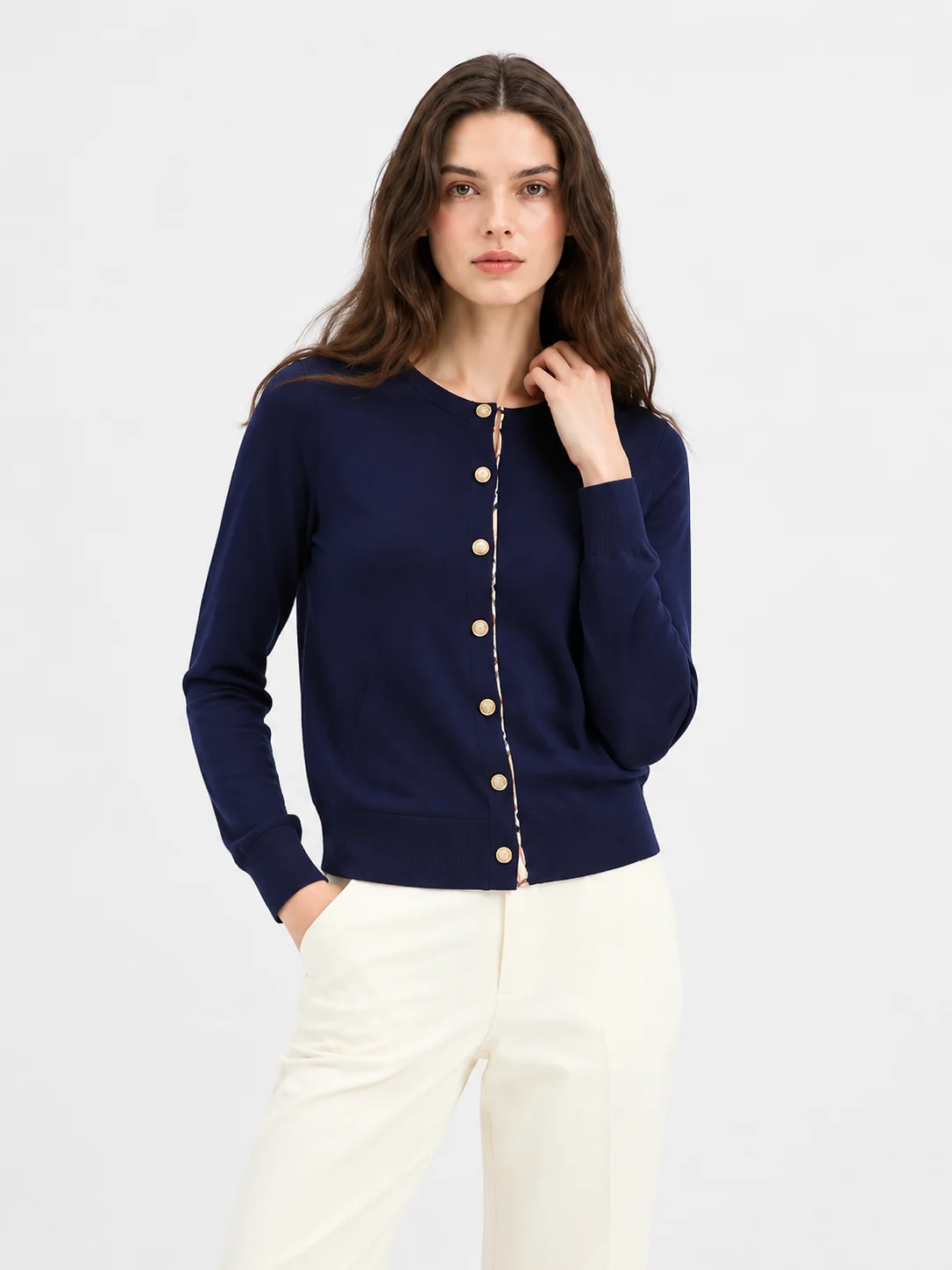
For a practical next step, review the lpknit knitwear collection and compare it with relevant examples such as the mohair long-sleeve knit sweater and fine-knit round-neck cardigan. When your design brief is ready, contact lpknit to discuss yarn, gauge, sample development, MOQ, and a suitable pilot order for your US, UK, or EU collection.