To create a sweater tech pack, document the garment’s front and back views, finished measurements, yarn composition, gauge, stitch structure, construction, trims, labels, and finishing in one version-controlled file. A knitwear factory such as lpknit can use those specifications to assess a merino, cashmere, or mohair design, confirm sampling details, and identify open questions before production.
A sweater tech pack turns a design idea into instructions that a product developer, pattern technician, and factory can review together. For knitwear, a generic sketch and size chart are not enough: yarn behavior, stitch density, linking, and finishing can change the final fit and appearance.
The guide below is written for boutique labels and first-time founders. It includes a beginner workflow, a copy-ready checklist, and examples you can adapt for a cardigan or pullover.
Key takeaways
– Specify measurable details; do not rely on a mood board alone.
– Record yarn composition, gauge, stitch, construction, and finishing separately.
– State finished-garment measurements and tolerances for every point of measure.
– Use the first sample to test fit, hand feel, appearance, and construction.
– Export a dated PDF, but keep an editable source file and revision log.
What a sweater tech pack tells a knitwear factory
A sweater tech pack is the controlled specification a factory uses to understand what to sample and how to assess the result. It combines drawings, materials, measurements, construction notes, and approval requirements so that questions can be identified before bulk production.
Think of the pack as a shared reference, not a substitute for discussion. If a design choice is undecided, label it “to confirm” and ask the factory to quote or sample the options rather than allowing the factory to guess.
| Section | What to include | Why it matters for knitwear |
|---|---|---|
| Style overview | Style name, code, season, sample size, date, revision | Keeps files and samples traceable |
| Technical drawings | Front, back, and detail views | Shows silhouette, openings, and finishing |
| Bill of materials (BOM) | Yarn, trims, labels, packaging | Supports sourcing and costing |
| Knit specification | Gauge, stitch, structure, panel details | Influences appearance, weight, and fit |
| Measurement chart | Points of measure (POM), size, tolerance | Makes fit review objective |
| Construction and finishing | Seams, linking, ribs, wash, pressing | Clarifies how parts become a garment |
| Color and artwork | Color references, placement, scale | Reduces interpretation differences |
| Sample comments | Photos, issue, requested correction | Turns review into actionable revisions |
How to create a sweater tech pack for beginners
Beginners can create a useful sweater tech pack by moving from the design decision to the factory check in a fixed sequence. Start with what must remain consistent across samples, then mark any details that still need factory input.
- Define the style. Give the garment a style name and code. Record the intended customer, season, fit, sample size, and whether the design is a pullover or cardigan.
- Draw the garment. Add clean front and back flats, plus close-ups of details such as a V-neck, button band, cuff, pocket, or shoulder seam. Label each view and point to the relevant note.
- Choose the material direction. List fiber content, yarn type or count if known, color, and any approved substitute rules. Distinguish a confirmed requirement from a target that the factory may propose.
- Specify knit and make. Record gauge, stitch structure, rib dimensions, panel changes, and seam or linking method. If you do not know the factory’s machine constraints, ask for a recommendation instead of inventing a technical value.
- Build the measurement chart. Name each POM, show where it is measured on the flat drawing, enter the sample size, and add tolerances. Add grade rules or request the factory to propose them.
- Document trims and finishing. Include button material and size, label position, wash or finishing requirements, and packaging notes. Attach reference images only when they clarify a specific instruction.
- Review the sample and revise. Compare the physical sample to the chart and drawings. Write numbered comments, attach marked-up photos, and issue a new revision before another sample or production decision.
A simple file can be assembled in spreadsheet or presentation software. Keep one editable master, link relevant images inside the file where possible, and export a clearly named PDF such as ST-104_Sweater_Tech-Pack_Rev02_2026-05-26.pdf.
Which knitwear details belong in a sweater tech pack?
A complete sweater tech pack identifies the yarn, knit method, garment measurements, assembly, trims, and finishing as distinct specifications. Naming a fiber alone is not sufficient: “merino sweater” does not tell a factory the yarn construction, stitch appearance, or target weight.
For each item, state whether it is required, preferred, or open for factory recommendation. This distinction helps a manufacturer give a meaningful sample plan and quote without silently changing the design.
- Yarn: fiber composition, supplier or yarn reference if selected, yarn count or ply if known, color, and acceptable alternatives. For cashmere or mohair, note the intended hand feel and appearance; these are not substitutes for a defined composition.
- Gauge and stitch: machine gauge if specified, stitch structure such as jersey or 1×1 rib, and any cable, jacquard, or texture placement. Attach a close-up reference and identify the face side.
- Construction: fully fashioned or cut-and-sew approach if specified, panel shape, shoulder treatment, seam type, and linking expectations. Ask the factory to confirm feasibility where construction is not yet decided.
- Rib and openings: cuff, hem, and neckline dimensions; rib structure; button-band width; button count and spacing; and closure direction.
- Finishing: washing, steaming, pressing, brushing, or other requested treatment. State desired outcome and ask the factory to confirm a practical process.
- Labels and trims: label type and placement, button size and material, thread or reinforcement requirements, and packaging instructions.
For example, a “soft, fuzzy cardigan” description is subjective. A stronger note points to the mohair-blend yarn reference, shows the intended surface in a labeled image, specifies the button-band width, and asks the factory to confirm the available yarn and finishing options.
How to specify sweater measurements, tolerances, and grading
A sweater measurement chart should describe the finished garment laid flat, not the wearer’s body, unless the chart clearly says otherwise. Each POM needs a name, a visual measurement location, a target value, a tolerance, and the size to which the value applies.
Start with the measurements that define the silhouette. Common POMs include chest width, body length from high point shoulder, shoulder width, sleeve length, bicep width, cuff opening, hem opening, and neckline width or depth. Add garment-specific points for raglan sleeves, dropped shoulders, pockets, or a cardigan button band.
A practical chart might look like this:
| POM | How to define it | Sample size | Tolerance |
|---|---|---|---|
| 1/2 chest | Measure straight across, below armhole | S | ±1.0 cm |
| Body length | High point shoulder to bottom edge | S | ±1.0 cm |
| Sleeve length | Shoulder point to cuff edge | S | ±1.0 cm |
| Cuff opening | Measure across cuff at relaxed state | S | ±0.5 cm |
These values are illustrative starting points, not universal factory standards. Confirm tolerances with the manufacturer, particularly for elastic ribs and textured knits, where relaxed and stretched measurements can differ.
For a first sample, specify the sample size and identify the base size for grading. A factory needs the intended measurements for each production size or agreed grading increments; “grade up normally” leaves too much room for interpretation. Ask how the sample will be measured after finishing and whether the chart records relaxed, stretched, or blocked dimensions.
How to create a sweater tech pack PDF or free template
A free sweater tech pack can be made with familiar spreadsheet and slide tools, provided the file is organized and readable. The best software is the tool your team can update accurately; a specialized platform may help manage revisions, while a PDF is useful for sharing an approved snapshot.
| Option | Works well for | Watch-outs |
|---|---|---|
| Spreadsheet | Measurement charts, BOM, revision tracking | Add clear sketches and page breaks |
| Presentation software | Flats, callouts, visual layout | Tables can become hard to maintain |
| Design software | Precise technical drawings | Confirm the factory can open or review exports |
| Tech-pack platform | Team workflows and structured fields | Check export quality and access requirements |
| PDF export | Review and sign-off snapshot | Keep an editable source; PDF alone is hard to revise |
A free template should include a cover or style header, technical flats, BOM, knit specifications, measurement chart, construction notes, label and trim details, and a revision log. Add blank fields for factory comments and sample status. Before sending, check that text remains legible, links work, measurements include units, and every page shows the style code and revision.
For a “How to create a sweater tech pack PDF” workflow, export only after the team has checked the editable file. Name the export with style code, revision, and date; avoid ambiguous names such as final-final.pdf. When corrections are made, increment the revision and summarize what changed.
How to review a sweater sample and correct the tech pack
A sample review compares the physical sweater against the approved specification and records each correction in a way the factory can act on. Do not send a list of general reactions such as “make it nicer”; identify the location, observed result, and requested change.
Hypothetical example: Maya, founder of a six-style boutique label, receives a size S merino cardigan. The chest measures 2 cm wider than the approved target, and the button band rolls after finishing. She records both issues with photos, confirms whether the chest difference exceeds the agreed tolerance, and asks the factory to propose a band construction adjustment before the next sample.
A second hypothetical example: Jordan is testing a 24-piece mohair capsule for a small online launch. The first sample looks fuzzier than the reference and the sleeves feel too long. Jordan updates the surface reference and sleeve POM, then asks the factory whether an available yarn or finishing option can better match the target before approving the low-MOQ run.
Use this review sequence:
- Measure the sample using the same POM definitions as the chart.
- Photograph fit and construction issues in consistent views.
- Number each comment and identify the affected location.
- State the desired result or revised measurement.
- Confirm the factory’s response and update the pack revision.
- Approve production only after outstanding changes and materials are confirmed.
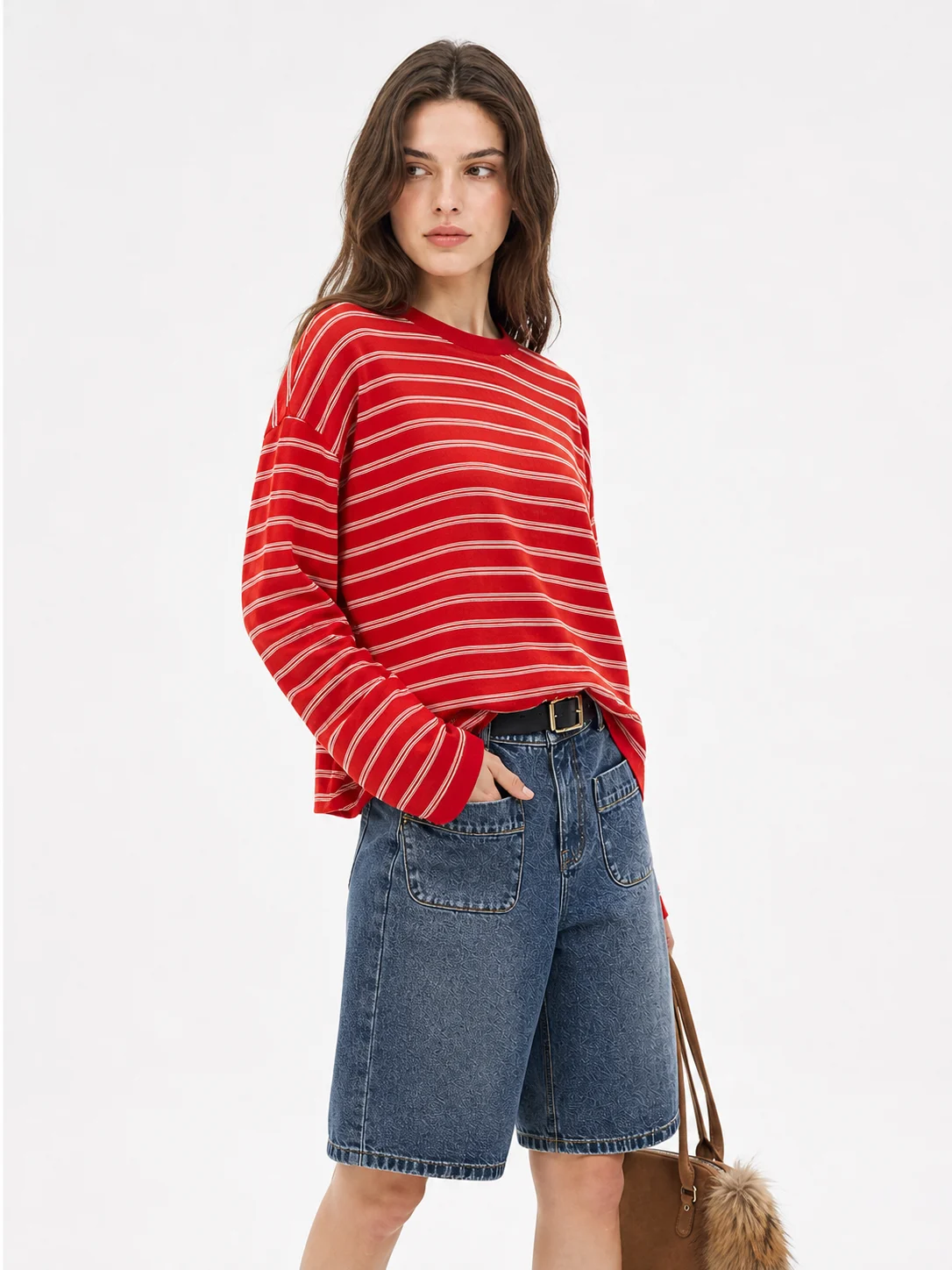
For product references while developing a style, lpknit’s knitwear product range includes cardigans and sweaters, including a fine-knit round-neck cardigan and a mohair long-sleeve sweater. Reference products can help communicate direction, but they do not replace your own measurements and construction instructions.
Specification note (2026): No universal sweater measurement tolerance or required tech-pack format is cited here. The sample values above are examples, not industry statistics. Confirm the measurement method, tolerances, materials, and construction with the selected factory before approval. For fiber identification and care-label planning, consult the U.S. Federal Trade Commission’s Textile Fiber Products Identification Act guidance (FTC, accessed 2026) and the European Commission’s textile labelling rules (European Commission, accessed 2026). The Woolmark guide to wool fiber provides additional material context.
FAQ: sweater tech packs
How do I make my own sweater tech pack as a beginner?
Start with a style header, front and back flats, a material list, a measurement chart, and construction notes. Mark undecided details clearly and ask the factory to confirm them. The first version does not need advanced design software; it needs clear labels, units, sample size, tolerances, and a revision date.
What should be included in a sweater tech pack?
Include style identification, technical drawings, yarn and trim details, knit structure, construction, finished-garment measurements, tolerances, grading information, labels, finishing, and revision history. Add sample comments as the development progresses. The factory should be able to identify what is fixed and what remains open for discussion.
What measurements and tolerances does a knitwear factory need?
A factory needs named points of measure, a drawing that shows each measurement location, target values by size, and agreed tolerances. Typical points include chest, body length, shoulder, sleeve, cuff, hem, and neckline. Tolerance values depend on the garment and measurement method, so agree them with the factory rather than treating an example chart as a universal standard.
Which yarn and knit details should I specify?
State fiber composition, yarn reference or target, color, gauge if known, stitch structure, rib details, and any pattern placement. Also describe linking or seam expectations, trims, and finishing. If you lack technical information, label it as a preference and request a factory recommendation before sampling.
What is the best software for creating tech packs?
There is no single best tool for every brand. Spreadsheets work well for measurements and BOMs, presentation software is accessible for visual layouts, and dedicated platforms can help with team revisions. Choose a tool that exports a legible PDF and keeps an editable source file; confirm that your factory can review the format.
Can I create a sweater tech pack for free?
Yes. A spreadsheet and presentation tool can cover the essential sections without a paid platform. Use consistent page layouts, include clear flats and measurement callouts, and export a dated PDF for review. A free template is only a starting point: you still need to verify the specifications with the factory.
Do I need an LLC before sending a tech pack to a factory?
A tech pack can be prepared before a business entity is formed; it is a product-development document, not proof of company registration. Legal and tax requirements depend on where the business operates and sells. Check the relevant government guidance or consult a qualified adviser before placing orders or signing contracts.
This guide uses lpknit’s stated focus on merino, cashmere, and mohair sweaters, OEM development, low-MOQ support (from 1 piece per colour on catalogue styles and 100 pieces per style on custom designs), and factory sampling. Verify fiber-label requirements against the FTC and European Commission guidance linked above, and confirm technical tolerances directly with the manufacturer. To discuss a sweater concept, sample plan, or private-label requirement, contact lpknit through its product range.